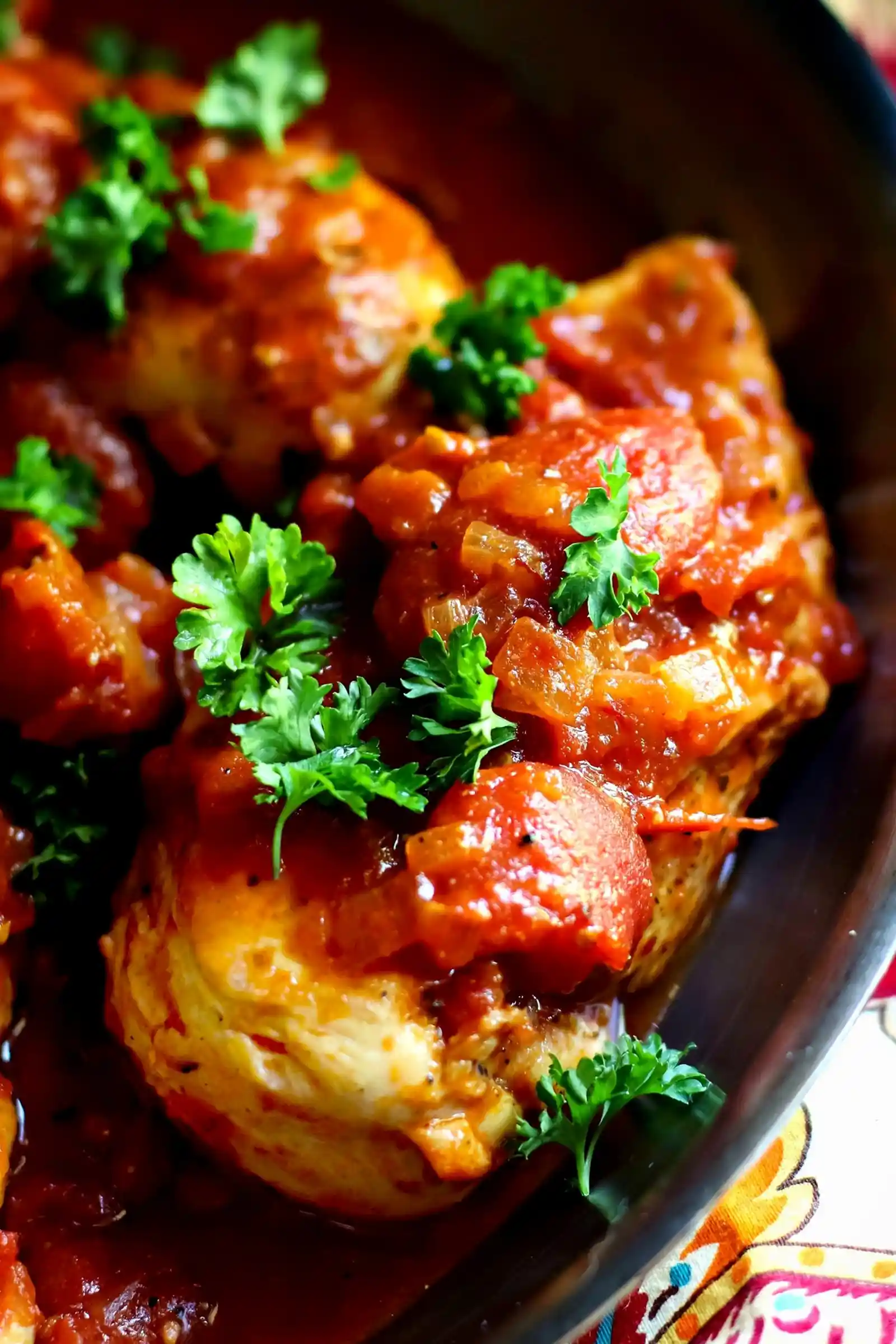
This efficient one-pan dinner combines juicy chicken breasts with a rich, savory tomato sauce. It uses basic pantry staples to create a hearty meal with minimal cleanup.
List of ingredients
- 4 whole boneless chicken breasts – pat dry for better searing.
- One 28 ounce can diced tomatoes – include the juice from the can.
- 1 cup chicken broth – low sodium preferred to control salt levels.
- 1 onion, diced – yellow or white onions provide a balanced flavor.
- 1/2 cup chicken broth – used for deglazing the pan.
- 1 Teaspoon garlic powder – provides a consistent savory depth throughout the sauce.
- 1 Tablespoon olive oil – used for browning the meat.
- salt and pepper – used for basic seasoning on both sides of the chicken.
- 1 Tablespoon white sugar – balances the natural acidity of the canned tomatoes.
step-by-step instructions
- Season the meat: Apply salt and pepper evenly to both sides of the chicken breasts.
- Sear the chicken: Heat olive oil in a large saute pan over medium-high heat. Saute the chicken breasts until they are golden brown on both sides, then remove them to a plate.
- Deglaze the pan: Pour 1/2 cup of chicken broth into the hot pan. Use a spatula to scrape the browned bits from the bottom to incorporate the flavor into the sauce.
- Build the sauce: Add the diced onions, the remaining 1 cup of chicken broth, diced tomatoes, garlic powder, and sugar to the pan.
- First simmer: Let the sauce simmer for 10 minutes to allow the onion to soften and flavors to merge.
- Finish cooking: Place the chicken breasts back into the pan. Spoon the tomato mixture over the top of each breast.
- Final simmer: Simmer for an additional 15 minutes or until the chicken is cooked through to an internal temperature of 165°F. Serve immediately.
Optimal Searing Techniques
Pat Chicken Dry Before Searing
Use paper towels to remove all surface moisture from the chicken breasts. Excess water creates steam in the pan, which prevents the meat from developing a golden-brown crust.
Avoid Crowding the Saute Pan
Ensure there is enough space between the chicken breasts in the pan. If the pan is too full, the temperature drops rapidly and the chicken will boil in its own juices rather than sear.
Maintain Medium-High Heat
Keep the heat consistent so the olive oil stays at a high temperature. If the oil does not shimmer before adding the meat, the chicken may stick to the pan surface.
Ingredient Substitutions
Using Fresh Tomatoes Instead of Canned
Replace the canned tomatoes with 28 ounces of diced fresh Roma tomatoes. To mimic the consistency of canned tomatoes, simmer the fresh pieces for an extra 10 minutes before adding the chicken back in.
Swapping Chicken Breasts for Thighs
Boneless, skinless chicken thighs can be used for a richer flavor and more moisture. Increase the final simmering time by 5-10 minutes to ensure the thighs are fully cooked.
Replacing White Sugar with Natural Sweeteners
Use one tablespoon of honey or maple syrup if you prefer a different type of sweetness. You can also omit the sugar entirely if you prefer a more tart, acidic tomato profile.
Using Fresh Garlic Instead of Powder
Substitute the garlic powder with 3 cloves of minced fresh garlic. Add the minced garlic to the pan during the last minute of sautéing the onions to prevent it from burning.
Recommended Serving Ideas
Pairing with Grain Bases
Serve this dish over a bed of fluffy white rice or quinoa to soak up the tomato sauce. For an Italian-style meal, toss the sauce and chicken with cooked linguine or fettuccine pasta.
Complementary Vegetable Sides
Steamed broccoli or roasted asparagus provide a fresh contrast to the rich sauce. A side of sautéed spinach with lemon juice also balances the savory tones of the chicken.
Adding Fresh Herb Garnishes
Garnish the final dish with freshly chopped parsley or basil leaves. This adds a pop of color and a fresh, aromatic finish to the braised chicken.
Storage and Reheating
Refrigeration Guidelines
Store leftovers in an airtight container in the refrigerator for up to 4 days. Ensure the chicken is fully submerged in the sauce to prevent the meat from drying out during storage.
Freezing Instructions
Place the chicken and sauce in a freezer-safe container or vacuum-sealed bag for up to 3 months. Thaw the meal completely in the refrigerator overnight before reheating.
Best Reheating Methods
Reheat the dish on the stovetop over low heat, adding a splash of water or broth if the sauce has thickened too much. Avoid overcooking in the microwave to keep the chicken breast tender.
Cooking Troubleshooting
Preventing Dry Chicken Breasts
Use a meat thermometer to check the internal temperature of the thickest part of the breast. Remove the chicken from the heat as soon as it reaches 165°F to avoid overcooking.
Fixing a Sauce That Is Too Thin
If the sauce is too watery, increase the heat to medium and simmer without a lid for several minutes. This allows the liquid to reduce and thicken naturally.
Reducing Excess Acidity
If the tomato sauce tastes too sharp or acidic, stir in a small pinch of additional sugar. A tablespoon of unsalted butter stirred in at the end can also mellow the flavor.
Meal Prep and Make-Ahead Advice
Prepping Ingredients in Advance
Dice the onions and measure out the broth and sugar the day before. Store the chopped onions in a small container to reduce active prep time on the day of cooking.
Cooking the Sauce Base Separately
Prepare the tomato and onion sauce in advance and store it in the fridge. When ready to eat, sear the fresh chicken and then simmer it directly in the pre-made sauce.
Frequently Asked Questions
Can I use a different type of pan?
A stainless steel or cast iron skillet is ideal for this recipe because they hold heat well for searing. Non-stick pans work but may not develop as deep a brown crust on the meat.
Do I need to peel the tomatoes?
Diced canned tomatoes are typically peeled and ready to use. If using fresh tomatoes, peeling is optional but recommended for a smoother sauce texture.
Can I add other vegetables to the sauce?
Yes, diced carrots, celery, or bell peppers can be added along with the onions. Sauté these vegetables until tender before adding the liquids and tomatoes.
Is it possible to make this in a slow cooker?
Sear the chicken in a pan first for flavor, then transfer everything to a slow cooker. Cook on low for 6-7 hours or on high for 3-4 hours.
What if I don’t have garlic powder?
You can use onion powder as a partial substitute, though the flavor will differ. Freshly minced garlic is the best alternative for maintaining the savory profile.
Print
One-Pan Tomato-Braised Chicken Breasts
- Total Time: 44 minutes
- Yield: 4 servings 1x
- Diet: General
Description
A simple and delicious skillet tomato chicken breast dinner that is easy to prepare and packed with flavor.
Ingredients
- 4 whole boneless chicken breasts
- one 28 ounce can diced tomatoes
- 1 cup chicken broth
- 1 onion, diced
- 1/2 cup chicken broth
- 1 Teaspoon garlic powder
- 1 Tablespoon olive oil
- salt and pepper
- 1 Tablespoon white sugar
Instructions
- Season: Salt and pepper both sides of the chicken breasts.
- Sear: Place the olive oil in a large saute pan. Saute the chicken breast until golden brown on both sides.
- Rest: Remove the chicken breasts from the pan to a plate.
- Deglaze: Add 1/2 cup chicken broth to the pan and deglaze it.
- Simmer Sauce: Add the onions, 1 cup chicken broth, tomatoes, garlic powder, and sugar to the pan. Simmer for 10 minutes.
- Cook Through: Place the chicken breasts back into the pan, spoon the tomatoes on top of the breasts, simmer for 15 minutes or until chicken is cooked through.
- Serve: Serve immediately.
Notes
This dish pairs wonderfully with Parmesan Risotto or mashed potatoes.
- Prep Time: 14 minutes
- Cook Time: 30 minutes
- Category: Main Course
- Method: Sautéing
- Cuisine: Italian
Nutrition
- Serving Size: 1 chicken breast
- Calories: 380 kcal
- Sugar: 8 g
- Sodium: 850 mg
- Fat: 8 g
- Saturated Fat: 2 g
- Unsaturated Fat: 6 g
- Trans Fat: 0 g
- Carbohydrates: 18 g
- Fiber: 3 g
- Protein: 35 g
- Cholesterol: 90 mg