This recipe transforms standard chicken breasts into a gourmet meal using classic Italian flavors. It is a fast, one-pan dinner that delivers a restaurant-quality result with minimal cleanup.
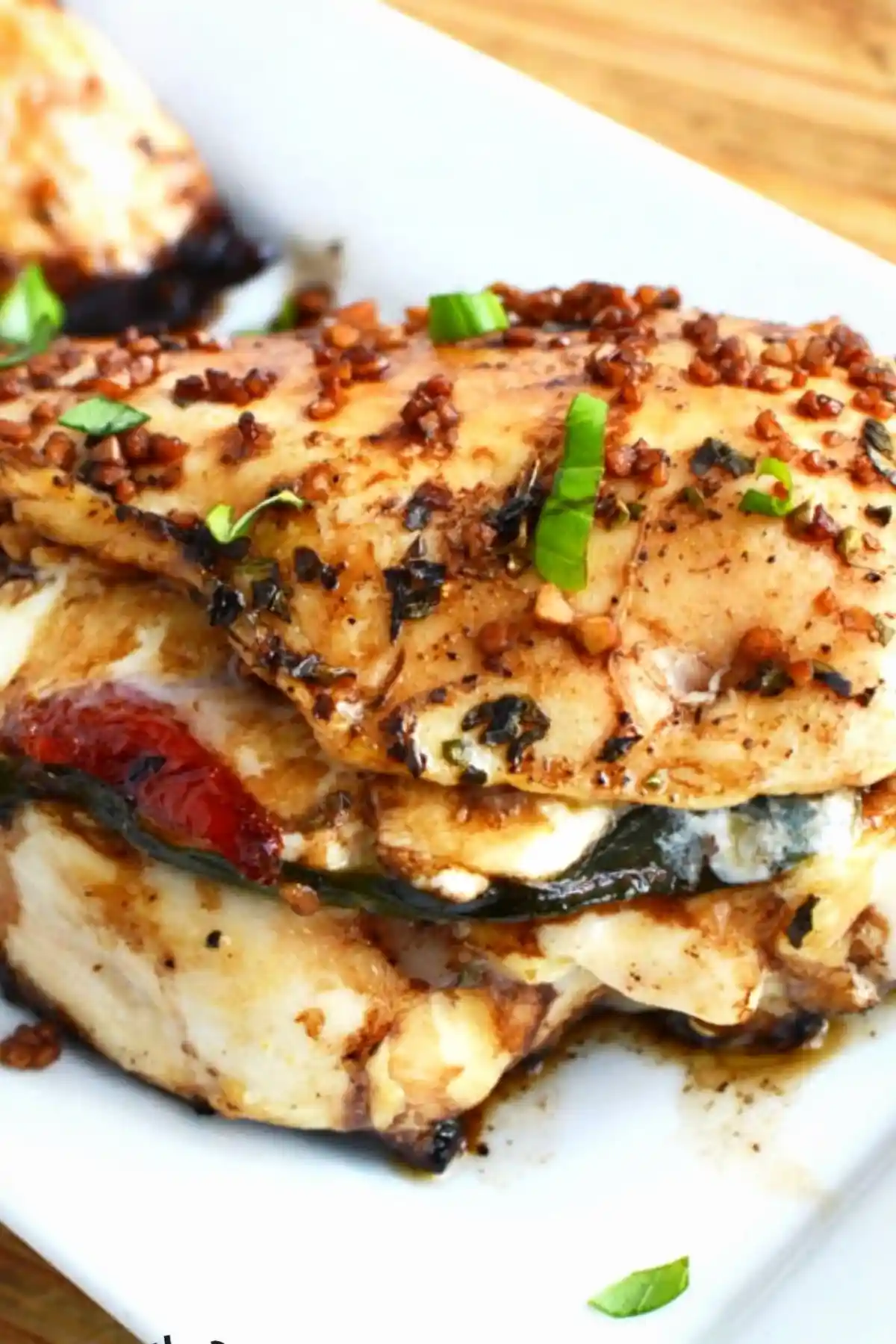
List of ingredients
- 2 boneless, skinless chicken breasts – ensure they are similar in size for even cooking.
- 3.5 oz. sundried tomatoes in oil – provides a concentrated tart flavor.
- 4 fresh mozzarella slices – use high-quality fresh mozzarella for a better melt.
- 6 fresh basil leaves – provides the aromatic core of the Caprese profile.
- 1/2 teaspoon dried oregano – adds an earthy herb note to the exterior.
- 1/2 teaspoon dried basil – complements the fresh basil inside.
- 1 tablespoon minced garlic – used for the balsamic pan sauce.
- 1/3 cup balsamic vinegar – creates the tangy base for the glaze.
- Salt and Pepper – used for basic seasoning to enhance all flavors.
step-by-step instructions
- Prepare the oven and chicken: Preheat your oven to 350°F (175°C). Carefully cut a pocket into the side of each chicken breast, being careful not to slice all the way through.
- Stuff the breasts: Place 1/4 of the sun-dried tomatoes, 2 mozzarella slices, and 3 fresh basil leaves into each pocket. For more flavor, you can add a few extra sun-dried tomatoes on top before sealing.
- Secure the meat: Close the pockets and secure them by inserting toothpicks at an angle. This prevents the cheese from leaking out during the searing and baking process.
- Season the exterior: Sprinkle the top of each breast with dried oregano, dried basil, salt, and pepper. Ensure the seasoning is evenly distributed for a consistent crust.
- Sear the chicken: Heat an ovenproof skillet, such as cast iron, over medium heat. Brown the chicken for 3-5 minutes per side until a golden-brown color is achieved.
- Create the glaze: While the chicken is browning, whisk the minced garlic and balsamic vinegar together in a small bowl. Pour this mixture directly over the seared chicken in the skillet.
- Finish in the oven: Move the skillet into the oven and bake for 10-15 minutes. Use a meat thermometer to ensure the internal temperature reaches 165°F (75°C).
- Final touch: Remove the toothpicks before serving. Optionally, garnish with freshly chopped basil and a drizzle of balsamic glaze for a professional presentation.
Preparation Mastery
Ensuring Uniform Thickness
Use a meat mallet or a heavy rolling pin to gently flatten the thicker end of the chicken breast. This prevents the thinner edges from drying out while the center remains undercooked. Aim for a consistent thickness of about one inch across the entire piece.
Selecting the Proper Knife
Use a very sharp chef’s knife to create the stuffing pocket. A dull blade may tear the meat, making it harder to keep the stuffing inside. Slice horizontally through the center, stopping just before you hit the opposite side.
Strategic Toothpick Placement
Insert toothpicks at a slight diagonal angle across the opening of the pocket. This creates a more secure lock than inserting them straight down. Always remember to count how many toothpicks you used so you can remove all of them before serving.
Managing the Searing Process
Allow the skillet to reach a medium-high heat before adding the chicken. If the pan is too cold, the chicken will steam instead of brown, losing that critical Maillard reaction. Avoid overcrowding the pan to maintain a high surface temperature.
Ingredient Substitutions
Alternative Cheese Options
If fresh mozzarella is unavailable, try using provolone or Havarti for a similar melt. For a bolder flavor, smoked gouda or white cheddar can be used. Ensure the replacement cheese is sliced thin enough to fit comfortably in the pocket.
Fresh Tomato Alternatives
You can replace sun-dried tomatoes with diced Roma tomatoes or halved cherry tomatoes. If using fresh tomatoes, seed them first to remove excess moisture. This prevents the chicken from becoming watery inside the oven.
Garlic Variations
Fresh minced garlic provides the best punch, but garlic powder can be used in a pinch. Use approximately 1/4 teaspoon of garlic powder for every clove of fresh garlic. Roasted garlic is another excellent option for a mellower, sweeter taste.
Herb Swaps for Basil
If fresh basil is not in season, baby spinach can be used for a similar color and texture. While the flavor differs, spinach pairs well with mozzarella and balsamic. You can also use a small amount of pesto for a concentrated herb flavor.
Flavor Variations
Pesto-Infused Core
Spread a thin layer of basil pesto inside the pocket before adding the cheese and tomatoes. This adds another layer of garlic and pine nut flavor to the center. Reduce the amount of dried basil on the exterior if you use pesto.
Mediterranean Style Twist
Replace the mozzarella with crumbled feta and the sun-dried tomatoes with Kalamata olives. This shifts the flavor profile toward a Greek-inspired dish. Keep the balsamic glaze as it balances the saltiness of the feta.
Adding Spicy Elements
Tuck a few thin slices of jalapeño or a pinch of red pepper flakes into the stuffing. The heat of the pepper cuts through the richness of the mozzarella. This is a great way to add depth to the Italian flavor profile.
Creamy Goat Cheese Filling
Substitute the mozzarella with softened goat cheese for a tangier, creamier interior. Goat cheese pairs exceptionally well with the sweetness of the balsamic vinegar. Mix the goat cheese with a bit of lemon zest for extra brightness.
Serving Suggestions
Complementary Grain Sides
Serve the chicken alongside a bed of wild rice or fluffy quinoa. These neutral grains absorb the excess balsamic glaze from the pan. Brown rice is also a hearty option that complements the richness of the cheese.
Light Vegetable Pairings
Roasted asparagus or sautéed broccolini provide a crisp, fresh contrast to the stuffed chicken. A simple side of steamed green beans with lemon juice also works well. These greens balance the savory and sweet notes of the meal.
Traditional Bread Accompaniments
A slice of toasted sourdough or a warm baguette is ideal for soaking up the remaining garlic-balsamic sauce. Garlic bread is another popular choice that enhances the Italian theme. Ensure the bread is toasted enough to hold the weight of the sauce.
Creating a Full Caprese Meal
Pair the main course with a fresh Caprese salad consisting of sliced tomatoes, basil, and drizzled olive oil. This reinforces the theme of the dinner and adds a refreshing, raw element to the plate. A light arugula salad with a lemon vinaigrette is also recommended.
Storage and Reheating
Refrigerator Storage Guidelines
Store leftover chicken in an airtight container in the refrigerator for up to 3 to 4 days. Ensure the chicken is cooled slightly before sealing to prevent excess condensation. This helps maintain the texture of the meat and the cheese.
Best Reheating Methods
Reheat the chicken in an oven or air fryer at 350°F for about 10 minutes. This method preserves the sear on the outside and prevents the chicken from becoming rubbery. Avoid the microwave, as it can make the chicken tough and the cheese oily.
Freezing Instructions
Wrap individual cooked breasts tightly in aluminum foil and then place them in a freezer-safe bag. They can be stored for up to 2 months. Thaw them completely in the refrigerator overnight before reheating in the oven.
Maintaining Glaze Consistency
If the balsamic glaze thickens too much during storage, add a teaspoon of water or broth when reheating. This loosens the sauce and restores its glossy appearance. Stir the glaze gently to avoid breaking the sauce.
Cooking Troubleshooting
Preventing Cheese Leakage
Ensure the mozzarella slices are not too thick, as overstuffing the pocket puts pressure on the meat. Seal the edges tightly with toothpicks and avoid poking holes in the chicken. Searing on medium-high heat quickly seals the outer meat.
Avoiding Dry Chicken Breasts
Use a digital meat thermometer to track the internal temperature precisely. Remove the skillet from the oven as soon as the chicken hits 165°F. Overcooking by even a few minutes can lead to dry, stringy meat.
Fixing a Burnt Glaze
Balsamic vinegar has a high sugar content and can burn if the pan is too hot. If the glaze begins to smoke or darken too quickly, add a splash of chicken broth to the pan. This lowers the temperature and adds moisture to the sauce.
Handling Underdone Centers
If the outside is browned but the center is raw, lower the oven temperature and bake for another 5 minutes. Covering the pan with foil can help trap heat and cook the interior without burning the top. Always check the thickest part of the breast.
Frequently Asked Questions
Can I use frozen chicken breasts?
Yes, but they must be completely thawed in the refrigerator before you begin. Cooking from frozen will result in uneven cooking and the stuffing will likely leak out. Pat the thawed chicken dry with paper towels for a better sear.
What is the best skillet for this recipe?
A cast iron skillet is the best choice because it retains heat exceptionally well and can move directly from the stove to the oven. An oven-safe stainless steel pan also works. Avoid using non-stick pans that are not rated for high oven temperatures.
How do I know when the chicken is done?
The only reliable way is using a meat thermometer to reach 165°F (75°C). Visually, the juices should run clear when the thickest part is pierced. The chicken should also feel firm to the touch.
Can I make this in a slow cooker?
This specific recipe is designed for searing and roasting to get a crust. While you can slow cook stuffed chicken, you will lose the golden-brown exterior and the reduced glaze. For the best results, stick to the skillet-to-oven method.
Is balsamic vinegar the same as balsamic glaze?
No, balsamic vinegar is a thin liquid, while a glaze is a reduced, syrupy version. This recipe uses vinegar for the cooking process, but you can use a store-bought glaze for the final garnish. You can make your own glaze by simmering balsamic vinegar until it thickens.
Do I have to use sun-dried tomatoes in oil?
The oil helps preserve the tomatoes and adds flavor to the chicken. If you use dry-packed sun-dried tomatoes, you must rehydrate them in warm water or olive oil first. This ensures they have the correct texture inside the breast.
How do I stop the basil from turning black?
Basil oxidizes and darkens when exposed to high heat for too long. Placing the basil inside the chicken protects it from direct heat. For the garnish, add the fresh basil only after the chicken has been removed from the oven.
} Print
Balsamic Caprese Stuffed Chicken Breasts
- Total Time: 45 minutes
- Yield: 2 breasts 1x
- Diet: General
Description
Caprese Stuffed chicken with balsamic glaze has delicious tomatoes and mozzarella cheese and is a perfect chicken breast recipe that you can count on for your dinner menu.
Ingredients
- 2 chicken breasts (boneless, skinless)
- 3.5 oz. sundried tomatoes in oil
- 4 fresh mozzarella slices
- 6 fresh basil leaves
- 1/2 teaspoon dried oregano
- 1/2 teaspoon dried basil
- 1 tablespoon minced garlic
- 1/3 cup balsamic vinegar
- Salt and Pepper
Instructions
- Step: Preheat your oven to 350°F (175°C). Cut a pocket into each chicken breast and stuff with 1/4 of the sun-dried tomatoes, 2 slices of fresh mozzarella, and 3 fresh basil leaves. Use toothpicks to close the pocket by inserting them at an angle.
- Step: Sprinkle the top of each chicken breast with dried oregano, dried basil, salt and pepper.
- Step: Heat an ovenproof skillet over medium heat. Brown the chicken on both sides, about 3-5 minutes per side.
- Step: Mix the minced garlic and balsamic vinegar together in a small bowl and pour the mixture over the chicken in the skillet.
- Step: Place the skillet in the oven and bake for 10-15 minutes, or until the chicken reaches an internal temperature of 165°F (75°C).
- Step: Optional: Top with freshly chopped basil and drizzle with balsamic glaze before serving.
Notes
Ensure chicken breasts are of similar thickness for even cooking; pound thicker areas if necessary. Remember to remove toothpicks before serving.
- Prep Time: 15 minutes
- Cook Time: 30 minutes
- Category: Main Dishes
- Method: Searing and Baking
- Cuisine: Italian
Nutrition
- Serving Size: 1 chicken breast
- Calories: 422 kcal
- Sugar: 7 g
- Sodium: 419 mg
- Fat: 13 g
- Saturated Fat: 3 g
- Unsaturated Fat: 8 g
- Trans Fat: 1 g
- Carbohydrates: 22 g
- Fiber: 4 g
- Protein: 52 g
- Cholesterol: 146 mg