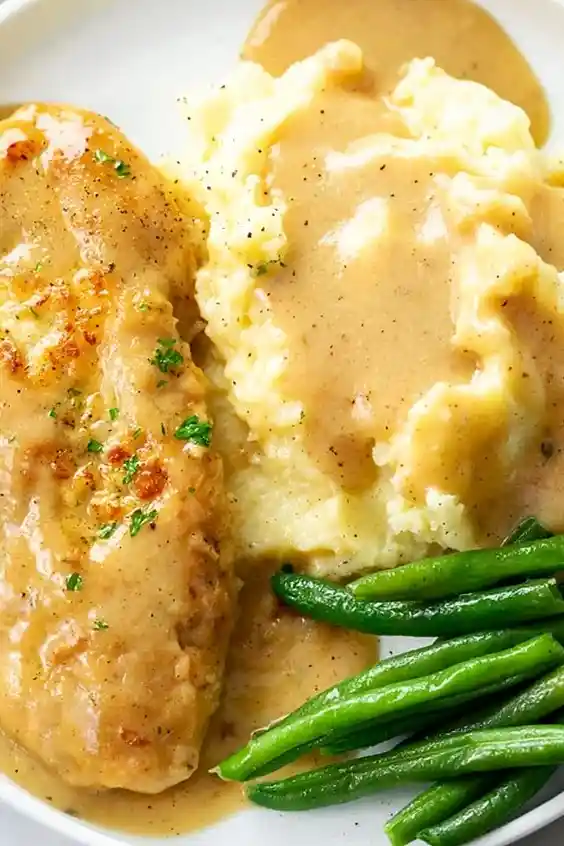
This recipe delivers juicy chicken breasts smothered in a rich, homemade gravy. It is a straightforward meal that pairs perfectly with hearty sides for a comforting dinner.
List of ingredients
- 2 large boneless skinless chicken breasts – pounded to even thickness.
- Salt and pepper – used for primary seasoning.
- 1/4 cup flour – for dredging the chicken.
- 1-2 tablespoons olive oil – for searing the meat.
- 1/2 cup chicken broth – used for deglazing the pan.
- 4 tablespoons butter – for the roux.
- 1/4 cup flour – used to thicken the gravy.
- 2 cups chicken broth – the main liquid base.
- 1/2 cup beef broth – adds depth and color.
- 1/2 chicken bouillon cube – enhances the savory flavor.
- 1 splash heavy cream – or half and half for richness.
- 1 teaspoon Worcestershire sauce – or soy sauce for umami.
- 1/2 teaspoon onion powder – for aromatic flavor.
- 1/2 teaspoon garlic powder – for pungent depth.
- 1/2 teaspoon mustard powder – adds a subtle tang.
- 1/4 teaspoon dried thyme – for herbal notes.
- 1/4 teaspoon ground sage – provides a classic savory scent.
- 1/4 teaspoon black pepper – for a touch of spice.
step-by-step instructions
- Prepare the gravy base: In a large measuring cup with a spout, whisk together the chicken broth, beef broth, chicken bouillon, heavy cream, Worcestershire sauce, and all the seasonings. Set this mixture aside for later use.
- Prepare the chicken: Slice each chicken breast in half lengthwise to create 2-3 thinner cutlets. Place them under saran wrap and use the textured side of a meat mallet to pound them to a consistent 1/2 inch thickness. Pat the meat dry with paper towels.
- Coat the meat: Season both sides of the chicken with salt and pepper. Sprinkle flour over the surface and rub it in well to ensure an even coating on both sides.
- Sear the chicken: Heat olive oil in a large skillet over medium-high heat. Sear the chicken in batches for 4-5 minutes per side until a golden brown crust forms. Remove the chicken from the pan and set aside on a plate.
- Deglaze the skillet: Turn off the heat and pour in the 1/2 cup of chicken broth. Return the heat to medium and use a silicone spatula to scrape the browned bits (fond) from the bottom and sides of the pan. Bring to a bubble and reduce the liquid by half, about 3-4 minutes.
- Make the roux: Melt the butter in the same skillet and stir in the 1/4 cup of flour. Stir continuously for 2 minutes until the flour turns light brown and the raw scent disappears.
- Thicken the sauce: Gradually add the prepared gravy mixture in small splashes, stirring constantly. This slow addition is critical to prevent lumps and maintain a smooth consistency.
- Reduce the gravy: Bring the liquid to a gentle boil, then lower the heat to a light simmer. Let the sauce reduce and concentrate for 5-7 minutes without a lid, stirring occasionally.
- Finish the dish: Return the seared chicken and any accumulated pan juices to the skillet. Spoon the gravy over the meat and simmer for another 5 minutes, or until the sauce reaches your preferred thickness.
- Serve: Plate the chicken and gravy immediately, ideally alongside mashed potatoes and roasted green beans.
Professional Cooking Techniques
Achieving Even Chicken Thickness
Pounding the chicken to a uniform half-inch thickness is essential for consistent cooking. Use a meat mallet or a heavy rolling pin over plastic wrap to avoid tearing the meat. This ensures the edges do not overcook while the center remains raw.
Maximizing Flavor Through Searing
Searing the chicken in batches prevents the pan temperature from dropping, which avoids steaming the meat. Medium-high heat is necessary to create a golden crust via the Maillard reaction. This crust provides the foundational flavor for the final sauce.
The Importance of Deglazing
The brown bits left in the pan after searing, known as the fond, contain concentrated flavor. Adding chicken broth and scraping the pan lifts these particles into the sauce. This step adds a layer of complexity that cannot be achieved by simply simmering the sauce.
Perfecting the Roux
A roux is the combination of fat and flour used to thicken the gravy. Cooking the butter and flour for at least two minutes ensures the final sauce does not taste like raw flour. Keep the heat moderate to avoid burning the butter.
Ingredient Substitutions
Using Chicken Thighs
Boneless, skinless chicken thighs can replace breasts for a juicier result. Thighs are more forgiving and less likely to dry out during the simmering process. Follow the same searing and simmering steps as the breast recipe.
Substituting Soy Sauce for Worcestershire
If Worcestershire sauce is unavailable, soy sauce is an excellent alternative. It provides the same salty, umami depth required to balance the richness of the butter and cream. Use the same 1 teaspoon measurement.
Dairy-Free Cream Alternatives
For a dairy-free version, replace the heavy cream with full-fat coconut milk or a cashew-based cream. Ensure the substitute is unsweetened to maintain the savory profile of the gravy. Use the same splash amount for consistency.
Adjusting the Broth Blend
If you prefer a lighter color, you can use 100% chicken broth instead of adding beef broth. The beef broth is primarily used to add a darker hue and a deeper, meatier undertone. The final result will still be flavorful with only chicken broth.
Serving and Pairing Ideas
Classic Mashed Potato Base
Serving this dish over creamy mashed potatoes allows the potatoes to soak up the extra gravy. Use Yukon Gold or Russet potatoes for the best texture. Butter and a splash of milk in the potatoes complement the richness of the sauce.
Balanced Roasted Vegetables
Roasted green beans provide a necessary crispness and bitterness to cut through the heavy gravy. Toss them in olive oil and salt before roasting at 400°F. This adds color and nutritional balance to the plate.
Steamed Grain Options
For a different twist, serve the chicken and gravy over steamed white or brown rice. The grains act as a sponge for the sauce, making the meal more filling. Quinoa is another healthy alternative that pairs well with the herbal seasonings.
Storage and Reheating Guide
Refrigeration Timeline
Store leftovers in an airtight container in the refrigerator for up to 3 days. Ensure the chicken is fully submerged in the gravy to prevent the meat from drying out during storage. Allow the food to cool slightly before sealing the container.
Freezing for Long Term
This dish freezes well for up to 3 months. Place the chicken and gravy in a freezer-safe bag or container, removing as much air as possible. Label the container with the date to ensure quality during consumption.
Best Reheating Methods
To reheat from the fridge, place the chicken and gravy in a skillet over low heat with a splash of extra broth. For frozen leftovers, thaw overnight in the fridge first. Bake in a covered casserole dish at 350°F for 20-25 minutes to keep the chicken moist.
Troubleshooting and Fixes
Fixing Lumpy Gravy
If the gravy develops lumps, use a whisk to vigorously stir the sauce over medium heat. If lumps persist, you can pour the sauce through a fine-mesh strainer. To prevent this, always add the liquid to the roux in very small splashes.
Preventing Tough Chicken
Avoid bringing the sauce to a hard boil once the chicken is returned to the pan. High heat can tighten the protein fibers, making the breast meat tough and rubbery. Maintain a very gentle simmer for the final five minutes.
Adjusting Sauce Thickness
If the gravy is too thin, simmer it uncovered for a few more minutes to allow more evaporation. If the sauce becomes too thick, stir in a tablespoon of chicken broth or water. This will loosen the consistency without diluting the flavor.
Frequently Asked Questions
Can I use a slow cooker for this recipe?
This recipe is designed for the stovetop because it requires searing and reduction. A slow cooker does not allow for evaporation, meaning the gravy will not thicken or concentrate in the same way. The stovetop method is superior for this specific flavor profile.
Why use both chicken and beef broth?
The combination of both broths creates a more complex flavor profile. Beef broth adds a darker color and a richer, more savory base that prevents the gravy from tasting one-dimensional. It mimics the depth found in traditional professional sauces.
Can I use a different type of oil for searing?
Any oil with a high smoke point will work, such as avocado oil or canola oil. Olive oil is used for its flavor, but avocado oil is better if you prefer higher heat. Avoid using butter for the initial sear as it may burn before the chicken browns.
Is it possible to make this without flour?
Flour is essential here for both the dredging and the roux to provide thickness. For a gluten-free option, you can substitute the flour with a 1:1 gluten-free flour blend or cornstarch. If using cornstarch for the roux, adjust the quantity as it thickens more aggressively.
How do I know when the roux is done?
The roux is ready when it stops bubbling violently and takes on a light golden-brown color. You should also notice that the raw, floury smell has changed into a toasted, nutty aroma. This typically takes about two minutes of constant stirring.
Print
Savory Chicken and Gravy
- Total Time: 50 minutes
- Yield: 4 servings 1x
- Diet: General
Description
This Chicken and Gravy recipe is easy to make and full of homemade flavor. Serve this with mashed potatoes and green beans for a cozy dinner that your family will love!
Ingredients
- 2 large boneless skinless chicken breasts
- Salt and pepper
- 1/4 cup flour
- 1–2 tablespoons olive oil
- 1/2 cup chicken broth
- 4 tablespoons butter
- 1/4 cup flour
- 2 cups chicken broth
- 1/2 cup beef broth
- 1/2 chicken bouillon cube
- 1 splash heavy cream
- 1 teaspoon Worcestershire sauce
- 1/2 teaspoon onion powder
- 1/2 teaspoon garlic powder
- 1/2 teaspoon mustard powder
- 1/4 teaspoon dried thyme
- 1/4 teaspoon ground sage
- 1/4 teaspoon pepper
Instructions
- Step 1: In a large measuring cup with a spout, combine the chicken broth, beef broth, chicken bouillon, cream, Worcestershire sauce, and seasonings and set aside.
- Step 2: Slice the chicken in half lengthwise to create 2-3 thinner slices. Cover with saran wrap and use the textured side of a meat mallet to pound it to 1/2 inch thick. Pat dry.
- Step 3: Season each side with salt/pepper, then sprinkle with flour and rub it over the surface of each side.
- Step 4: Heat oil in a large skillet over medium-high heat. Sear the chicken in batches for 4-5 minutes per side, until a golden crust has developed. Set aside.
- Step 5: Turn the heat off. Add the chicken broth and then set the heat to medium. Use a silicone spatula to clean the bottom and sides of the skillet. Bring to a gentle bubble and reduce by half, about 3-4 minutes.
- Step 6: Melt the butter and add the flour. Stir continuously for 2 minutes, until the flour turns a light brown, and the raw flour smell is cooked off.
- Step 7: Add the gravy mixture in small splashes, stirring continuously.
- Step 8: Bring the liquid to a gentle boil, then reduce it to a light simmer. Let it reduce and concentrate for 5-7 minutes, uncovered, stirring occasionally.
- Step 9: Add the chicken back to the skillet along with any juices from the plate. Spoon the sauce on top. Let it simmer and reduce for 5 more minutes, or until desired thickness is obtained.
- Step 10: Serve with mashed potatoes and roasted green beans!
Notes
If using smaller chicken breasts, consider using 3-4 instead of 2 large. Store in an airtight container and refrigerate for up to 3 days or freeze for up to 3 months.
- Prep Time: 15 minutes
- Cook Time: 35 minutes
- Category: Main Course
- Method: Stovetop
- Cuisine: American
Nutrition
- Serving Size: 1 serving
- Calories: 264 kcal
- Sugar: 1 g
- Sodium: 844 mg
- Fat: 17 g
- Saturated Fat: 8 g
- Unsaturated Fat: 7 g
- Trans Fat: 0.5 g
- Carbohydrates: 10 g
- Fiber: 0.5 g
- Protein: 15 g
- Cholesterol: 69 mg