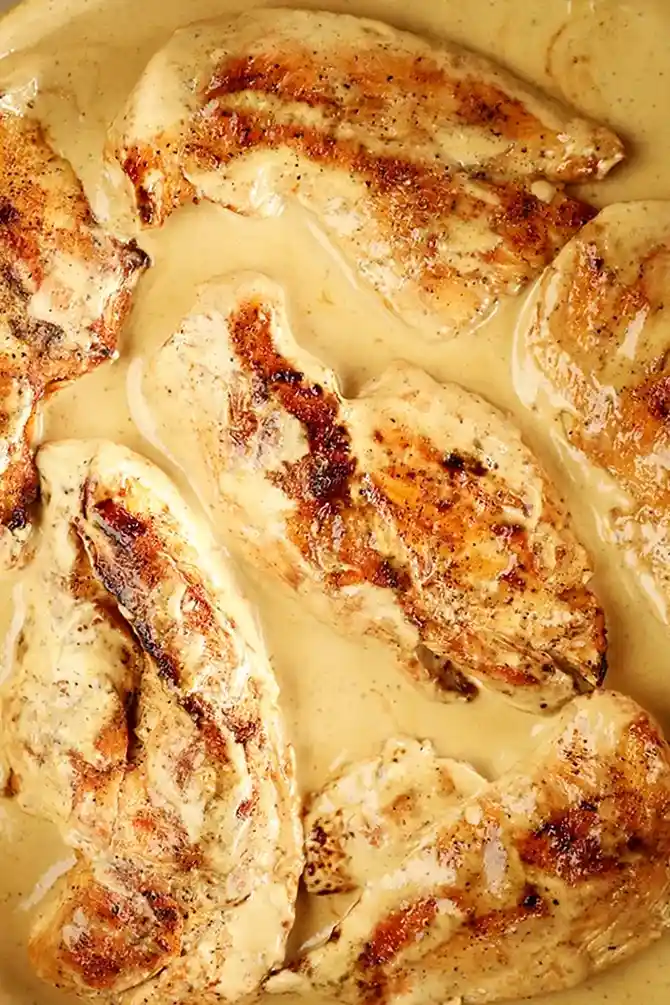
This quick dinner utilizes a rich cream cheese pan sauce to enhance lean chicken breasts. It is an efficient one-pan method that maximizes flavor and minimizes cleanup.
List of ingredients
- 2 pounds boneless, skinless chicken breasts – sliced lengthwise for even cooking.
- salt – used for seasoning and moisture retention.
- pepper – provides a basic sharp flavor.
- garlic powder – adds savory depth to the meat.
- 3 tablespoons olive oil – for searing the chicken.
- 2 tablespoons butter – used for deglazing and richness.
- 1 cup chicken broth – the liquid base for the pan sauce.
- 4 oz cream cheese – room temperature and cubed for easy melting.
- 2 teaspoons mustard – dijon, creole, or spicy brown for acidity.
step-by-step instructions
- Prep the meat: Trim excess fat and slice the chicken breast in half lengthwise to create equal pieces roughly 3/4 to 1-inch thick. Season both sides with salt, pepper, and garlic powder.
- Sear the chicken: Heat oil in a large skillet over medium heat. Cook the chicken in batches if needed until the internal temperature reaches 165°F. Remove the chicken and tent with aluminum foil to keep warm.
- Deglaze the pan: Melt the butter in the same skillet. Pour in the chicken broth and scrape the bottom of the pan to loosen all cooked-on bits.
- Emulsify the sauce: Bring the broth to a simmer and whisk in the cubed cream cheese until completely melted and smooth.
- Thicken and season: Stir in the mustard and continue simmering until the sauce thickens. Add salt and pepper to taste.
- Combine and serve: Return the chicken to the pan and coat thoroughly with the sauce. Add a small amount of extra broth if the sauce is too thick. Serve immediately.
Professional Poultry Preparation
Slicing for Consistent Thickness
Standard chicken breasts are often too thick to cook evenly. Slicing them lengthwise into thinner cutlets ensures the center reaches 165°F before the exterior overcooks. This method reduces total cooking time and prevents dry meat.
Utilizing a Digital Meat Thermometer
Relying on color or time is often inaccurate. A digital instant-read thermometer allows you to pull the chicken exactly at the safety threshold. This prevents the protein fibers from tightening and squeezing out moisture.
Managing Pan Temperature and Crowding
Avoid overcrowding the skillet, as this drops the temperature and causes the chicken to steam instead of sear. Cook in batches to maintain a high heat for a proper brown crust. If the pan looks dry between batches, add a small amount of olive oil.
Adapting for Boneless Chicken Thighs
Boneless, skinless chicken thighs can be used as a substitute for breasts. Thighs have a higher fat content and are more forgiving if slightly overcooked. Follow the same searing and sauce process for a richer result.
Mastering the Pan Sauce Process
Deglazing the Pan for Maximum Flavor
The brown particles stuck to the pan after searing are called the fond. Deglazing with chicken broth lifts these concentrated proteins into the liquid. This process is essential for creating a deep, savory base for the sauce.
Incorporating Cream Cheese for Smoothness
Adding cubed, room-temperature cream cheese prevents lumps from forming. Whisking constantly as the cheese melts ensures a smooth emulsion. If the cheese is too cold, it may take longer to integrate and could potentially separate.
Reducing the Sauce to the Correct Texture
The sauce thickens as the liquid evaporates during the simmering process. Stir frequently to prevent the bottom from scorching. The ideal consistency should be thick enough to coat the back of a spoon without being pasty.
Integrating Mustard for Acidity
Mustard provides a necessary acidic counterpoint to the richness of the cream cheese and butter. Adding it toward the end of the process preserves its sharp flavor profile. This balance prevents the sauce from tasting overly heavy.
Ingredient Alternatives and Swaps
Using Different Types of Mustard
Dijon mustard offers a sophisticated, sharp taste that pairs well with cream. Creole mustard adds a spicy, pungent kick for more heat. Spicy brown mustard provides a balanced, traditional flavor profile.
Replacing Cream Cheese with Mascarpone
Mascarpone is a viable substitute for cream cheese if a milder, creamier taste is preferred. It has a higher fat content and melts very quickly. Use the same 4 oz quantity for similar results.
Using Vegetable-Based Broths
If chicken broth is unavailable, vegetable broth can be used as a replacement. To maintain the savory depth, add a pinch more salt or a drop of soy sauce. This keeps the sauce flavor profile robust.
Substituting Olive Oil with Avocado Oil
Avocado oil is an excellent alternative to olive oil due to its higher smoke point. This allows for a hotter sear on the chicken without the oil breaking down. Both oils provide a neutral base for the seasoning.
Recommended Side Dish Pairings
Starchy Bases for Sauce Absorption
Mashed potatoes are an ideal pairing because they absorb the excess pan sauce. Egg noodles or white rice also work well to complement the creaminess. Polenta provides a rustic alternative that pairs well with the mustard notes.
Steamed and Roasted Vegetable Options
Roasted asparagus or steamed broccoli offer a fresh contrast to the rich sauce. Sautéed spinach or glazed carrots add natural sweetness. These options provide essential nutrients and color to the plate.
Fresh Greens and Acidic Salads
A side salad with a lemon-based vinaigrette helps cut through the richness of the cream cheese. Arugula or mixed baby greens are recommended for their peppery notes. This ensures the meal feels balanced and light.
Storage and Reheating Protocols
Proper Refrigeration Techniques
Store leftover chicken and sauce in an airtight container in the refrigerator. The dish will remain safe to eat for 3 to 4 days. Ensure the chicken is fully coated in sauce to prevent the meat from drying out during storage.
Avoiding Sauce Separation During Reheating
Reheat the chicken and sauce slowly over low heat on the stove. Adding a tablespoon of water or broth helps loosen the sauce and restores the emulsion. Avoid high heat, which can cause the cream cheese to split.
Guidelines for Freezing and Thawing
While possible, freezing cream-based sauces can lead to texture changes. If freezing, thaw the dish slowly in the refrigerator overnight. Reheat gently and whisk in a small amount of broth to restore the smooth consistency.
Kitchen Troubleshooting Guide
Correcting a Broken or Curdled Sauce
If the sauce separates or looks curdled, whisk in a teaspoon of cold water or extra broth. Heat the mixture slowly while whisking vigorously. This helps re-emulsify the fats and liquids into a smooth state.
Managing Excessively Thick Sauce
If the sauce becomes too thick, simply stir in more chicken broth one tablespoon at a time. Continue stirring over low heat until the desired consistency is achieved. This is common if the sauce simmers for too long.
Preventing the Chicken from Drying Out
Always use a meat thermometer to avoid overcooking the breasts. Tenting the chicken with foil while the sauce cooks prevents heat loss and keeps the meat juicy. Return the chicken to the pan only at the very end.
Frequently Asked Questions
Can I use frozen chicken breasts?
Yes, provided they are completely thawed before cooking. Thawing them in the refrigerator overnight is the safest method. Cooking frozen chicken directly leads to uneven searing and a raw center.
How do I soften cream cheese quickly?
You can microwave cubed cream cheese in 15-second intervals, stirring in between. Alternatively, place the sealed package in a bowl of warm water for 10 minutes. Avoid overheating, as this can change the texture.
Which type of skillet is best for this recipe?
A large stainless steel or cast iron skillet is ideal because they develop a good fond. Non-stick pans are less effective for deglazing and flavor development. Ensure the pan is wide enough to prevent overcrowding.
Can I add fresh herbs to the sauce?
Yes, chopped parsley, thyme, or chives added at the very end enhance the flavor. Stir them in just before serving to keep the herbs bright and fresh. This adds a visual pop of color to the creamy sauce.
Print
Easy Chicken with Cream Cheese Pan Sauce
- Total Time: 35 minutes
- Yield: 4 servings 1x
- Diet: General
Description
A quick and delicious recipe for boneless skinless chicken breasts featuring a decadent, creamy pan sauce made with cream cheese and a hint of mustard.
Ingredients
- 2 pounds boneless, skinless chicken breasts
- salt
- pepper
- garlic powder
- 3 tablespoons olive oil
- 2 tablespoons butter
- 1 cup chicken broth
- 4 oz cream cheese, room temperature, cubed
- 2 teaspoons mustard (dijon, creole, or spicy brown)
Instructions
- Prepare: Trim excess fat and then slice the chicken breast in half lengthwise to equal pieces that are roughly 3/4 to 1-inch in thickness. Season both sides of the chicken with salt, pepper, and garlic powder. Set aside.
- Cook: In a large skillet, heat oil over medium heat. Cook the chicken (working in batches if necessary) in the skillet until it is cooked through and the internal temperature is 165°. Adjust the heat as necessary to prevent burning and add additional oil if needed. Remove the chicken from the skillet and tent with aluminum foil to keep warm.
- Deglaze: Add the butter and melt. Add the chicken broth to the pan and scrape the bottom of the pan to loosen the cooked-on bits.
- Combine: Bring the broth to a simmer and add cream cheese. Whisk together to combine once melted.
- Thicken: Add mustard and continue to simmer until sauce starts to thicken, stirring frequently. Add salt and pepper to taste.
- Finish: Once the sauce is thick, return the chicken to the pan and coat with the sauce. Add additional broth if the sauce gets too thick. Serve immediately.
Notes
To ensure even cooking, slice chicken breasts lengthwise or pound them to a consistent thickness. Use an instant-read thermometer to ensure the chicken reaches 165°F without becoming dry. This recipe also works well with boneless chicken thighs.
- Prep Time: 15 minutes
- Cook Time: 20 minutes
- Category: Main Course
- Method: Pan-Searing
- Cuisine: American
Nutrition
- Serving Size: 1 serving
- Calories: 506 kcal
- Sugar: 1 g
- Sodium: 643 mg
- Fat: 32 g
- Saturated Fat: 12 g
- Unsaturated Fat: 20 g
- Trans Fat: 0.3 g
- Carbohydrates: 2 g
- Fiber: 0.1 g
- Protein: 50 g
- Cholesterol: 190 mg