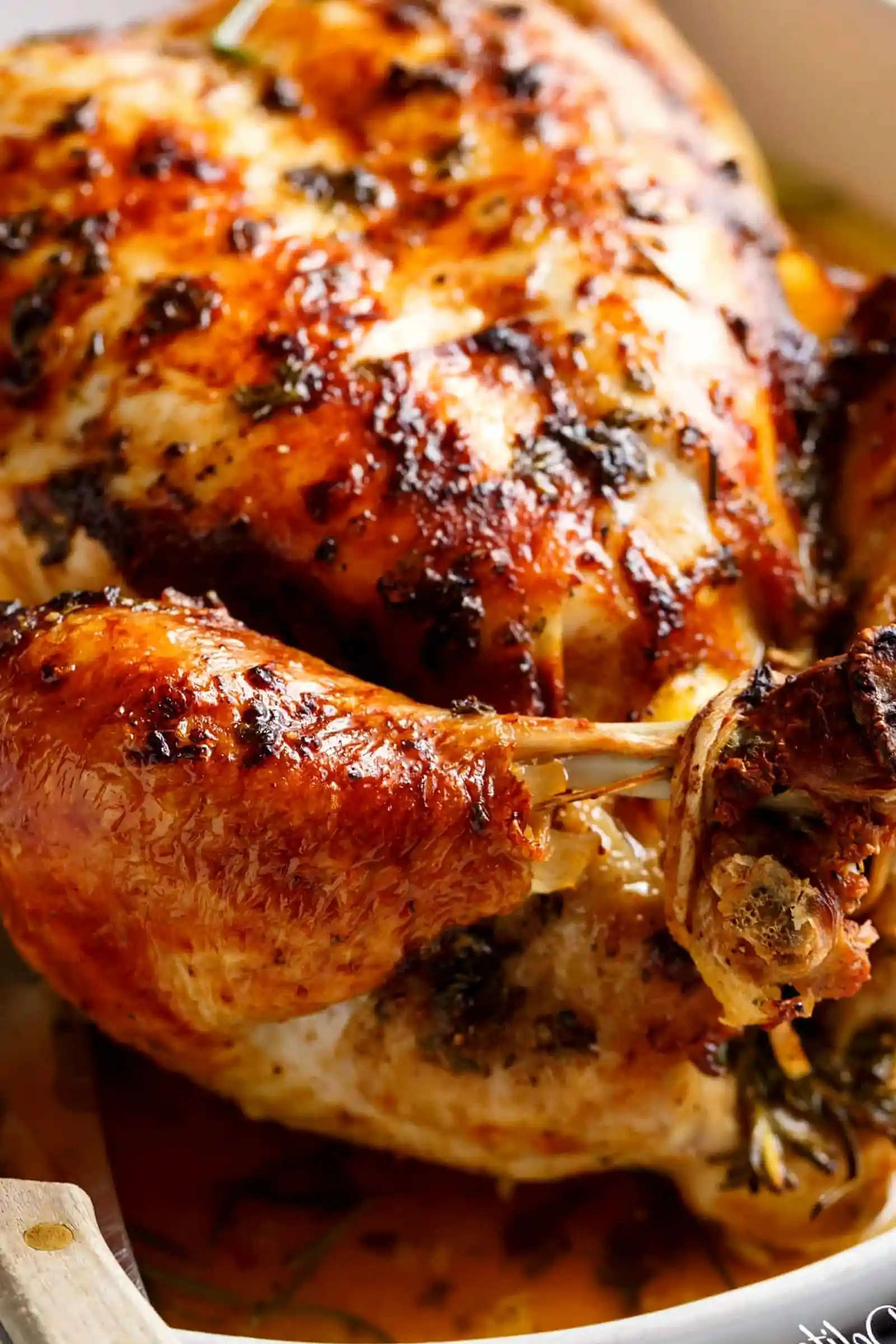
Achieve a restaurant-quality roast chicken with an exceptionally golden, crunchy exterior and tender, juicy meat. This method focuses on infusing a garlic-herb butter blend directly under the skin for maximum flavor penetration.
List of ingredients
- 4 pound whole chicken – room temperature, with giblets and neck removed from the cavity
- 1/4 cup unsalted butter – melted for easy application
- 3 tablespoons olive oil – adds heat stability for the skin
- 1/4 cup chicken broth – replaces wine to maintain moisture and flavor
- 1 lemon – halved for juice and cavity stuffing
- 1 pinch salt – adjusted to taste
- 1 pinch pepper – adjusted to taste
- 2 tablespoons fresh parsley – finely chopped
- 4 cloves garlic – minced for the exterior rub
- 1 head garlic – peeled and cut in half horizontally through the middle
- 3 fresh rosemary sprigs – whole for aromatic stuffing
step-by-step instructions
- Prepare Oven and Pan: Preheat your oven to 430°F (220°C), or 400°F (200°C) if using a fan-forced oven. Line a large baking tray with aluminum foil or lightly grease a roasting pan to prevent sticking.
- Prep the Bird: Discard the neck and any giblets found inside the cavity. Remove any excess fat deposits or leftover feathers from the skin. Use paper towels to pat the entire surface of the chicken completely dry.
- Apply Liquid Seasoning: Pour the olive oil, melted butter, chicken broth, and the juice from half of the lemon over the chicken. Ensure the liquid gets under the skin and inside the cavity. Season the exterior and the interior of the cavity liberally with salt and pepper, then sprinkle the chopped parsley over the skin.
- Add Garlic Rub: Rub the minced garlic over the entire bird. Massage the garlic and the existing liquid mixture together, ensuring it is worked thoroughly under the breast skin.
- Stuff and Truss: Place the halved head of garlic, the whole rosemary sprigs, and the squeezed lemon half into the chicken cavity. Use kitchen string to tie the legs together securely.
- Initial Roast: Place the chicken breast-side up in the prepared pan. Roast for 1 hour and 15 to 20 minutes. Baste the bird with the pan juices halfway through the cooking time. The chicken is ready when the juices run clear when the thickest part of the thigh is pierced with a skewer.
- Final Crisp: Baste the chicken one last time. Turn on the broiler and cook for an additional 2 to 3 minutes until the skin is deep golden brown.
- Rest and Serve: Remove the pan from the oven and cover the chicken loosely with foil. Allow the meat to stand for 10 minutes. Serve drizzled with pan juices and the remaining lemon half cut into wedges.
Techniques for Maximum Crispiness
Ensure the Skin is Completely Dry
Moisture is the enemy of a crispy crust. When the skin is damp, the oven’s heat must first evaporate that water before it can begin to brown the skin, which often leads to steamed, rubbery skin. Patting the bird dry with paper towels ensures the butter and oil sear immediately upon contact with the heat.
Use a High Initial Temperature
Starting the roast at 430°F provides an immediate blast of heat that renders the fat under the skin quickly. This high heat creates the initial Maillard reaction, which is responsible for the golden color and savory flavor. If the temperature is too low from the start, the skin takes longer to crisp, which can result in overcooked breast meat.
The Importance of the Final Broil
While the roasting process cooks the meat through, the broiler provides intense top-down heat. This final step targets the skin specifically, creating a shatteringly crisp texture without overcooking the interior. Keep a close eye on the bird during these few minutes to prevent the skin from charring.
Ingredient Substitutions and Alternatives
Replacing Butter with Plant-Based Fats
If you prefer not to use dairy butter, ghee or a high-quality plant-based butter alternative works well. Ghee is particularly effective because it has a higher smoke point than butter, allowing for a very high-heat roast without burning. Olive oil can also be used, though it lacks the creamy richness provided by butter.
Alternative Herb Combinations
While rosemary and parsley are classic, you can swap them for fresh thyme, sage, or oregano. Thyme and sage pair exceptionally well with the garlic and lemon profile. If using dried herbs instead of fresh, reduce the quantity by half, as dried herbs have a more concentrated flavor profile.
Substituting Fresh Garlic
Freshly minced garlic is ideal for deep flavor, but garlic powder can be used in a pinch. When using powder, mix it directly into the melted butter before applying it to the skin. Be aware that powder can burn more easily under the broiler, so monitor the skin color closely.
Liquid Variations for the Pan
Chicken broth is an excellent standard substitute for white wine. For a slightly different flavor profile, you can use a splash of apple cider vinegar or a small amount of white grape juice. These additions provide the necessary acidity to balance the richness of the butter.
Optimizing the Roasting Process
Adjusting Heat for Larger Birds
If you are roasting a chicken larger than 4 pounds, you must adjust the temperature to prevent the outside from burning before the inside is safe. Roast at 430°F for the first hour, then lower the oven to 325°F (160°C). Baste the bird, cover it with foil, and continue roasting for another 45 to 60 minutes until the internal temperature reaches 165°F.
The Role of Kitchen Twine
Tying the legs together, known as trussing, keeps the chicken in a compact shape. This prevents the legs and wings from burning and ensures the breast meat cooks more evenly. A compact bird also allows the heat to circulate more effectively around the meat.
Selecting the Best Roasting Pan
Use a roasting pan with low sides or a cast-iron skillet. Pans with very high walls can trap steam around the bird, which prevents the skin from crisping. A shallow pan allows moisture to escape and heat to hit the sides of the chicken more effectively.
Using a Digital Meat Thermometer
Relying on time alone can be risky because oven temperatures vary and birds differ in size. Insert a digital thermometer into the thickest part of the thigh, ensuring it does not hit the bone. The chicken is safely cooked when it reaches an internal temperature of 165°F (75°C).
Serving and Pairing Ideas
Complementary Potato Side Dishes
The pan drippings from this chicken are rich in garlic and herb flavors, making them perfect for potatoes. Garlic roasted potatoes, creamy mashed potatoes, or crispy baked wedges can be cooked in the same oven. Drizzling the leftover pan juices over the potatoes enhances the entire meal.
Fresh Vegetable Pairings
Balance the richness of the butter with bright, green vegetables. Roasted carrots with honey, grilled asparagus, or steamed green beans provide a necessary color and nutritional contrast. These vegetables can be tossed in a bit of the remaining garlic butter before roasting.
Starter and Appetizer Suggestions
Since the chicken requires a 10-minute resting period, this is the perfect time to serve a light starter. A fresh garden salad with a lemon vinaigrette or spicy deviled eggs work well. These options cleanse the palate before the main course.
Storage, Reheating, and Make-Ahead Advice
Storing Leftover Chicken
Remove the leftover meat from the bone before storing it to save space and make reheating easier. Place the meat in an airtight container and refrigerate for up to four days. This pre-cooked protein is excellent for adding to salads, sandwiches, or wraps the following day.
Freezing Instructions
Cooked roast chicken freezes remarkably well. Shred or slice the meat and place it in a heavy-duty freezer bag, pressing out as much air as possible to prevent freezer burn. Store for up to three months and thaw in the refrigerator overnight before use.
Best Methods for Reheating
To prevent the meat from drying out, avoid the microwave if possible. Instead, place the chicken in a baking dish with a splash of chicken broth, cover tightly with foil, and warm in the oven at 325°F (160°C). For a quicker method, warm the meat in a skillet over medium-low heat with a teaspoon of olive oil.
Preparing the Bird in Advance
You can prepare the garlic herb butter a few days ahead of time and store it in the refrigerator. For even more flavor, you can rub the butter mixture onto the raw chicken the morning of the meal. Keep the prepped bird covered in the fridge, but let it sit at room temperature for 30 minutes before roasting to ensure even cooking.
Troubleshooting Common Issues
Why is the Skin Not Crispy?
If the skin remains soft, it is usually due to excess moisture or a roasting pan that is too deep. Ensure the chicken is patted dry and that the pan allows steam to escape. If the bird is done but the skin isn’t crisp, increase the broiler time by one-minute increments.
Preventing Dry Breast Meat
Dry breasts usually occur when the chicken is overcooked or not rested. Using a meat thermometer prevents overcooking, while resting allows the juices to redistribute. Massaging butter under the skin also creates a protective barrier that keeps the white meat moist.
Handling Uneven Cooking
If the legs are undercooked while the breast is done, you can use a small piece of foil to cover the breast meat. This shields the white meat from direct heat, allowing the darker meat in the thighs and legs to finish cooking without drying out the rest of the bird.
Frequently Asked Questions
Do You Cover A Whole Chicken When Roasting?
No, the chicken should be roasted uncovered. This allows the dry heat of the oven to interact directly with the skin, which is essential for achieving a crispy texture. Only cover the bird with foil during the resting phase.
Should You Wash Chicken Before Cooking?
You should not wash raw chicken in the sink. Rinsing the meat can splash bacteria across your kitchen surfaces and utensils. The high heat of the oven effectively destroys all bacteria during the cooking process.
Do You Roast A Chicken Breast Side Up Or Down?
This recipe uses the breast-side up method. This ensures the breast skin gets the most direct heat and develops a golden crunch. While some roast breast-side down initially, flipping a heavy bird can be messy and may tear the skin.
Why Do You Need To Let Chicken Rest?
Resting allows the muscle fibers to relax and the juices to redistribute throughout the meat. If you carve the chicken immediately, the juices will run out onto the board, leaving the meat dry. Ten to fifteen minutes of resting ensures maximum juiciness in every slice.
Print
Garlic Herb Butter Roasted Chicken with Crispy Skin
- Total Time: 85 minutes
- Yield: 4 servings 1x
- Diet: General
Description
Garlic Herb Butter Roast Chicken packed with unbelievable flavours, crispy skin, and so juicy! Nothing beats an easy to make and even easier to prepare roast chook!
Ingredients
- 4 pound whole chicken (at room temperature giblets and neck removed from cavity)
- 1/4 cup unsalted butter (melted)
- 3 tablespoons olive oil
- 1/4 cup chicken broth
- 1 lemon (halved)
- 1 pinch salt (to taste)
- 1 pinch pepper (to taste)
- 2 tablespoons fresh parsley (chopped)
- 4 cloves garlic (minced)
- 1 head garlic (head of garlic roughly peeled and cut in half horizontally through the middle, crosswise)
- 3 fresh rosemary (whole sprigs)
Instructions
- Preheat: Preheat oven to 430°F | 220°C (400°F or 200°C fan forced). Line a baking tray with foil, or lightly grease a roasting pan.
- Prep: Discard neck from inside the cavity and remove any excess fat and leftover feathers. Pat dry with paper towels.
- Season: Pour the olive oil, melted butter, chicken broth and the juice of half a lemon over the chicken, under the skin and inside the cavity. Season chicken liberally on the outside and inside the cavity with salt and pepper. Sprinkle over the parsley.
- Garlic Rub: Rub the minced garlic over the chicken, mixing all ingredients together over the chicken and under the skin.
- Stuff: Stuff the garlic head into the chicken cavity along with the rosemary sprigs and the squeezed lemon halve. Tie legs together with kitchen string.
- Roast: Place breast-side up into baking tray or roasting pan. Roast for 1 hour and 15-20 minutes, basting half way through cooking time, until juices run clear when chicken thigh is pierced with a skewer.
- Broil: Baste again, then broil for a further 2-3 minutes, until golden.
- Rest: Remove from the oven, cover with foil and allow to stand for 10 minutes before serving. Serve, drizzled with pan juices and remaining lemon half cut into wedges or slices.
Notes
Store leftover meat in an airtight container in the fridge for up to four days or freeze for up to three months. Reheat gently in the oven at 325°F (160°C) with a splash of chicken broth or in a skillet over medium-low heat.
- Prep Time: 10 minutes
- Cook Time: 75 minutes
- Category: Dinner
- Method: Roasting
- Cuisine: American
Nutrition
- Serving Size: 1 serving
- Calories: 693 kcal
- Sugar: 0.4 g
- Sodium: 194 mg
- Fat: 55 g
- Saturated Fat: 18 g
- Unsaturated Fat: 33 g
- Trans Fat: 1 g
- Carbohydrates: 4 g
- Fiber: 1 g
- Protein: 41 g
- Cholesterol: 194 mg