This low-carb dinner features tender chicken breasts filled with fresh asparagus, melted mozzarella, and savory sun-dried tomatoes. It is a high-protein meal that is simple to prepare and perfect for a healthy weeknight dinner.
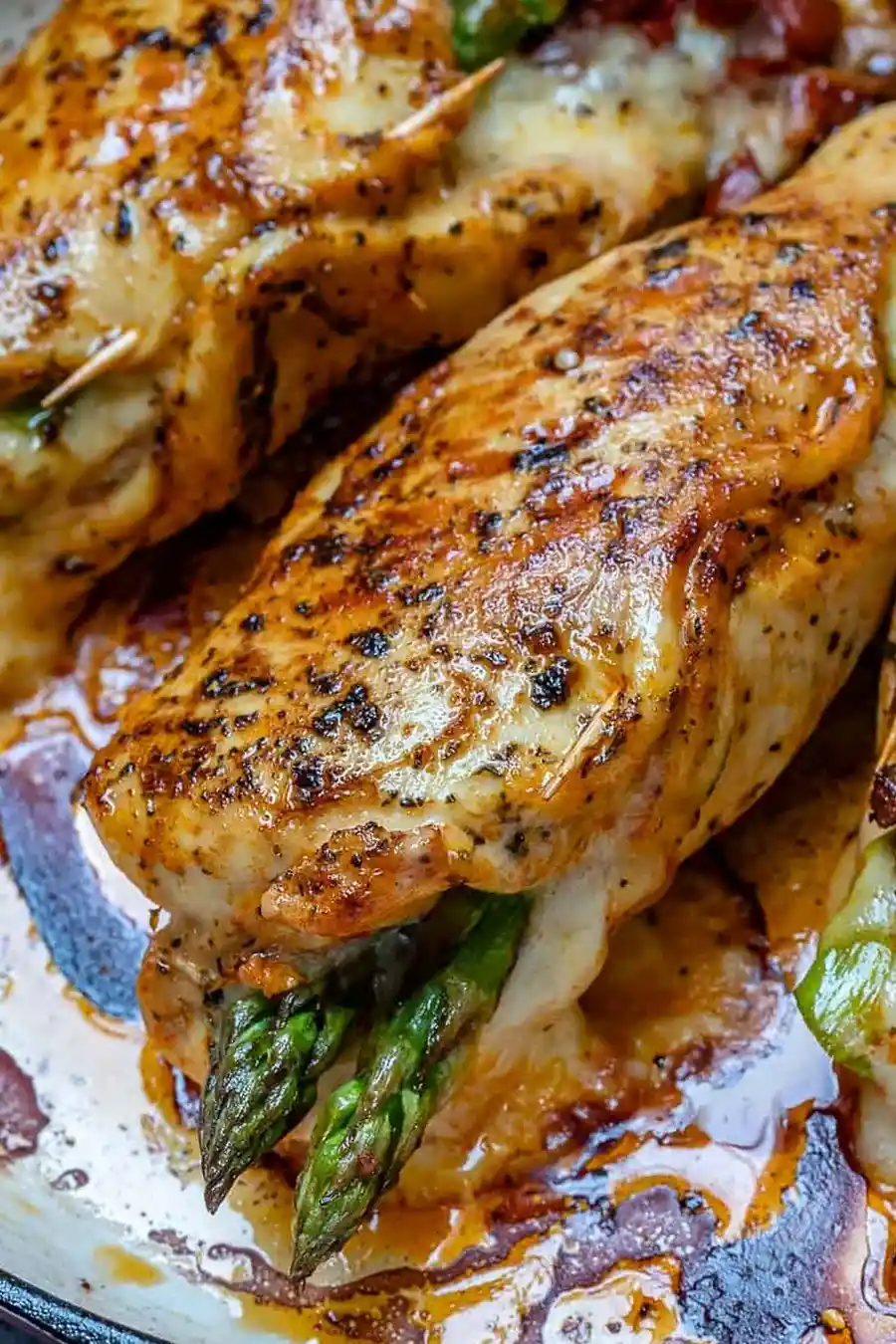
List of ingredients
- 4 skinless boneless chicken breasts (about 1 1/2 lb.) – use evenly sized breasts for uniform cooking.
- 1 teaspoon Italian seasoning mix – provides a blend of herbs.
- 1 teaspoon Garlic Powder – adds a savory depth.
- 1 teaspoon Smoked Paprika – adds a subtle smokiness and color.
- Sea salt and pepper – to taste.
- 12 asparagus stalks (end trimmed) – use medium-thickness stalks.
- 1 ounce sun-dried tomatoes (chopped) – adds concentrated tartness.
- 4 slices mozzarella cheese – helps bind the stuffing.
- 1 tablespoon olive oil – for searing the meat.
step-by-step instructions
- Prepare Oven: Preheat your oven to 400 F.
- Season Meat: Place the 4 skinless boneless chicken breasts on a clean chopping board and sprinkle with 1 teaspoon Italian seasoning mix, 1 teaspoon garlic powder, 1 teaspoon smoked paprika, sea salt, and pepper.
- Create Pockets: Start cutting each chicken breast once lengthwise to create the pockets. Be careful not to cut all the way through the opposite side.
- Stuff Chicken: Trim and wash the 12 asparagus stalks. Add three sprigs of asparagus and a couple of pieces of chopped sun-dried tomatoes to one of the 4 slices of mozzarella cheese, then roll the cheese to hold the ingredients inside. Stuff this roll into the chicken breast pocket.
- Seal and Sear: Close the pocket securely with a toothpick. Heat 1 tablespoon of olive oil in a large cast-iron skillet over medium-high heat. Add the chicken and sear until nicely golden brown, about 3-5 minutes per side.
- Bake: Transfer the skillet or move the chicken to a baking dish and bake for 15-20 minutes, or until the chicken is cooked through and no longer pink on the inside.
Cooking Techniques for Best Results
Searing with a Cast Iron Skillet
Using a cast-iron skillet is recommended because it retains heat more efficiently than stainless steel or non-stick pans. This ensures a consistent golden-brown crust on the chicken, which adds a deep layer of flavor known as the Maillard reaction. Make sure the oil is shimmering before adding the meat to prevent sticking.
Controlling Oven Temperature
Baking at 400 F allows the chicken to finish cooking quickly without drying out the exterior. If your oven runs hot, check the internal temperature a few minutes early. Ensuring the oven is fully preheated prevents the chicken from spending too much time in a lukewarm environment, which can lead to a rubbery texture.
Using a Digital Meat Thermometer
The most accurate way to prevent overcooking is by using a digital probe thermometer. Insert the probe into the thickest part of the chicken breast, making sure it does not touch the pan. Remove the chicken from the heat once it reaches an internal temperature of 165 F.
Allowing the Meat to Rest
Let the stuffed chicken rest for 5 to 10 minutes before slicing or serving. This allows the juices to redistribute throughout the meat rather than running out onto the plate. Resting also ensures the melted cheese sets slightly, keeping the stuffing intact when you cut into it.
Ingredient Substitutions and Alternatives
Alternative Cheese Options
If you prefer a stronger flavor, replace mozzarella with provolone or Swiss cheese. For a sharper profile, a sharp white cheddar can be used, although it may oil off more during the baking process. For a dairy-free version, use a plant-based mozzarella alternative that is designed for melting.
Vegetable Variations for Stuffing
If asparagus is unavailable, thin green beans or julienned zucchini strips work well. Small broccoli florets can also be used, though they may require slightly more cooking time. Ensure any substitute vegetable is trimmed to a similar length as the original asparagus to fit the pocket.
Different Oil Choices for Searing
While olive oil is standard, avocado oil is an excellent substitute due to its higher smoke point, which prevents the oil from burning at medium-high heat. Grapeseed oil is another neutral option that works well for high-heat searing without altering the flavor of the seasonings.
Seasoning Adjustments
For a different flavor profile, replace the Italian seasoning with a blend of dried oregano and thyme. You can also add a pinch of cayenne pepper to the rub if you prefer a spicy kick. Ensure you use smoked paprika rather than sweet paprika to maintain the depth of the flavor.
Meal Prep and Storage Guidance
Refrigerator Storage
Store leftover stuffed chicken in an airtight container in the refrigerator. It will remain fresh and safe to eat for 4 to 5 days. To prevent the meat from drying out during storage, you can place a damp paper towel over the chicken before sealing the lid.
Freezing Cooked Chicken
Cooked stuffed chicken can be frozen for up to 3 months. Wrap each piece individually in foil and then place them in a heavy-duty freezer bag to prevent freezer burn. Note that the texture of the asparagus may soften slightly after the freezing and thawing process.
Safe Thawing Methods
The best way to thaw frozen chicken is to move it from the freezer to the refrigerator 24 hours before you plan to eat it. Avoid thawing at room temperature on the counter to prevent bacterial growth. For a faster method, use the defrost setting on your microwave, though this may affect the texture of the cheese.
Optimal Reheating Methods
Oven Reheating for Texture
To maintain the golden crust, reheat the chicken in the oven at 350 F. Place the pieces in a baking dish and add a tablespoon of water or chicken broth to the bottom to create steam. Cover with foil and heat for 10 to 15 minutes until warmed through.
Microwave Reheating for Speed
For a quicker option, use the microwave on medium power to avoid overcooking the meat. Cover the chicken with a damp paper towel to lock in moisture. Heat in 1-minute intervals, checking the internal temperature until it is hot.
Air Fryer Refresh
An air fryer is ideal for restoring the crispness of the seared exterior. Place the chicken in the basket at 350 F for 3 to 5 minutes. This method is faster than the oven and prevents the meat from becoming soggy.
Serving Ideas and Pairings
Low Carb Side Dishes
Pair this dish with a fresh avocado and tomato salad for a keto-friendly meal. Sautéed spinach with lemon or roasted cauliflower are also excellent choices that complement the asparagus filling. A side of garlic-roasted mushrooms adds an earthy element to the plate.
Hearty Grain Accompaniments
For a more filling meal, serve the chicken alongside a portion of quinoa or brown rice. Wild rice is particularly good as its nutty flavor pairs well with the sun-dried tomatoes. You can also serve it over a bed of mashed cauliflower or Boursin mashed potatoes.
Fresh Vegetable Pairings
Roasted carrots with a honey glaze or steamed broccoli provide a bright contrast to the rich cheese and chicken. A simple green salad with a vinaigrette helps cut through the richness of the mozzarella. Grilled zucchini slices are another great option for a cohesive vegetable-forward meal.
Common Troubleshooting
Preventing Stuffing Leakage
If the cheese and vegetables leak out during cooking, use two or three toothpicks per breast instead of one. Ensure the toothpicks are placed strategically along the seam. Using a low-moisture mozzarella cheese can also help the stuffing stay contained.
Handling Asparagus Texture
If the asparagus remains too crunchy, ensure you are trimming the woody ends off the stalks. You can also blanch the asparagus for 60 seconds in boiling water before stuffing them into the chicken. This ensures the vegetable is perfectly tender by the time the meat is cooked.
Avoiding Dry Chicken Breast
Chicken breasts vary in size, and larger ones can dry out if left in the oven too long. Always use a meat thermometer to pull the chicken at exactly 165 F. Avoid using an excessively high oven temperature, which can burn the outside while leaving the inside raw.
Correcting a Lack of Color
If the chicken looks pale after searing, the pan may not have been hot enough. Wait until the oil is shimmering and slightly smoking before adding the meat. Avoid crowding the pan, as adding too many pieces at once lowers the surface temperature and causes the meat to steam instead of sear.
Air Fryer Instructions
Temperature and Timing
To make this recipe in an air fryer, set the temperature to 360 F. After seasoning and stuffing the chicken, spray the outside with a small amount of cooking oil to encourage browning. Air fry for 18 to 22 minutes, depending on the thickness of the breasts.
Air Fryer Preparation Tips
Place the chicken breasts in a single layer, ensuring they do not touch each other. This allows the hot air to circulate evenly around the meat for a consistent cook. Check the internal temperature at the 18-minute mark to avoid overcooking.
Frequently Asked Questions
How do you make chicken not chewy?
Avoid overcooking the meat, as high internal temperatures cause the muscle fibers to tighten and become chewy. Use a meat thermometer to ensure you stop cooking at 165 F. Resting the meat after cooking also helps maintain a tender texture.
How long should I cook chicken?
In the oven at 400 F, this stuffed chicken typically takes 15 to 20 minutes after searing. If you are grilling, it usually takes 6 to 8 minutes per side over direct heat. Always rely on the internal temperature rather than a timer alone.
Does chicken cook faster covered or uncovered?
Chicken cooks slightly faster when covered because the cover traps steam and heat. However, covering the meat prevents the exterior from browning. For this recipe, sear first and then bake uncovered to achieve the best color and texture.
How do you cut breasts for stuffing?
Lay the chicken breast flat on a cutting board with the thickest part facing up. Use a sharp knife to slice lengthwise into the side of the breast, creating a pocket. Be careful not to slice all the way through to the other side.
What is the best way to seal stuffed chicken?
The most effective method is using wooden toothpicks to pin the edges of the pocket together. Place 2 to 3 toothpicks along the opening to ensure the cheese and asparagus do not slide out during the searing and baking process.
Print
Asparagus Stuffed Chicken Breast
- Total Time: 40 minutes
- Yield: 4 servings 1x
- Diet: Keto
Description
Easy to make chicken recipe stuffed with asparagus, cheese, and sun-dried tomatoes.
Ingredients
- 4 skinless boneless chicken breasts (about 1 1/2 lb.)
- 1 teaspoon Italian seasoning mix
- 1 teaspoon Garlic Powder
- 1 teaspoon Smoked Paprika
- Sea salt and pepper
- 12 Asparagus stalks (end trimmed)
- 1 ounce Sun-dried Tomatoes (chopped)
- 4 slices Mozzarella Cheese
- 1 tablespoon Olive Oil
Instructions
- Preheat: Preheat your oven to 400 F.
- Season: Place the 4 Skinless boneless chicken breasts on a clean chopping board and sprinkle with 1 teaspoon Italian seasoning mix, 1 teaspoon Garlic Powder, 1 teaspoon Smoked Paprika, Sea salt and pepper.
- Cut: Start cutting each chicken breast one lengthwise to create the pockets. Be careful not to cut all the way through.
- Stuff: Trim and wash the 12 Asparagus stalks. Add three sprigs of asparagus and a couple of pieces of 1 ounce Sun-dried Tomatoes to one of the 4 slices Mozzarella Cheese, then roll it to hold them inside. Stuff the chicken breasts with it.
- Seal and Heat: Close the pocket with a toothpick. Heat 1 tablespoon Olive Oil in a large and cast-iron skillet over medium-high heat.
- Sear: Add in the chicken and sear it until nicely golden brown, about 3-5 minutes per side.
- Bake: Bake the chicken for 15-20 minutes, or until it is cooked through and no longer pink in the inside.
Notes
You may substitute Mozzarella cheese with provolone. You can use other vegetables like broccoli or zucchini if you do not like asparagus. Any cooking oil of choice will work.
- Prep Time: 10 minutes
- Cook Time: 30 minutes
- Category: Main Course
- Method: Searing and Baking
- Cuisine: American
Nutrition
- Serving Size: 1 stuffed chicken breast
- Calories: 277 kcal
- Sugar: 4 g
- Sodium: 328 mg
- Fat: 13 g
- Saturated Fat: 5 g
- Unsaturated Fat: 8 g
- Trans Fat: 0 g
- Carbohydrates: 7 g
- Fiber: 2 g
- Protein: 33 g
- Cholesterol: 95 mg