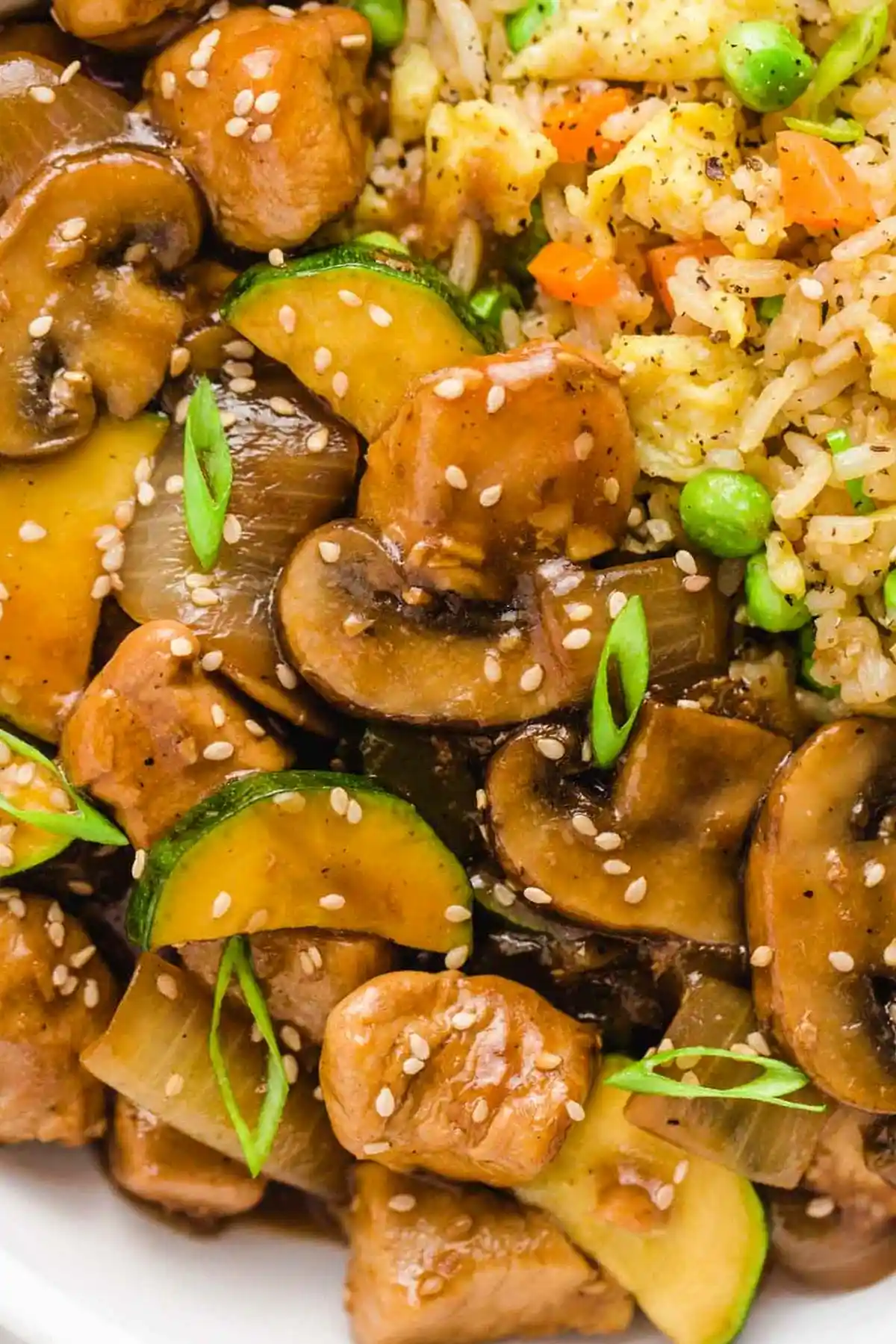
This Instant Pot Hibachi Chicken delivers the savory, charred flavors of a Japanese steakhouse in a fraction of the time. It is a convenient one-pot meal that combines tender chicken and fresh vegetables in a glossy soy-ginger glaze.
List of ingredients
- 1/4 cup low-sodium soy sauce – provides the base salty flavor.
- 1/4 cup water – balances the saltiness of the soy sauce.
- 2 tablespoons wine vinegar or apple cider vinegar – adds necessary acidity.
- 1 tablespoon fresh ginger, grated – provides a zesty, aromatic punch.
- 2 cloves garlic, minced – adds depth and savory notes.
- 1 tablespoon granulated sugar, honey, or maple syrup – balances the salt and acid.
- 1/4 teaspoon ground white pepper or black pepper – adds a mild heat.
- 1 1/2 pounds (700 grams) chicken breasts, cut into bite-size pieces – the primary protein.
- 2 zucchini, sliced into 1/4-inch rounds then halved – adds freshness and texture.
- 1 onion, sliced or quartered – provides a sweet, savory base.
- 6 mushrooms, sliced into 1/4-inch slices – adds an earthy, umami quality.
- Green onion, chopped – for a fresh, colorful garnish.
- Toasted sesame seeds – for a nutty finish.
- 1 tablespoon cornstarch mixed with 1 tablespoon water – used to thicken the sauce.
step-by-step instructions
- Prepare the sauce: Add the low-sodium soy sauce, water, vinegar, grated ginger, minced garlic, sugar, and pepper directly into the Instant Pot.
- Combine ingredients: Place the cubed chicken, sliced onion, zucchini, and mushrooms on top of the sauce mixture.
- Pressure cook: Secure the lid and set the steam vent to the SEALING position. Select the PRESSURE COOK or MANUAL setting and set the timer for 3 minutes on high pressure.
- Release pressure: Once the cooking cycle is complete, immediately perform a quick release of the steam.
- Thicken the sauce: Carefully remove the vegetables if you prefer them firmer. Press the SAUTE button and let the sauce come to a gentle simmer, then whisk in the cornstarch slurry until the sauce thickens.
- Final assembly: Return the vegetables to the pot and stir to coat everything in the glossy sauce.
- Serve: Spoon the chicken and vegetables over steamed rice and garnish with chopped green onion and toasted sesame seeds.
Optimizing Vegetable Texture
Preventing Mushy Zucchini with Post-Pressure Steaming
Pressure cooking zucchini for 3 minutes can make it very tender, which some find too soft. To keep a bit of crunch, omit the zucchini from the initial pressure cooking phase. Instead, add the raw slices to the pot after the chicken is done and let them steam in the residual heat for a few minutes.
Using Separate Steaming for Maximum Crispness
For those who prefer a traditional hibachi snap, steam the zucchini in a separate steamer basket. Mix the steamed zucchini into the chicken and sauce just before serving. This ensures the vegetable retains its bright green color and firm structure.
Slicing Mushrooms for Uniform Cooking
Cut your mushrooms into consistent 1/4-inch slices to ensure they cook evenly. Slices that are too thin may disappear into the sauce, while those too thick may remain rubbery. Uniformity helps them absorb the soy-ginger glaze without losing their shape.
Sauce Customization and Balance
Using Low-Sodium Soy Sauce to Control Salt
It is important to use low-sodium soy sauce to prevent the dish from becoming overly salty. Because the liquid reduces slightly during the sauteing process, standard soy sauce can concentrate and overpower the other ingredients. If the sauce is still too salty, add an extra tablespoon of water.
Adjusting Sweetness with Natural Alternatives
While granulated sugar is traditional, honey or maple syrup can be used for a richer flavor profile. Honey adds a floral note that pairs well with ginger, whereas maple syrup provides a deeper, woody sweetness. These alternatives also help the sauce thicken more naturally due to their viscosity.
Balancing Acidity with Different Vinegars
Wine vinegar provides a sharp, traditional Japanese-style tang that cuts through the richness of the chicken. Apple cider vinegar is a great substitute that offers a slightly fruitier undertone. Ensure you do not exceed the 2-tablespoon limit to avoid making the sauce too tart.
Cooking Equipment and Techniques
Utilizing the Saute Function for Sauce Thickness
The SAUTE setting is essential for activating the cornstarch slurry. Cornstarch requires heat to gelatinize and thicken the liquid into a glossy glaze. Without this step, the sauce will remain watery and will not cling to the chicken and vegetables.
Managing the Quick Release Process Safely
Always use a kitchen towel or oven mitt when releasing the steam to protect your hand from the heat. Point the steam vent away from your face and other people to avoid burns. Quick releasing is necessary here to prevent the chicken breasts from overcooking and becoming tough.
Preventing the Instant Pot Burn Notice
To avoid the ‘Burn’ error, ensure the sauce ingredients are at the bottom and the chicken and vegetables are layered on top. Do not stir the ingredients vigorously before pressure cooking, as this can cause thick sugars or starches to settle and scorch on the bottom of the inner pot.
Serving and Pairing Suggestions
Preparing Perfect Jasmine Rice
Long-grain jasmine rice is the ideal base for this dish due to its aromatic scent and ability to absorb sauces. Rinse the rice under cold water until the water runs clear to remove excess starch. This prevents the rice from becoming gummy and ensures distinct, fluffy grains.
Creating Hibachi-Style Fried Rice
For a more authentic experience, serve the chicken over fried rice cooked with butter, soy sauce, and peas. Use day-old chilled rice to ensure the grains fry properly without clumping. This adds a buttery richness that complements the soy-ginger glaze.
Adding a Side of Steamed Cabbage
To mimic a full hibachi platter, serve the meal with a side of steamed or sautéed cabbage. Sauté sliced cabbage with a small amount of butter and salt until tender-crisp. This adds a mild, earthy flavor and extra nutrients to the meal.
Storage and Reheating Guidelines
Refrigerating Leftovers in Airtight Containers
Store the hibachi chicken in an airtight glass container to keep the moisture locked in. This dish stays fresh in the refrigerator for up to 3 to 4 days. Keep the rice in a separate container to prevent it from absorbing all the sauce and becoming mushy.
Reheating Using the Microwave Method
When reheating in the microwave, add a teaspoon of water to the chicken and vegetables to restore the sauce’s consistency. Heat on medium power in 1-minute intervals, stirring in between. This prevents the chicken from rubberizing due to excessive heat.
Using a Stovetop for Better Texture
For the best results, reheat the chicken in a non-stick skillet over medium heat. Add a splash of water or chicken broth to loosen the thickened sauce. This method allows you to slightly sear the edges of the chicken again, restoring some of the hibachi-style char.
Freezing for Long-Term Storage
The chicken and sauce freeze well, but the zucchini and mushrooms may lose their texture upon thawing. If you plan to freeze the meal, undercook the vegetables slightly during the initial process. Thaw overnight in the refrigerator before reheating on the stove.
Make-Ahead Strategies
Prepping Ingredients for Faster Cooking
You can chop the onion, mushrooms, and zucchini up to 24 hours in advance. Store them in separate containers or bags in the refrigerator. This reduces the prep time to nearly zero on the day you decide to cook the meal.
Creating a Pre-Mixed Sauce Base
Whisk together the soy sauce, water, vinegar, ginger, garlic, and sugar in a jar. Store the sauce in the fridge and pour it into the Instant Pot right before adding the meat. This ensures the flavors are well-blended and saves time during the dinner rush.
Marinating the Chicken for Extra Flavor
While not required, you can toss the chicken pieces in a portion of the sauce for 30 minutes before pressure cooking. This allows the ginger and garlic to penetrate deeper into the meat. Ensure you add the remaining sauce to the pot to maintain the correct liquid ratio.
Troubleshooting Common Issues
Fixing a Sauce That Is Too Thin
If the sauce is still too watery after the first addition of cornstarch slurry, mix another teaspoon of cornstarch with a teaspoon of water. Stir it into the simmering sauce on the SAUTE setting and cook for one more minute. The sauce should coat the back of a spoon.
Preventing Dry Chicken Breast
Chicken breasts can dry out quickly if overcooked. Stick strictly to the 3-minute high-pressure timing and perform the quick release immediately. Using chicken thighs instead of breasts is another way to ensure the meat remains juicy, though they may require 1-2 extra minutes of cooking.
Reducing Excessive Liquid in the Pot
If you find there is too much liquid after pressure cooking, extend the SAUTE time before adding the cornstarch. Allowing more water to evaporate naturally will concentrate the flavors. Be careful not to over-reduce, or the sauce may become too salty.
Frequently Asked Questions
Can I use chicken thighs instead of breasts?
Yes, you can use boneless, skinless chicken thighs. They are more forgiving and stay juicier than breasts. Increase the pressure cooking time to 5 minutes to ensure they are fully cooked through.
Is it possible to make this recipe in a slow cooker?
Yes, but the timing and liquid ratios must change. Cook on Low for 6-8 hours or High for 3-4 hours. Add the zucchini and mushrooms during the last hour of cooking to prevent them from becoming mushy.
What is the best substitute for wine vinegar?
Apple cider vinegar is the closest substitute in terms of flavor and acidity. If neither is available, a mixture of white vinegar and a pinch of sugar can work, although the flavor will be slightly more sharp.
Can I add more vegetables to the pot?
You can add broccoli florets, carrots, or snap peas. Since these have different densities, add carrots at the start and broccoli or snap peas during the thickening phase on the SAUTE setting to avoid overcooking them.
Print
Instant Pot Hibachi Chicken
- Total Time: 20 minutes
- Yield: 4 servings 1x
- Diet: General
Description
Dump and start Instant Pot hibachi chicken with mushrooms and zucchini cooked in a delicious soy sauce, and served over rice. This easy IP dinner is ready in just 20 minutes from start to finish!
Ingredients
- 1/4 cup low-sodium soy sauce
- 1/4 cup water
- 2 tablespoons apple cider vinegar
- 1 tablespoon fresh ginger, grated
- 2 cloves garlic, minced
- 1 tablespoon granulated sugar
- 1/4 teaspoon ground white pepper
- 1 1/2 pounds chicken breasts, cut into bite-size pieces
- 2 zucchini, sliced into 1/4-inch rounds then halved
- 1 onion, sliced or quartered
- 6 mushrooms, sliced into 1/4-inch slices
- green onion, chopped
- toasted sesame seeds
- 1 tablespoon cornstarch
- 1 tablespoon water
Instructions
- Sauce: Add the sauce ingredients to the Instant Pot: soy sauce, water, vinegar, ginger, garlic, sugar, and white or black ground pepper.
- Combine: Add the chicken, onion, zucchini, and mushrooms.
- Pressure Cook: Secure the lid and set the vent to SEALING. Select the PRESSURE COOK/MANUAL setting and set the cooking time for 3 minutes at high pressure.
- Release: When the cooking program ends, quickly release the steam.
- Thicken: Press on SAUTE, and once the sauce comes to a gentle simmer, add the cornstarch mixed with water. Whisk until the sauce is thickened.
- Serve: Serve over rice, and garnish with sesame seeds and chopped green onion.
Notes
If you prefer firmer zucchini, do not pressure cook it; instead, add it to the pot after pressure cooking the other ingredients and thickening the sauce, then cover with the lid and steam for a few minutes. Using low-sodium soy sauce prevents the dish from becoming too salty.
- Prep Time: 5 minutes
- Cook Time: 15 minutes
- Category: Main Course
- Method: Pressure Cooking
- Cuisine: Japanese
Nutrition
- Serving Size: 1 serving
- Calories: 448 kcal
- Sugar: 8 g
- Sodium: 1755 mg
- Fat: 27 g
- Saturated Fat: 8 g
- Unsaturated Fat: 19 g
- Trans Fat: 0 g
- Carbohydrates: 12 g
- Fiber: 2 g
- Protein: 38 g
- Cholesterol: 133 mg