This quick chicken stir-fry combines tender protein with fresh vegetables in a savory-sweet glaze. It is a balanced meal that can be prepared in about 30 minutes for a healthy weeknight dinner.
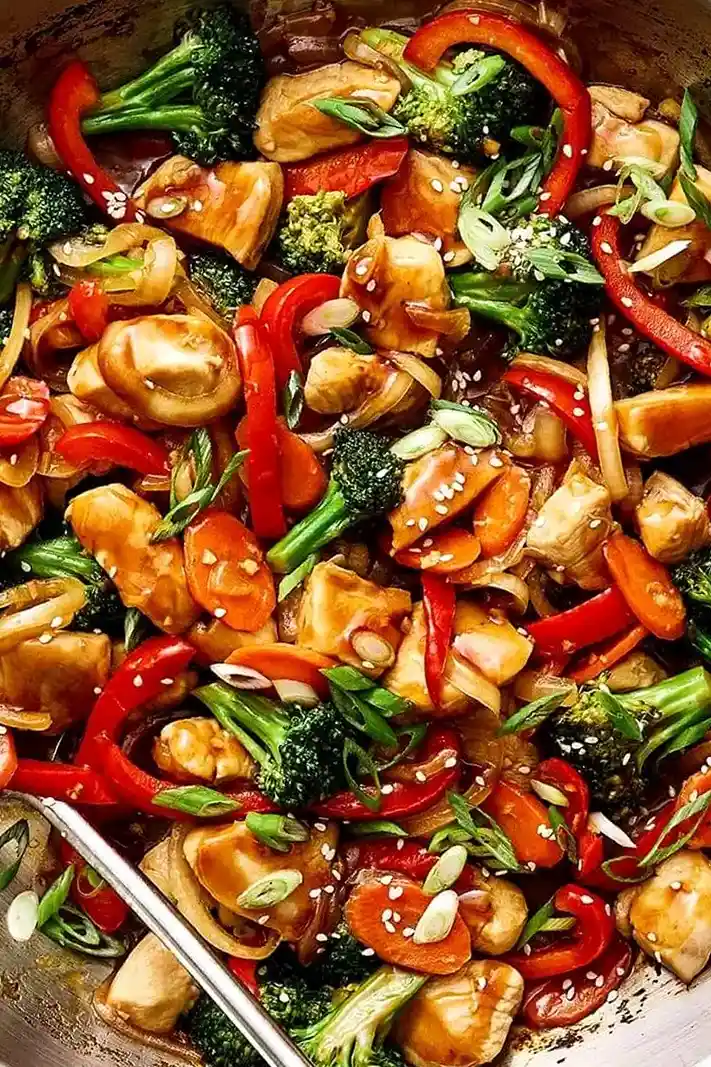
List of ingredients
- 1/4 cup chicken broth – provides a savory base for the sauce.
- 1/4 cup tamari soy sauce (or coconut aminos) – adds saltiness and depth.
- 1 tablespoon white grape juice – a non-alcoholic substitute for dry sherry to add subtle sweetness.
- 1 tablespoon honey – balances the salt with a touch of sweetness.
- 1 teaspoon sesame oil – adds a distinct toasted nutty aroma.
- 1 teaspoon rice vinegar (or apple cider vinegar) – provides necessary acidity.
- 1 tablespoon cornstarch (or arrowroot powder) – acts as the thickening agent.
- 2 tablespoons avocado oil – used for high-heat searing.
- 1 pound boneless skinless chicken breast (cut into 1-inch pieces) – the primary protein.
- Salt and pepper (to taste) – for basic seasoning of the meat.
- 1 red bell pepper (deseeded and chopped) – adds color and sweetness.
- 1 small carrot (thinly sliced) – provides texture and nutrients.
- 2 cups broccoli florets (cut into bite-sized pieces) – adds bulk and a fresh taste.
- 1 small yellow onion (chopped) – provides a savory aromatic base.
- 1 tablespoon finely grated fresh ginger – adds a zingy, warm flavor.
- 4 garlic cloves (minced) – provides a pungent, savory depth.
- 1 tablespoon sesame seeds – used for garnish and crunch.
- 1 green onion (sliced) – adds a fresh, mild onion finish.
step-by-step instructions
- Prepare the sauce: In a small bowl, whisk together the chicken broth, soy sauce, white grape juice, honey, sesame oil, rice vinegar, and cornstarch or arrowroot powder. Set this mixture aside for later use.
- Sear the chicken: Heat one tablespoon of avocado oil in a large skillet or wok over medium-high heat. Add the chicken pieces in a flat layer, season with salt and black pepper, and cook until lightly browned for about 4 to 5 minutes, stirring occasionally. Remove the cooked chicken to a plate.
- Sauté the vegetables: Keep any remaining juices in the pan and add another tablespoon of oil. Toss in the red bell pepper, onion, carrot, and broccoli, cooking for 3 to 4 minutes until they are tender yet still crisp.
- Combine and thicken: Return the browned chicken to the pan along with the minced ginger and garlic. Stir for 30 seconds to cook the aromatics. Pour in the prepared sauce and stir-fry for another 1 to 2 minutes until the sauce thickens and coats everything evenly.
- Final touch: Garnish the finished stir-fry with sliced green onion and sesame seeds before serving.
Cooking Techniques for Optimal Texture
High Heat Searing
Maintain medium-high heat to ensure the chicken browns quickly without releasing too much moisture. This prevents the meat from steaming and ensures a better flavor profile through the Maillard reaction.
Uniform Cutting of Ingredients
Cut the chicken into consistent 1-inch pieces and slice carrots thinly. Uniform sizes ensure that all components of the dish cook at the same rate, preventing some pieces from being raw while others are overdone.
Avoiding Pan Overcrowding
Searing the chicken in a flat layer and removing it before cooking the vegetables prevents the pan temperature from dropping. Overcrowding the pan leads to steaming rather than searing, resulting in grey, rubbery meat.
Managing Aromatic Timing
Add the garlic and ginger only at the end of the vegetable cooking phase. These aromatics burn quickly at high temperatures, so stirring them for only 30 seconds preserves their fresh flavor.
Controlling Sauce Viscosity
Allow the sauce to simmer for at least one minute after pouring it into the pan. This activation time is necessary for the cornstarch or arrowroot to reach its full thickening potential.
Ingredient Modifications and Substitutions
Using Chicken Thighs Instead of Breast
Boneless, skinless chicken thighs can be used for a juicier result. Thighs are more forgiving at high temperatures and remain tender even if slightly overcooked compared to breast meat.
Substituting Tamari for Coconut Aminos
Coconut aminos are an excellent soy-free alternative to tamari. They are naturally sweeter and lower in sodium, so you may want to add a pinch more salt to balance the flavor.
Arrowroot Powder vs Cornstarch
Arrowroot powder provides a glossy finish and is a great gluten-free alternative. Be careful not to overcook arrowroot, as it can become slightly gummy if heated for too long.
Swapping Honey for Maple Syrup
Pure maple syrup can replace honey for a different kind of sweetness. It has a thinner consistency, so the final sauce may be slightly less viscous but equally flavorful.
Alternative Vinegar Options
If rice vinegar is unavailable, apple cider vinegar is the best substitute. It provides a similar tang and acidity that cuts through the richness of the sesame oil and honey.
Incorporating Different Vegetables
You can replace the standard mix with snap peas, baby corn, or water chestnuts. Ensure that harder vegetables like carrots are added first, while leafy greens like bok choy are added at the very end.
Adding Sliced Mushrooms
Shiitake or button mushrooms add a deep umami flavor to the dish. Sauté them along with the onions to allow them to brown and release their moisture before adding the other vegetables.
Using Different Cooking Oils
Avocado oil is ideal due to its high smoke point. If unavailable, grapeseed or canola oil are suitable alternatives, but avoid extra virgin olive oil as it burns too quickly at stir-fry temperatures.
Serving and Pairing Suggestions
Pairing with Jasmine Rice
Steamed jasmine rice is the classic accompaniment for stir-fry. Its floral aroma and fluffy texture absorb the savory-sweet sauce perfectly.
Serving Over Brown Rice
Brown rice adds a nutty flavor and extra fiber to the meal. Because it has a chewier texture, it provides a hearty contrast to the tender chicken and crisp vegetables.
Using Quinoa as a Healthy Base
Quinoa is a protein-rich alternative to rice that pairs well with the ginger and garlic flavors. It adds a slight crunch and increases the nutritional density of the dinner.
Low-Carb Cauliflower Rice
Sautéed cauliflower rice is an excellent option for those reducing carbohydrate intake. Be sure to drain the cauliflower rice well to avoid adding excess water to the stir-fry sauce.
Side of Smashed Cucumber Salad
A chilled cucumber salad with rice vinegar and sesame oil provides a refreshing contrast. The cold, crisp texture helps balance the heat and richness of the stir-fried dish.
Adding Steamed Edamame
Serving the stir-fry with a side of steamed edamame increases the plant-based protein content. It adds a bright green color and a buttery texture to the overall plate.
Storage and Preservation
Proper Cooling Procedures
Allow the stir-fry to cool to room temperature before transferring it to storage containers. Placing hot food directly into the fridge can create condensation, which makes the vegetables soggy.
Using Airtight Glass Containers
Glass containers are preferable for storing stir-fry as they do not absorb odors and provide a tighter seal. This keeps the flavors fresh and prevents the chicken from drying out.
Refrigeration Guidelines
Store the chicken stir-fry in the refrigerator for up to 4 to 5 days. Ensure the lid is secure to prevent the sauce from absorbing other odors from the fridge.
Freezing for Long-Term Storage
This dish can be frozen for up to 3 months in an airtight container. Include the cooked rice in the container to keep it moist during the reheating process.
Thawing Methods
Thaw frozen stir-fry overnight in the refrigerator for the best results. This slow thaw helps maintain the integrity of the vegetables and prevents the sauce from separating.
Reheating Techniques
Stovetop Reheating Method
Reheat the stir-fry in a skillet over medium heat. Add a tablespoon of water or chicken broth to emulsify the sauce and bring back its original glossy consistency.
Microwave Reheating Tips
Heat the meal in 1-minute intervals, stirring in between. Place a damp paper towel over the dish to create steam, which prevents the chicken from becoming tough.
Adjusting Sauce After Reheating
The sauce may thicken further during storage or reheating. Stir in a teaspoon of water or a dash of soy sauce to loosen the glaze and restore the flavor balance.
Troubleshooting Common Issues
Fixing a Sauce That Is Too Thick
If the sauce becomes too gluey or thick, whisk in a small amount of chicken broth. Add the liquid one tablespoon at a time until the desired consistency is reached.
Correcting Overly Salty Flavors
If the dish tastes too salty, add a small amount of honey or a squeeze of lime juice. The sweetness and acidity help neutralize the saltiness of the soy sauce.
Preventing Tough Chicken
Avoid overcooking the chicken in the initial searing phase. Remember that the meat will cook further when it is returned to the pan with the sauce at the end.
Managing Watery Vegetables
If the vegetables release too much water, increase the heat to evaporate the liquid quickly. Ensure the pan is sufficiently hot before adding the oil and vegetables.
Frequently Asked Questions
Can I use a regular frying pan instead of a wok?
Yes, a large stainless steel or non-stick skillet works well. While a wok distributes heat differently, a wide skillet provides enough surface area for effective searing.
Is this recipe gluten-free?
This recipe is gluten-free if you use tamari or coconut aminos and ensure your cornstarch or arrowroot powder is certified gluten-free.
Can I prep the vegetables in advance?
Yes, you can chop the vegetables and store them in an airtight container for up to 2 days. This significantly reduces the active prep time on the day of cooking.
What is the best oil for high-heat stir-frying?
Avocado oil is highly recommended because it has one of the highest smoke points of any cooking oil. This allows you to sear the meat without the oil breaking down or smoking.
Can the sauce be made ahead of time?
The sauce can be whisked together and stored in the fridge for up to a week. Just be sure to shake it well before using, as the cornstarch may settle at the bottom.
Do I have to peel the carrots?
Peeling the carrots is optional but recommended for a smoother texture. If you use organic carrots, a thorough scrub with a vegetable brush is sufficient.
Can I use frozen broccoli instead of fresh?
Frozen broccoli can be used, but it should be thawed and patted dry first. Frozen vegetables hold more water, which can dilute the sauce and prevent proper searing.
Print
Easy Savory Chicken Stir-Fry
- Total Time: 30 minutes
- Yield: 4 servings 1x
- Diet: Gluten-free
Description
This chicken stir-fry recipe is my go-to for a balanced dinner that’s easy to make in 30 minutes! Juicy chicken breast are tossed with colorful vegetables and the best savory-sweet stir-fry sauce.
Ingredients
- 1/4 cup chicken broth
- 1/4 cup tamari soy sauce (or coconut aminos)
- 1 tablespoon alcohol-free flavor substitute
- 1 tablespoon honey
- 1 teaspoon sesame oil
- 1 teaspoon rice vinegar (or apple cider vinegar)
- 1 tablespoon cornstarch (or arrowroot powder)
- 2 tablespoons avocado oil
- 1 pound boneless skinless chicken breast, cut into 1-inch pieces
- salt and pepper to taste
- 1 red bell pepper, deseeded and chopped
- 1 small carrot, thinly sliced
- 2 cups broccoli florets, cut into bite-sized pieces
- 1 small yellow onion, chopped
- 1 tablespoon finely grated fresh ginger
- 4 garlic cloves, minced
- 1 tablespoon sesame seeds
- 1 green onion, sliced
Instructions
- Step: In a small bowl, whisk together the chicken broth, soy sauce, alcohol-free flavor substitute, honey, sesame oil, rice vinegar, and arrowroot powder. Set aside.
- Step: In a large skillet or wok on medium high heat, add one tablespoon of oil. Add the chicken in a flat layer. Season with salt and black pepper, and cook until lightly browned, about 4 to 5 minutes, stirring as needed. Remove the chicken to a plate.
- Step: Leaving any juices in the pan, add one tablespoon of oil along with the red bell pepper, onion, carrot, and broccoli. Cook the vegetables until tender, about 3 to 4 minutes.
- Step: Add the chicken back to the pan with the minced ginger and garlic. Stir for 30 seconds. Pour in the sauce and stir fry for another 1 to 2 minutes, until the sauce thickens.
- Step: Garnish with green onion and sesame seeds before serving.
Notes
To store in the fridge: Let it cool completely before storing it in airtight containers for 4 to 5 days. To freeze: This can be frozen for up to 3 months in an airtight container.
- Prep Time: 15 minutes
- Cook Time: 15 minutes
- Category: Dinner
- Method: Stir-fry
- Cuisine: Asian
Nutrition
- Serving Size: 1 serving
- Calories: 297 kcal
- Sugar: 9 g
- Sodium: 976 mg
- Fat: 12 g
- Saturated Fat: 2 g
- Unsaturated Fat: 9 g
- Trans Fat: 0.01 g
- Carbohydrates: 18 g
- Fiber: 3 g
- Protein: 29 g
- Cholesterol: 73 mg