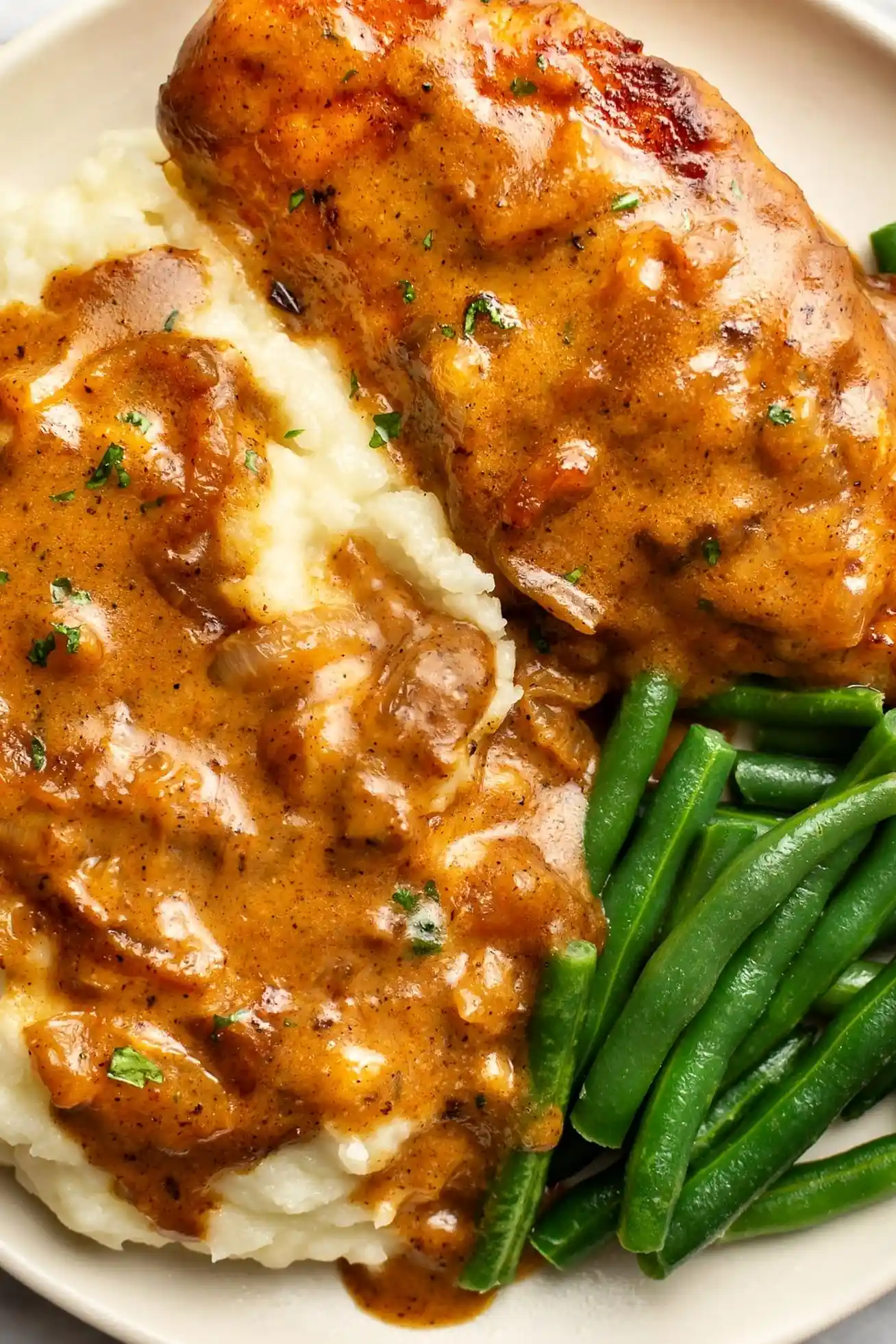
This skillet meal features tender chicken cutlets coated in a savory seasoned crust and simmered in a rich onion gravy. It is a straightforward dinner option that uses basic pantry staples to create a comforting main course.
List of ingredients
- 2 large chicken breasts – cut lengthwise into four cutlets.
- Salt & pepper – used for basic seasoning to taste.
- 1/2 cup flour – for dredging the chicken and thickening the gravy.
- 1 tablespoon garlic powder – adds a deep aromatic flavor.
- 1 tablespoon onion powder – complements the fresh sliced onions.
- 1/2 tablespoon paprika – provides color and a mild sweetness.
- 1/2 teaspoon cayenne pepper – adds a subtle heat to the dish.
- 2 tablespoons olive oil – used for searing the chicken.
- 2 tablespoons butter – used for sautéing the onions.
- 1 medium-to-large onion – sliced into half rings.
- 1 cup chicken broth – forms the base of the savory gravy.
- 1 teaspoon Worcestershire sauce – adds a complex salty and tangy layer.
- 1/4 cup heavy/whipping cream – creates a luxurious, creamy texture.
step-by-step instructions
- Prepare the chicken: Cut the chicken breasts in half lengthwise to create four thinner cutlets. Season each piece thoroughly with salt and pepper on both sides.
- Mix the dredging flour: In a bowl, combine the flour, garlic powder, onion powder, paprika, and cayenne pepper. Stir well, then measure out 2 tablespoons of this mixture into a separate small bowl to reserve for the gravy.
- Heat the skillet: Pour the olive oil into a skillet and place it over medium-high heat.
- Coat the meat: While the pan heats, place the remaining seasoned flour on a plate. Coat each chicken cutlet evenly in the flour, shaking off any excess.
- Sear the chicken: Add the chicken to the skillet and cook for 5 minutes per side until golden brown. Note that the chicken does not need to be fully cooked through at this stage. Transfer the pieces to a plate.
- Sauté the onions: Reduce the heat to medium-low and melt the butter in the same skillet. Add the sliced onions and cook for 15-20 minutes until they are softened and golden. Stir occasionally and lower the heat if the onions begin to burn.
- Build the roux: Sprinkle the reserved 2 tablespoons of seasoned flour over the onions. Cook for about one minute, stirring constantly to incorporate the flour.
- Deglaze and simmer: Stir in the chicken broth and Worcestershire sauce. Scrape the bottom of the pan to release the browned bits, then stir in the heavy cream until smooth.
- Finish cooking: Return the chicken cutlets to the pan. Cook for another 5-7 minutes, or until the chicken reaches an internal temperature of 165F and the gravy has thickened.
- Final touch: Season the finished dish with additional salt and pepper if needed and serve immediately.
Cooking Techniques for Optimal Results
Use a Sharp Knife for Even Cutlets
When cutting the chicken breasts in half lengthwise, use a very sharp chef’s knife to create four thin cutlets. This ensures that the meat cooks evenly and quickly during the searing process. Consistent thickness prevents some pieces from overcooking while others remain raw.
Maintain Proper Pan Temperature
Ensure the olive oil is shimmering before adding the chicken to achieve a golden crust. If the oil is too cold, the flour will absorb the fat and become greasy rather than crisp. If it is too hot, the flour may burn before the chicken is seared.
Be Patient with the Onion Browning
The onions should be cooked slowly to develop a natural sweetness and a golden hue. Avoid the temptation to rush this process with high heat, as burnt onions will make the gravy taste bitter. Stir them every few minutes to ensure even coloring.
Use a Meat Thermometer for Accuracy
Chicken breasts can easily overcook and become dry. Using an instant-read thermometer allows you to remove the meat exactly when it hits 165F. This ensures the chicken remains juicy while being safe for consumption.
Ingredient Alternatives and Substitutions
Swap Chicken Breasts for Thighs
Boneless, skinless chicken thighs can be used instead of breasts for a richer flavor and more moisture. Thighs are more forgiving during the cooking process and are less likely to dry out. You may need to increase the final simmering time by a few minutes to ensure they are tender.
Use Plant-Based Cream Alternatives
For a dairy-free version, replace the heavy cream with full-fat coconut milk or a cashew-based cream. These alternatives provide the necessary thickness and richness to the gravy. Be aware that coconut milk may add a slight coconut flavor to the dish.
Modify the Spice Level
The cayenne pepper provides a mild kick that builds during the meal. If you prefer a milder dish, reduce the amount to a small pinch or omit it entirely. For those who enjoy more heat, you can add a pinch of red pepper flakes during the onion sauté.
Substitute the Chicken Broth
If you do not have chicken broth, vegetable broth is a suitable alternative that maintains the savory profile. You can also use water mixed with a bouillon cube for a similar effect. Ensure the broth is low-sodium if you prefer to control the salt levels manually.
Flavor Enhancements and Variations
Add Sliced Mushrooms
Adding sliced cremini or button mushrooms to the skillet along with the onions adds an earthy depth to the gravy. Sauté the mushrooms until they release their moisture and turn brown before adding the reserved flour. This creates a more complex, mushroom-gravy style sauce.
Incorporate Fresh Herbs
Stirring in fresh thyme or parsley at the very end of the cooking process adds a bright, fresh contrast to the rich gravy. Thyme pairs exceptionally well with the onion and garlic notes. Finely chop the herbs and sprinkle them over the dish just before serving.
Use Fresh Minced Garlic
While the recipe uses garlic powder for the dredge, adding two cloves of fresh minced garlic to the onions adds another layer of flavor. Add the fresh garlic during the last two minutes of sautéing the onions. This prevents the garlic from burning while releasing its aromatic oils.
Experiment with Different Pepper Types
Replacing the paprika with smoked paprika can give the dish a woody, campfire-like flavor. This works particularly well if you are serving the chicken with roasted vegetables. The smoky notes complement the caramelized onions and cream.
Recommended Serving Pairings
Serve with Garlic Mashed Potatoes
Creamy mashed potatoes are the traditional pairing for smothered chicken. The potatoes act as a sponge for the rich gravy, making the meal feel complete. Adding roasted garlic to the potatoes enhances the overall flavor profile of the dinner.
Pair with Steamed Rice
White basmati or brown rice provides a neutral base that balances the intensity of the seasoned gravy. The rice absorbs the sauce without overpowering the flavor of the chicken. This is a great option for those looking for a gluten-free side alternative.
Use Buttered Egg Noodles
Wide egg noodles tossed in butter and parsley are an excellent choice for this recipe. The texture of the noodles complements the tenderness of the chicken. The butter in the noodles blends seamlessly with the creamy gravy.
Complement with Roasted Vegetables
Roasted carrots, green beans, or Brussels sprouts add necessary color and nutrition to the plate. The bitterness of roasted greens cuts through the richness of the cream sauce. Roast them at 400F with olive oil and salt until caramelized.
Pair with Warm Biscuits
Flaky buttermilk biscuits or a slice of warm cornbread are ideal for scooping up any remaining gravy on the plate. The sweetness of cornbread, in particular, pairs well with the savory elements of the chicken and onions.
Storage and Freezing Guidelines
Proper Refrigeration Methods
Store leftover smothered chicken and gravy in an airtight container in the refrigerator. The dish will remain fresh and safe to eat for 3 to 4 days. Ensure the chicken is fully cooled before sealing the container to prevent excess moisture buildup.
Freezing for Long-Term Storage
This recipe can be frozen for up to three months if stored in a freezer-safe container or vacuum-sealed bag. The gravy may change consistency slightly upon freezing, but the flavor remains intact. Cool the dish completely before freezing to maintain the best quality.
Safe Thawing Procedures
To thaw frozen smothered chicken, place the container in the refrigerator overnight. This slow thawing process preserves the texture of the meat and the stability of the sauce. Avoid thawing at room temperature to prevent bacterial growth.
Reheating for Best Quality
Slow-Heat Stovetop Method
The best way to reheat the dish is in a covered saucepan over low heat. Add a tablespoon of water or chicken broth to help loosen the gravy. Stir gently and occasionally to ensure the chicken is heated through without scorching the sauce.
Quick Microwave Method
For a faster option, place the chicken and gravy in a microwave-safe dish and cover it loosely. Heat in short 1-minute intervals, stirring in between. This prevents the edges from overcooking while the center remains cold.
Fixing Sauce Separation
If the gravy separates during reheating, it is usually due to the fat splitting from the cream. Stir the sauce vigorously over low heat to reintegrate the ingredients. Adding a tiny splash of broth can help emulsify the sauce again.
Preparing the Meal in Advance
Pre-Mix the Seasoned Flour
You can combine the flour, garlic powder, onion powder, paprika, and cayenne pepper several days in advance. Store the mixture in an airtight jar in a cool, dry pantry. This saves time during the actual cooking process.
Slice and Store Onions
Onions can be sliced into half rings and stored in a sealed container in the refrigerator for up to two days. This reduces prep time on busy weeknights. Use them directly from the fridge when you are ready to sauté.
Pre-Sear the Chicken
If you are short on time, you can dredge and sear the chicken cutlets earlier in the day. Store the seared meat in the fridge and return them to the pan during the final simmering stage. This ensures the chicken stays juicy and the sear is preserved.
Troubleshooting the Gravy and Chicken
Thinning Out Thick Gravy
If the gravy becomes too thick after simmering or reheating, stir in a small amount of chicken broth or water. Add the liquid one tablespoon at a time until the desired consistency is reached. Stir constantly over low heat to blend the liquid smoothly.
Thickening a Runny Sauce
If the sauce is too thin, allow it to simmer for a few more minutes without a lid to reduce the liquid. Alternatively, you can mix a teaspoon of cornstarch with a teaspoon of cold water to create a slurry. Stir the slurry into the simmering sauce for an immediate thickening effect.
Preventing Burnt Onions
If the onions begin to brown too quickly or stick to the pan, add a tablespoon of water or broth. This deglazes the pan and lowers the surface temperature, allowing the onions to soften properly. Always keep the heat at medium-low or low for the onion stage.
Fixing Overcooked Chicken
If the chicken becomes slightly dry due to overcooking, increase the amount of gravy served with each piece. The moisture from the sauce helps mask the dryness. In the future, rely strictly on a meat thermometer to prevent this issue.
Frequently Asked Questions
Can I use a different cooking oil?
Yes, you can use canola oil, vegetable oil, or grapeseed oil. These oils have high smoke points and neutral flavors, making them suitable for searing. Avoid using extra-virgin olive oil if you plan to use very high heat, as it can smoke.
Which pan works best for this recipe?
A cast-iron skillet is ideal because it retains heat evenly and provides a superior sear on the chicken. A stainless steel skillet is also a great choice for creating browned bits (fond) for the gravy. Non-stick pans work but may not brown the meat as effectively.
Is this recipe suitable for a slow cooker?
This specific recipe is designed for the stovetop to achieve the searing and sautéing effects. While you could simmer the chicken in gravy in a slow cooker, you would lose the texture and flavor provided by the initial pan-frying and onion browning.
How do I know when the chicken is fully cooked?
The only guaranteed way to know the chicken is safe is by using a meat thermometer to check for an internal temperature of 165F. Visually, the meat should be opaque throughout with no pink remaining in the center.
Print
Savory Smothered Chicken with Rich Gravy
- Total Time: 45 minutes
- Yield: 4 servings 1x
- Diet: General
Description
This smothered chicken recipe has juicy pan-fried chicken in the ultimate gravy! It’s rich, perfectly seasoned, and made from scratch with pantry staples.
Ingredients
- 2 large chicken breasts
- Salt & pepper (to taste)
- 1/2 cup flour
- 1 tablespoon garlic powder
- 1 tablespoon onion powder
- 1/2 tablespoon paprika
- 1/2 teaspoon cayenne pepper
- 2 tablespoons olive oil
- 2 tablespoons butter
- 1 medium-to-large onion (sliced)
- 1 cup chicken broth
- 1 teaspoon Worcestershire sauce
- 1/4 cup heavy/whipping cream
Instructions
- Step: Cut the chicken breasts in half lengthwise so you have 4 thinner cutlets. Season each piece with salt & pepper on both sides.
- Step: Add the flour, garlic powder, onion powder, paprika, and cayenne pepper to a bowl and stir; measure out 2 tablespoons of this seasoned flour into a small bowl for later.
- Step: Add the olive oil to a skillet over medium-high heat.
- Step: Coat each piece of chicken in the remaining seasoned flour from the larger bowl.
- Step: Add the chicken pieces to the skillet and cook for 5 minutes per side until golden; transfer chicken to a plate.
- Step: Reduce heat to medium-low, add butter, and cook sliced onions until softened and golden (about 15-20 minutes).
- Step: Sprinkle the 2 tablespoons of reserved seasoned flour into the pan and cook for about a minute, stirring constantly.
- Step: Stir in the chicken broth and Worcestershire sauce, scraping the browned bits off the bottom, then stir in the cream.
- Step: Add the chicken back to the pan and cook for another 5-7 minutes or until the chicken is fully cooked through (165F) and the gravy has thickened.
- Step: Season with salt & pepper as needed and serve immediately.
Notes
You can substitute chicken breasts for chicken thighs, though they may require a slightly longer cooking time. For those sensitive to spice, reduce the amount of cayenne pepper.
- Prep Time: 10 minutes
- Cook Time: 35 minutes
- Category: Main Course
- Method: Pan-frying
- Cuisine: American
Nutrition
- Serving Size: 1 serving
- Calories: 341 kcal
- Sugar: 1 g
- Sodium: 421 mg
- Fat: 21 g
- Saturated Fat: 9 g
- Unsaturated Fat: 11 g
- Trans Fat: 0.2 g
- Carbohydrates: 10 g
- Fiber: 1 g
- Protein: 26 g
- Cholesterol: 105 mg