This tangy and herbaceous marinade ensures your chicken remains moist and flavorful regardless of the cooking method. It uses simple pantry staples to create a professional, Mediterranean-style flavor profile in minutes.
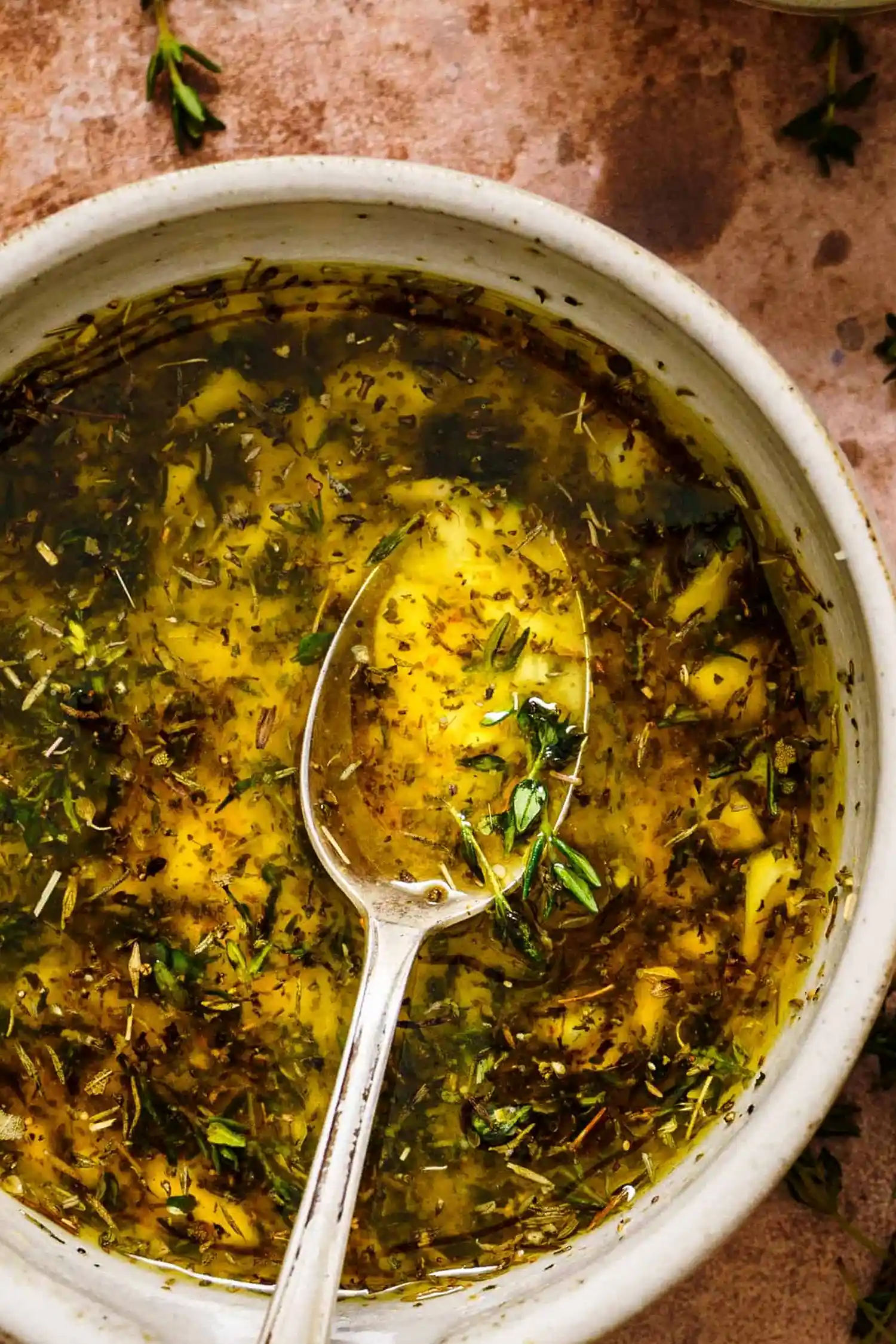
List of ingredients
- 1/4 Cup Olive Oil – provides a rich base and prevents sticking.
- 1 Lemon (juiced) – adds essential acidity to tenderize the meat.
- 2 Garlic Cloves – provides a pungent, aromatic depth.
- 2 Teaspoons Thyme – adds a classic earthy, herbaceous note.
- 1 Teaspoon Dijon Mustard – acts as an emulsifier and adds a subtle tang.
- 1 Teaspoon Salt – enhances all flavors and helps moisture retention.
step-by-step instructions
- Whisk the marinade: Combine the olive oil, lemon juice, garlic, thyme, mustard, and salt in a mixing bowl. Whisk until the ingredients are fully combined and emulsified.
- Apply to chicken: Place your chicken pieces in a container or zip-top bag and pour the marinade over them. Ensure every piece is thoroughly coated.
- Marinate: Store the chicken in the refrigerator for at least 1 to 2 hours to develop flavor. For maximum penetration, leave it for up to 24 hours.
- Cook: Remove the chicken from the marinade and cook using your preferred method, such as grilling or pan-searing. Cook until the internal temperature reaches 165°F.
- Store leftovers: Place any cooked leftover chicken in an airtight container. Keep it refrigerated for up to one week.
Optimal Cooking Techniques
Grilling for a Charred Finish
Preheat your grill to medium-high heat to achieve a smoky exterior. Grill chicken breasts for about 6-8 minutes per side depending on thickness. Avoid moving the meat too often to ensure deep grill marks form.
Pan-Searing for Golden Crusts
Use a heavy skillet or cast-iron pan over medium-high heat with a small amount of oil. Sear the chicken for 5-7 minutes per side until golden brown. This method creates a flavorful crust while keeping the inside juicy.
Oven Roasting for Even Cooking
Preheat your oven to 400°F and place marinated chicken on a parchment-lined baking sheet. Roast for 20-25 minutes or until the juices run clear. This is the best method for cooking larger quantities of chicken simultaneously.
Air Frying for Faster Results
Set the air fryer to 375°F and arrange chicken pieces in a single layer. Cook for 12-15 minutes, flipping halfway through the process. This provides a concentrated heat that mimics frying with less added oil.
Ingredient Selection and Preparation
Using Freshly Squeezed Lemon Juice
Always use fresh lemons rather than bottled concentrate for a brighter, more authentic taste. Roll the lemon on the counter before cutting to release more juice. Strain out the seeds to ensure a smooth marinade texture.
Preparing Garlic for Maximum Flavor
Mince the garlic cloves finely or use a garlic press to release the natural oils. Fresh garlic provides a sharper, more potent flavor than pre-minced jarred varieties. Add the garlic immediately before whisking to keep the flavor fresh.
Choosing the Right Olive Oil
Extra virgin olive oil is recommended for its superior flavor and health benefits. If you are grilling at very high temperatures, a light olive oil may be more stable. Ensure the oil is fresh and not rancid to avoid an off-taste.
Comparing Fresh and Dried Thyme
Dried thyme is more concentrated, so use the exact measurement provided in the recipe. If using fresh thyme, triple the amount to 6 teaspoons of leaves. Strip the leaves from the woody stems before adding them to the bowl.
Customizing the Flavor Profile
Adding Dried Oregano for Depth
Mix in one teaspoon of dried oregano to give the chicken a more traditional Greek profile. Oregano adds a slightly bitter, peppery note that complements the lemon perfectly. This is a common addition in Mediterranean souvlaki.
Incorporating Honey for Balance
Stir in a tablespoon of honey or maple syrup to balance the acidity of the lemon. The sugar helps the chicken caramelize and brown more effectively during cooking. This creates a sweet and savory glaze on the surface.
Adding Red Pepper Flakes for Heat
Include a pinch of crushed red pepper flakes if you prefer a spicy kick. The heat cuts through the richness of the olive oil and adds complexity. Adjust the amount based on your personal tolerance for spice.
Adding Greek Yogurt for Tenderness
Whisk in two tablespoons of plain Greek yogurt to create a creamier marinade. The lactic acid in yogurt tenderizes the meat more deeply than lemon juice alone. This results in an exceptionally soft texture similar to tandoori chicken.
Serving and Pairing Suggestions
Pairing with Traditional Greek Salad
Serve the chicken alongside a salad of cucumbers, tomatoes, kalamata olives, and feta cheese. Dress the salad with a simple mixture of olive oil and red wine vinegar. The freshness of the vegetables balances the savory chicken.
Serving with Lemon Rice Pilaf
Cook long-grain white rice with chicken broth and a squeeze of fresh lemon. Stir in chopped parsley and a knob of butter at the end for richness. This provides a fragrant base that absorbs the chicken juices.
Accompanying with Homemade Tzatziki
Make a dip using Greek yogurt, grated cucumber, garlic, and lemon juice. Spoon the cool sauce directly over the hot chicken after cooking. The creamy texture contrasts well with the charred exterior of the meat.
Using Warm Pita Bread for Wraps
Slice the cooked chicken into strips and wrap them in warmed pita bread. Add sliced red onions, fresh tomatoes, and a dollop of hummus or tzatziki. This makes the recipe a portable and satisfying lunch option.
Serving alongside Roasted Potatoes
Toss potato wedges in olive oil, salt, and oregano before roasting them in the oven. Cook them at the same temperature as the chicken for a coordinated meal. The crispy potatoes complement the tender, marinated meat.
Storage and Meal Prep Strategies
Using Vacuum-Seal Bags for Marinating
Place the chicken and marinade in a vacuum-seal bag and remove the air. This forces the marinade into the meat fibers more quickly and efficiently. It also prevents the chicken from oxidizing in the refrigerator.
Freezing Marinated Chicken for Later
Place chicken and marinade in a freezer-safe bag and freeze immediately. The chicken will marinate as it thaws in the refrigerator before cooking. This is an excellent way to prep proteins for the entire month.
Reheating Leftovers without Drying
Avoid the microwave, which can make chicken rubbery and dry. Instead, reheat the chicken in a skillet over low heat with a teaspoon of water or broth. Cover the pan to trap steam and maintain moisture.
Preparing Marinade in Large Batches
Double or triple the marinade recipe and store the excess in a glass jar. Keep the marinade in the fridge for up to one week if not used on meat. Use the leftover liquid as a dressing for grilled vegetables.
Common Cooking Problems and Solutions
Preventing the Chicken from Drying Out
Use a digital meat thermometer to check the internal temperature frequently. Remove the chicken from the heat as soon as it hits 165°F. Let the meat rest for five minutes before slicing to redistribute the juices.
Fixing a Bland Flavor Profile
If the flavor is too mild, increase the marinating time to the full 24 hours. You can also sprinkle a small amount of flaky sea salt over the chicken immediately after cooking. Ensure the lemon juice is fresh for maximum impact.
Avoiding Burnt Exterior Surfaces
If the chicken is browning too quickly, lower the heat on your stove or grill. The sugars in the mustard and lemon can burn if the pan is too hot. Use a medium heat for a more controlled browning process.
Managing Texture Changes from Acid
Do not marinate the chicken for longer than 24 hours. Excessive exposure to lemon juice can break down the protein too much, making the meat mushy. Stick to the recommended time windows for the best texture.
Frequently Asked Questions
Can I use chicken thighs instead of breasts?
Yes, chicken thighs are an excellent alternative and are often more flavorful. Because thighs have more fat, they are less likely to dry out during cooking. Adjust the cooking time slightly as thighs may take longer to reach the safe temperature.
Is lime juice a suitable replacement for lemon?
Lime juice can be used as a substitute and provides a similar acidity. However, it will change the flavor profile from Mediterranean to a more tropical or zesty taste. Use an equal ratio of lime juice to lemon juice.
How long can the marinade be stored?
The prepared marinade, without meat, can be stored in an airtight container in the fridge for about 5 to 7 days. Once meat is added, it must be cooked or frozen within 48 hours for safety. Always discard any marinade that has touched raw meat.
Should the chicken be patted dry before cooking?
No, leave the marinade on the chicken for maximum flavor. However, if you are pan-searing and notice too much liquid pooling, you can lightly shake off the excess. This helps the chicken brown rather than steam in the pan.
Can this marinade be used for seafood?
This marinade works very well with shrimp, salmon, or white fish. Note that seafood requires a much shorter marinating time, usually only 15 to 30 minutes. Over-marinating fish in acid will cause the flesh to break down and become mushy.
Print
The Best Ever Greek Chicken Marinade
- Total Time: 2 hours 5 minutes
- Yield: 1 pound of chicken 1x
- Diet: Paleo, Dairy-Free, Gluten-Free
Description
The juiciest, most delicious chicken of your LIFE is just a marinade away. This recipe is a surefire way to ensure that your chicken turns out perfectly moist and juicy, every single time, using only six simple ingredients.
Ingredients
- 1/4 cup olive oil
- 1 lemon, juiced
- 2 garlic cloves
- 2 teaspoons thyme
- 1 teaspoon Dijon mustard
- 1 teaspoon salt
Instructions
- Step 1: In a bowl, whisk together all of the ingredients for the marinade until they’re fully combined.
- Step 2: Pour your marinade over the chicken.
- Step 3: Store your chicken in the fridge for a minimum of 1-2 hours, and a maximum of 24 hours.
- Step 4: Cook chicken according to your preferred method, and enjoy!
- Step 5: Store any leftovers in the fridge, for up to one week.
Notes
For maximum flavor, marinate for 2-4 hours. Organic chicken breasts are recommended for the best flavor profile.
- Prep Time: 5 minutes
- Cook Time: 2 hours
- Category: Main Course
- Method: Marinating
- Cuisine: Mediterranean
Nutrition
- Serving Size: 1 pound of chicken
- Calories: 510 kcal
- Sugar: 1 g
- Sodium: 404 mg
- Fat: 54 g
- Saturated Fat: 8 g
- Unsaturated Fat: 46 g
- Trans Fat: 0 g
- Carbohydrates: 4 g
- Fiber: 1 g
- Protein: 4 g
- Cholesterol: 7 mg