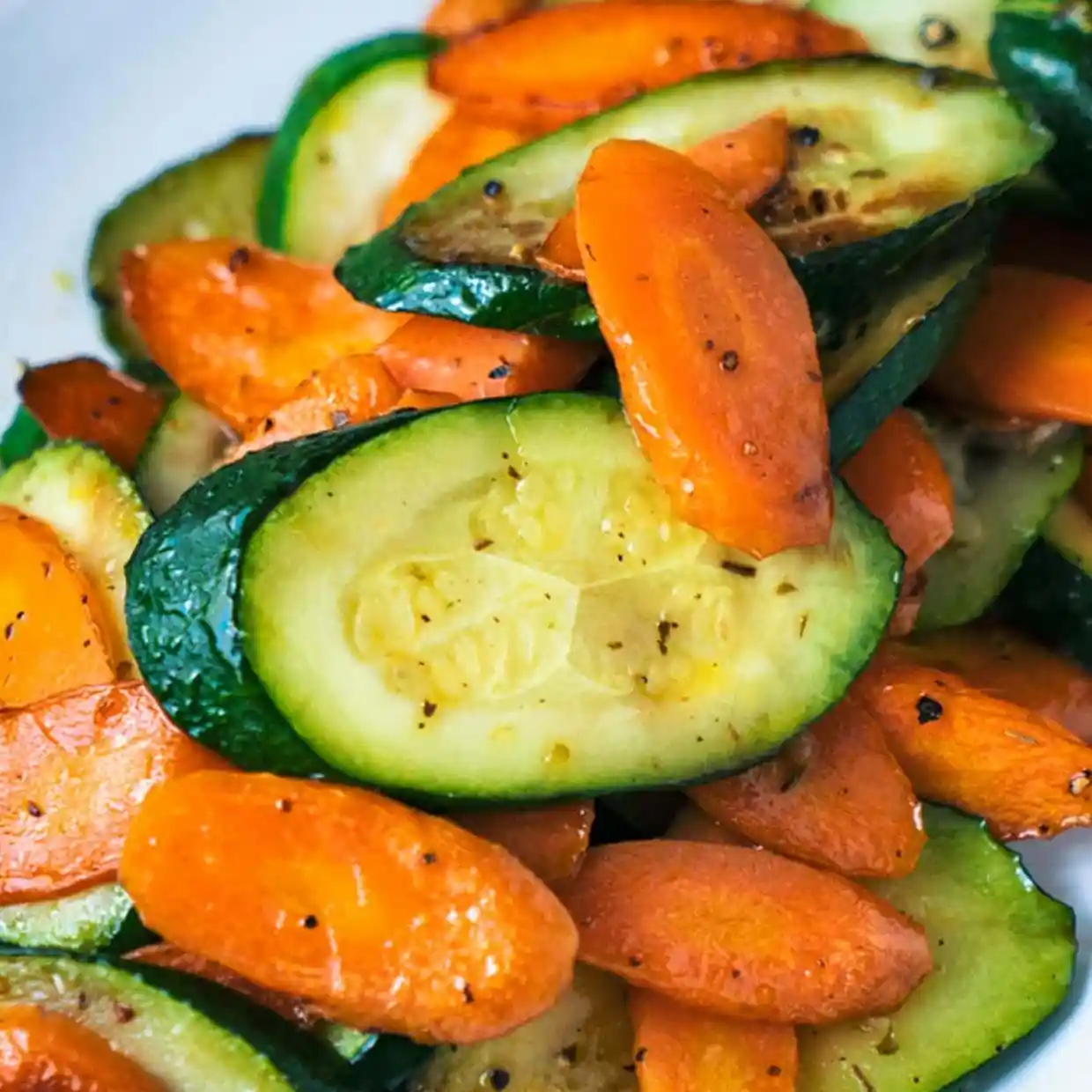
This quick vegetable side dish combines sliced carrots and zucchini with a blend of aromatic herbs. It is an easy way to add nutrients to your dinner plate in under 30 minutes.
List of ingredients
- 2 zucchinis, sliced – ensure slices are uniform for even cooking.
- 3 to 4 carrots, thinly sliced – thinner slices cook faster to match the zucchini.
- 1 tsp. dried thyme – adds an earthy, floral note.
- 1 tsp. dried parsley – provides a mild, fresh herb flavor.
- 1 tsp. garlic powder – gives a consistent savory depth.
- 1/2 tsp. dried oregano – adds a subtle Mediterranean touch.
- 1/4 cup olive oil – used for coating and seasoning the vegetables.
- 2 tbsp. ghee or olive oil – used for sautéing in the skillet.
- Sea salt and ground black pepper – adjusted to your taste preferences.
step-by-step instructions
- Combine Vegetables: In a big bowl, add the sliced zucchini and carrots.
- Coat and Season: Pour the olive oil over the sliced vegetables, and sprinkle with all the herbs and spices.
- Final Toss: Season to taste with salt and pepper, then toss until everything is well coated.
- Prepare Pan: Preheat the skillet over medium heat, and melt the ghee.
- Sauté: Saute the vegetables while tossing them until tender, about 8 to 10 minutes.
Cooking Techniques for Best Texture
Uniform Slicing for Consistent Doneness
Carrots are significantly denser than zucchini and require more time to soften. Slice the carrots into thin rounds or matchsticks to ensure they finish cooking at the same time as the zucchini.
Using a mandoline slicer can help achieve perfectly uniform thickness. This prevents the zucchini from becoming mushy while you wait for the carrots to become tender.
Managing Pan Temperature
Maintain a steady medium heat throughout the process. If the heat is too high, the dried herbs will burn and become bitter before the vegetables are cooked through.
If the pan begins to smoke, reduce the heat immediately. A gentle sizzle is the indicator that the vegetables are sautéing correctly without scorching the spices.
Preventing Vegetable Mushiness
Avoid overcrowding the skillet, as too many vegetables release moisture that can lead to steaming rather than sautéing. Cook in batches if your skillet is small.
Toss the vegetables frequently but avoid over-stirring. Constant stirring can break down the delicate structure of the zucchini, leading to a soft, porridge-like consistency.
Ingredient Substitutions
Swapping Zucchini for Other Squash
Yellow summer squash is a direct substitute for zucchini and behaves similarly under heat. You can use a 1:1 ratio of yellow squash to replace the zucchini for a different color palette.
Pattypan squash also works well, though it should be sliced into smaller wedges to ensure the centers cook through. Avoid using winter squashes like butternut unless you increase the cooking time significantly.
Using Fresh Herbs Instead of Dried
Fresh herbs have a higher water content and a more delicate flavor than dried versions. Use a ratio of three parts fresh herbs for every one part of dried herbs called for in the recipe.
Add fresh parsley and thyme toward the end of the sautéing process. This prevents the fresh leaves from wilting too quickly and preserves their vibrant green color.
Alternative Fats for Sautéing
Avocado oil is an excellent alternative to ghee or olive oil due to its higher smoke point. This allows for a slightly higher heat if you prefer a more browned exterior on the vegetables.
For a completely plant-based version, stick with olive oil or use coconut oil for a subtle tropical undertone. Avoid using butter if you need a dairy-free option, as ghee is clarified but still derived from milk.
Flavor Variations
Adding a Citrus Twist
Squeeze fresh lemon juice over the vegetables immediately after removing them from the heat. The acidity cuts through the richness of the oil and brightens the overall flavor profile.
Alternatively, grate fresh lemon zest into the mixing bowl along with the dried herbs. This adds a concentrated citrus aroma without adding extra liquid to the pan.
Incorporating Spicy Elements
Add a pinch of crushed red pepper flakes to the spice mix for a mild heat. This creates a nice contrast with the natural sweetness of the carrots.
For a more intense flavor, add a small amount of cayenne pepper or a dash of paprika. These spices add depth and a warm color to the finished dish.
Adding Umami with Soy-Free Options
Stir in a tablespoon of coconut aminos at the end of the cooking process for a savory, salty finish. This provides a depth of flavor similar to soy sauce but remains soy-free.
Nutritional yeast is another option for adding a cheesy, nutty flavor. Sprinkle it over the vegetables during the last minute of sautéing for a unique taste.
Pairing and Serving Suggestions
Complementary Protein Pairings
These vegetables pair exceptionally well with roasted chicken or grilled turkey. The savory herbs in the vegetables complement the natural flavors of poultry.
For a seafood option, serve this side dish with baked salmon or seared scallops. The sweetness of the carrots balances the richness of fatty fish.
Grain-Based Accompaniments
Serve the sautéed vegetables over a bed of fluffy quinoa or brown rice. The grains absorb the flavored olive oil from the pan, making the entire meal more cohesive.
Cauliflower rice is a great low-carb alternative that keeps the meal light. Simply steam the cauliflower rice and top it with the sautéed carrot and zucchini mixture.
Presentation Tips for Dinners
Garnish the final dish with a sprinkle of fresh chopped parsley or a few thyme leaves. This adds a pop of color and signals the use of fresh ingredients.
Arrange the vegetables on a platter rather than scooping them into bowls. This allows the different colors of the carrots and zucchini to be displayed prominently.
Storage and Reheating
Proper Refrigeration Method
Store leftovers in an airtight glass container to keep the vegetables from absorbing other odors in the fridge. They will remain fresh and safe to eat for 3 to 5 days.
Cool the vegetables completely before sealing the lid. Trapping steam inside the container can lead to excess moisture, which makes the zucchini soggy upon reheating.
Best Reheating Practices
The best way to reheat these vegetables is in a skillet over medium heat. This allows any released moisture to evaporate and helps restore some of the original texture.
If using a microwave, heat in short 30-second intervals and stir in between. Be careful not to overcook them, as the zucchini will soften further with every heating cycle.
Freezing Considerations
Freezing is not recommended for this specific recipe. Zucchini has a very high water content, and the freezing process breaks down its cellular structure, leaving it mushy when thawed.
While carrots freeze well, the combined sautéed mixture will lose its appeal. It is better to cook this dish in smaller batches and consume it fresh.
Make-Ahead Strategies
Pre-chopping and Pre-seasoning
You can slice the carrots and zucchini up to 24 hours in advance. Store them in separate containers or bags to prevent the zucchini from drawing moisture out of the carrots.
Mix the dried herbs and spices in a small jar beforehand. This makes the actual cooking process much faster, as you only need to pour the pre-measured mix over the vegetables.
Batch Cooking for Meal Prep
Double or triple the recipe to prepare side dishes for the entire week. Sauté the vegetables in large batches, ensuring you use a wide enough pan to avoid steaming.
Divide the cooked vegetables into individual portion containers. This makes it easy to grab a healthy side dish during a busy work week.
Common Troubleshooting
Fixing Overcooked Vegetables
If the vegetables become too soft, avoid adding more heat. Instead, add a splash of fresh lemon juice or a sprinkle of fresh herbs to distract from the texture.
To prevent this in the future, remove the vegetables from the pan the moment they reach a fork-tender state. Carry-over heat will continue to cook them slightly after they leave the skillet.
Correcting Under-seasoned Dishes
If the flavor feels flat, add a small pinch of sea salt. Salt enhances the existing flavors of the herbs and the natural sweetness of the vegetables.
A small amount of apple cider vinegar can also wake up the flavors. The acidity acts as a flavor enhancer, making the garlic and thyme more prominent.
Preventing Oil Splatter
Ensure the sliced vegetables are patted dry with a paper towel before adding them to the pan. Water on the surface of the vegetables causes the oil to pop and splatter.
Keep the heat at a consistent medium level. Extremely high temperatures cause the oil to reach its smoke point faster, increasing the likelihood of splattering.
Frequently Asked Questions
Can I use baby carrots?
Yes, you can use baby carrots, but you should slice them lengthwise into halves or quarters. Whole baby carrots are often too thick to cook at the same rate as zucchini slices.
Which olive oil is best for this recipe?
Use a refined olive oil or a light olive oil for the sautéing portion to avoid a burnt taste. Extra virgin olive oil is perfect for the initial coating in the bowl for maximum flavor.
How do I stop zucchini from releasing too much water?
Toss the zucchini with a pinch of salt and let it sit for 10 minutes, then pat it dry before cooking. This draws out excess moisture so the vegetables sauté instead of boiling in their own juices.
Print
Herbed Sautéed Carrots and Zucchini
- Total Time: 25 minutes
- Yield: 4 servings 1x
- Diet: Paleo, Low-Carb
Description
Carrots and zucchini sautéed in olive oil with an abundance of spices, really do make dinner come alive. Perfect when paired with an entire baked chicken.
Ingredients
- 2 zucchinis, sliced
- 3 to 4 carrots, thinly sliced
- 1 tsp. dried thyme
- 1 tsp. dried parsley
- 1 tsp. garlic powder
- 1/2 tsp. dried oregano
- 1/4 cup olive oil
- 2 tbsp. ghee or olive oil
- Sea salt and ground black pepper
Instructions
- Step 1: In a big bowl, add the sliced zucchini and carrots.
- Step 2: Pour the olive oil over the sliced vegetables, and sprinkle with all the herbs and spices.
- Step 3: Season to taste with salt and pepper, then toss until everything is well coated.
- Step 4: Preheat the skillet over medium heat, and melt the ghee.
- Step 5: Saute the vegetables while tossing them until tender, about 8 to 10 minutes.
Notes
Use your intuition to find the correct amount of seasoning you desire; if the thyme feels too powerful, sprinkle a bit less.
- Prep Time: 15 minutes
- Cook Time: 10 minutes
- Category: Appetizer, Side Dish
- Method: Sautéing
- Cuisine: American
Nutrition
- Serving Size: 1 serving
- Calories: 216 kcal
- Sugar: 3 g
- Sodium: 21 mg
- Fat: 21 g
- Saturated Fat: 7 g
- Unsaturated Fat: 14 g
- Trans Fat: 0 g
- Carbohydrates: 6 g
- Fiber: 2 g
- Protein: 2 g
- Cholesterol: 19 mg