This plant-based meal offers a nutrient-dense alternative to traditional pasta by using spiralized zucchini and a creamy avocado-based sauce. It is a quick, raw preparation that requires no cooking, making it ideal for maintaining the freshness of the ingredients.
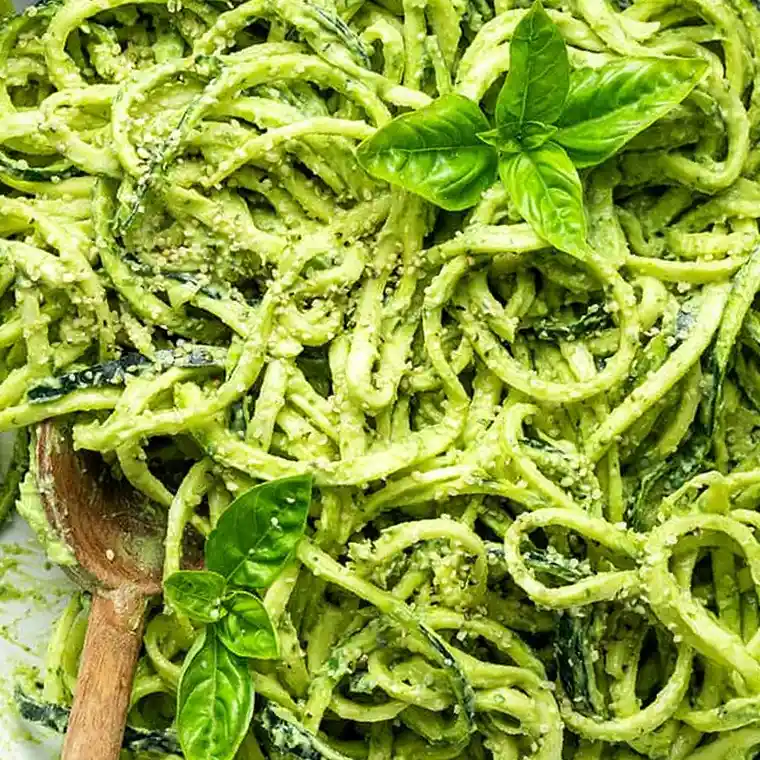
List of ingredients
- 3 – 4 medium zucchinis – selected for consistent texture and size.
- 2 avocados – must be ripe for a smooth blend.
- 2 cups fresh basil – packed tightly for maximum herb flavor.
- 3 – 4 cloves garlic – peeled and roughly chopped.
- Juice of 1 lemon – provides acidity and prevents browning.
- 1/4 cup hemp seeds (or pine nuts) – adds protein and creamy thickness.
- Sea salt + red pepper flakes – added to taste for seasoning and heat.
step-by-step instructions
- Prepare the zucchini: Spiralize the zucchinis and break or cut the noodles into smaller strands for easier mixing. Place them in a large bowl and set aside.
- Blend the pesto: Add the avocados, basil, garlic, lemon juice, hemp seeds (or pine nuts), salt, and red pepper flakes to a food processor. Blend on high speed until the mixture is completely smooth and creamy.
- Combine: Pour the prepared pesto over the zucchini noodles and toss thoroughly to ensure every strand is coated.
- Finish and serve: Serve the dish immediately or store it in the refrigerator until you are ready to eat.
- Garnish: Optionally sprinkle additional hemp seeds or nutritional yeast over the top before serving.
Zucchini Preparation Techniques
Using a Spiralizer for Traditional Noodles
A spiralizer is the most efficient tool for creating long, curly noodles that mimic spaghetti. Ensure the zucchini is firm to prevent the tool from crushing the vegetable during rotation.
Creating Ribbons with a Vegetable Peeler
If you lack a spiralizer, a standard vegetable peeler can create wide, flat ribbons. These ribbons resemble pappardelle pasta and provide a different mouthfeel and surface area for the sauce.
Cutting Julienne Strips with a Knife
A sharp chef’s knife can be used to cut zucchini into thin matchsticks. Slice the zucchini into planks first, then stack the planks and cut them into thin strips.
Managing Excess Moisture in Zoodles
Raw zucchini contains high water content which can dilute the sauce over time. To prevent this, sprinkle the spiralized noodles with a pinch of salt, let them sit for 10 minutes, and pat them dry with a paper towel.
Pesto Texture and Consistency
Achieving Maximum Smoothness
To ensure the pesto is perfectly creamy, process the ingredients on the highest setting of your food processor. If the blades are struggling, stop and scrape down the sides with a spatula before resuming.
Adjusting Thickness with Liquid
If the pesto feels too thick or heavy, add water or lemon juice one tablespoon at a time. Continue blending after each addition until the sauce reaches your preferred pouring consistency.
The Role of Hemp Seeds in Emulsification
Hemp seeds act as a thickener and emulsifier, helping the fats from the avocado bond with the lemon juice. They provide a nutty undertone and a smoother texture than some traditional nuts.
Substituting Pine Nuts for Hemp Seeds
Pine nuts provide a more traditional pesto flavor and a richer, buttery taste. If using pine nuts, lightly toast them first to enhance their aroma and flavor profile.
Avocado Selection and Maintenance
Identifying the Perfect Ripeness
Select avocados that yield slightly to gentle pressure but do not feel mushy. An avocado that is too firm will result in a grainy pesto, while an overripe one may have off-flavors.
Preventing Oxidation and Browning
The citric acid in lemon juice slows the oxidation process of the avocado. Ensure the lemon juice is blended thoroughly into the sauce to maintain a bright green color for longer.
Using Frozen Avocado Pits or Pulp
Frozen avocado can be used if thawed completely, though it may have a slightly different texture. Be prepared to add more lemon juice to counteract any flavor changes caused by freezing.
Storage of Unused Avocado
If you have leftover avocado, store it with the pit inside and wrap it tightly in plastic wrap. This minimizes exposure to air and prevents the surface from turning brown.
Cooking Variations for Zucchini
Quick Sautéing for a Softer Texture
If you prefer cooked noodles, sauté the zucchini in a pan with a teaspoon of olive oil for 2 to 3 minutes. Remove them from heat before stirring in the pesto to avoid heating the raw avocado.
Light Blanching for a Flexible Bite
Briefly dipping the zucchini noodles in boiling water for 30 to 60 seconds softens them. Immediately plunge them into an ice bath to stop the cooking process and maintain the color.
Avoiding Mushiness During Cooking
Overcooking zucchini leads to a watery, limp texture that cannot support a heavy sauce. Keep cooking times minimal and maintain high heat to sear the outside without breaking down the internal structure.
Combining Raw and Cooked Elements
You can mix raw zoodles with a small amount of sautéed vegetables like mushrooms or bell peppers. This adds complexity to the dish while keeping the core of the meal fresh and raw.
Protein and Vegetable Additions
Integrating Plant-Based Proteins
Toss in cubes of baked tofu or crispy chickpeas to increase the protein content of the meal. These additions make the dish more filling and suitable as a primary dinner course.
Adding Fresh Garden Vegetables
Halved cherry tomatoes or thin slices of cucumber add a refreshing contrast to the creamy sauce. These vegetables should be folded in gently at the end to keep them crisp.
Using Nutritional Yeast for Umami
Stirring nutritional yeast directly into the pesto adds a savory, cheesy flavor without using dairy. It also increases the B-vitamin content of the recipe.
Adding Leafy Greens for Extra Nutrients
Fold in a handful of baby spinach or arugula to increase the nutrient density. The greens will wilt slightly into the sauce, adding another layer of herbaceousness.
Storage and Reheating Guidelines
Refrigeration Limits for Raw Pesto
Stored in an airtight container, this dish is best consumed within 24 hours. After this point, the zucchini releases significant water and the avocado may begin to brown.
Managing Liquid Separation in the Fridge
It is normal for zucchini noodles to release water while stored. Simply drain the excess liquid from the container and toss the noodles again to redistribute the pesto before serving.
Why Freezing is Not Recommended
Avocados change texture and flavor when frozen and then thawed, often becoming bitter or watery. Similarly, frozen zucchini loses its structural integrity and becomes mushy upon thawing.
Best Practices for Airtight Storage
Use a glass container with a locking lid to keep oxygen out. Pressing a piece of parchment paper directly onto the surface of the pesto can further prevent oxidation.
Troubleshooting the Recipe
Correcting an Overpowering Garlic Taste
If the garlic is too strong, blend in a small amount of additional avocado or a teaspoon of cashew butter. This adds fat and creaminess that mellows the intensity of the raw garlic.
Balancing Too Much Acidity
If the lemon juice makes the sauce too tart, add a pinch of salt or a small amount of maple syrup. These additions help balance the pH levels and soften the sharp citrus notes.
Fixing a Grainy Sauce Texture
Graininess usually stems from under-ripe avocados or large pieces of garlic. Increase the blending time or pass the sauce through a fine-mesh sieve for a professional finish.
Addressing Watery Noodles
If the final dish is too watery, it is likely due to the zucchini. Next time, use the salting method mentioned in the preparation section to draw out moisture before mixing.
Frequently Asked Questions
Can I use a blender instead of a food processor?
Yes, a high-speed blender works well for this recipe. You may need to stop and stir the ingredients more frequently to ensure the basil and garlic are fully incorporated.
How do I keep the pesto bright green?
The key is the lemon juice and minimal exposure to air. Blend the sauce quickly and serve immediately, or store it in a container with as little headspace as possible.
Can I use a different citrus juice instead of lemon?
Lime juice is an excellent substitute and provides a slightly more tropical flavor. Ensure the quantity remains the same to maintain the correct balance of acidity.
What is the best way to spiralize zucchini without a machine?
A julienne peeler is the most effective manual alternative. It allows you to create consistent, thin strips that mimic the texture of noodles quite closely.
Can I replace the basil with other herbs?
You can use spinach for a milder taste or a mix of parsley and cilantro for a more pungent, zesty flavor. Adjust the quantity to match the 2 cups of basil.
} Print
Raw Avocado Pesto Zucchini Noodles
- Total Time: 5 minutes
- Yield: 4 servings 1x
- Diet: Vegan, Gluten-Free
Description
Zucchini noodles are tossed in a creamy raw avocado pesto for a healthy dinner perfect for hot summer days!
Ingredients
- 3–4 medium zucchinis
- 2 avocados
- 2 cups fresh basil
- 3–4 cloves garlic
- Juice of 1 lemon
- 1/4 cup hemp seeds or pine nuts
- Sea salt to taste
- Red pepper flakes to taste
Instructions
- Prep: Spiralize the zucchinis and break/cut the noodles into smaller strands. Put them in a large bowl and set aside.
- Blend: Add remaining ingredients to a food processor and blend on high until smooth and creamy. Pour pesto over zucchini noodles and toss to combine.
- Serve: Serve immediately or store in the fridge until ready to serve.
- Garnish: Enjoy with a sprinkling more of hemp seeds and/or nutritional yeast and enjoy!
Notes
Leftovers can be stored in an airtight container in the refrigerator for about a day. If the pesto is too thick, add water a tablespoon at a time until it reaches your desired consistency.
- Prep Time: 5 minutes
- Cook Time: 0 minutes
- Category: Main Course
- Method: Blending
- Cuisine: American, Italian
Nutrition
- Serving Size: 1 serving
- Calories: 280 kcal
- Sugar: 6 g
- Sodium: 96 mg
- Fat: 21 g
- Saturated Fat: 2 g
- Unsaturated Fat: 19 g
- Trans Fat: 0 g
- Carbohydrates: 19 g
- Fiber: 10 g
- Protein: 9 g
- Cholesterol: 0 mg