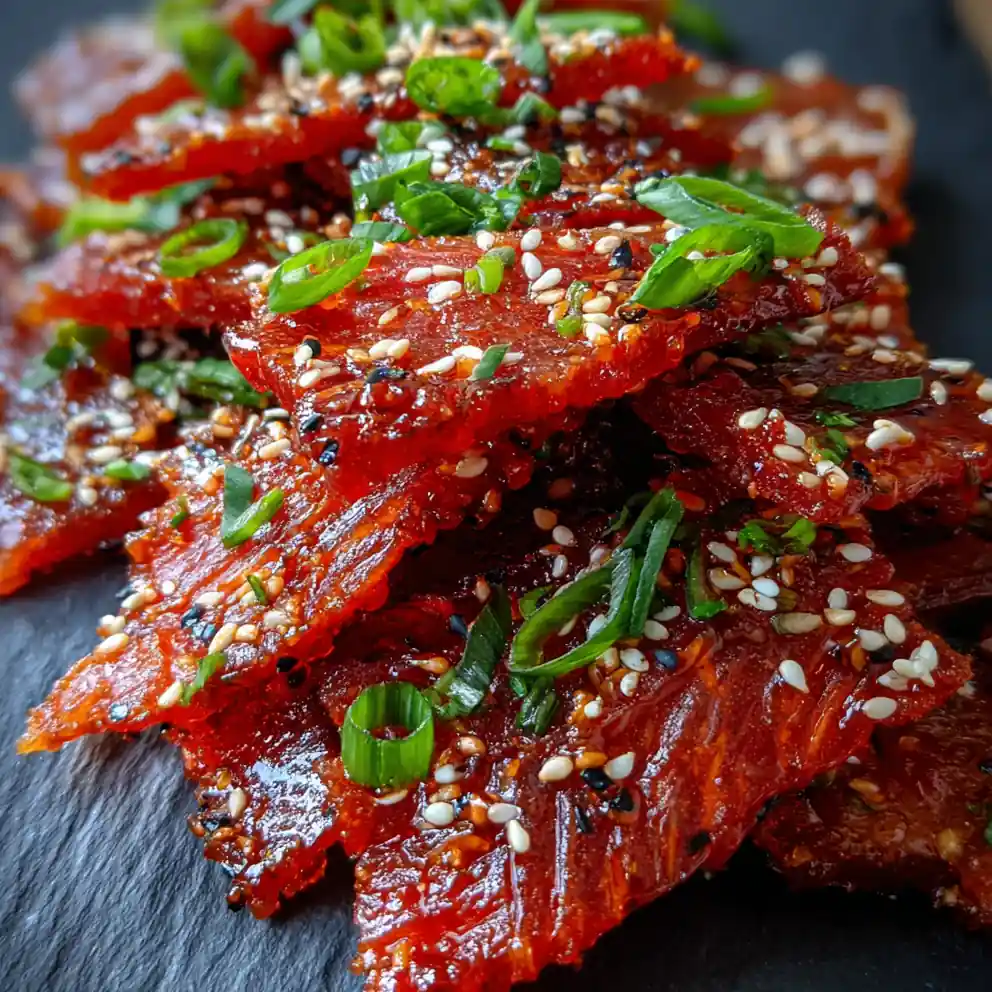
I’ve found making my own snacks is a fantastic way to keep my family fueled and happy without breaking the bank. Imagine biting into a perfectly chewy, savory piece of salmon jerky, boasting a glossy, reddish-orange hue and a hint of sweet heat. This homemade salmon jerky recipe is a game-changer for busy families and active folks, transforming simple fillets into a high-protein snack that truly satisfies. It’s a healthy, easy dinner idea for meal prep that keeps us going through long school days and after-school activities.
What You’ll Need for Your Homemade Salmon Jerky
To create this fantastic Gochujang-Maple salmon jerky recipe, you’ll need a few key items. Focusing on quality ingredients ensures a delicious and healthy snack for your family.
- Salmon Fillets: 700 g (1.5 lb) skinless, about 2.5-3 cm (1 inch) thick. Opt for wild-caught salmon for superior Omega-3s, making this a truly healthy choice. Choose fresh, firm salmon; store fillets properly in the fridge until ready to use.
- Gochujang (Korean chili paste): 60 g (1/4 cup). This provides the unique savory heat. (Ensure no alcohol content when selecting your paste).
- Pure Maple Syrup: 60 mL (1/4 cup). Adds natural sweetness, balancing the spice and aiding glaze texture. (You can swap for honey if you prefer a different sweetness profile).
- Low-Sodium Soy Sauce: 45 mL (3 tbsp). Forms the salty, umami base. (Use tamari for a gluten-free salmon jerky option, or coconut aminos for a paleo-friendly approach).
- Fresh Ginger: 15 g (1 tbsp) grated. Delivers aromatic freshness.
- Garlic: 15 g (1 tbsp) minced. Essential for a robust flavor foundation.
- Apple Cider Vinegar: 15 mL (1 tbsp). Brightens all the flavors.
- Toasted Sesame Oil: 5 mL (1 tsp). Adds a deep, nutty aroma, classic in Asian-inspired dishes.
- Freshly Ground Black Pepper: 2.5 mL (1/2 tsp). For a touch of earthy warmth.
- Toasted White Sesame Seeds: 30 mL (2 tbsp), for garnish. Adds a delightful nutty crunch and visual appeal to your high-protein snacks.
- Green Onions: 2, thinly sliced on the bias, for garnish. Provides vibrant color and a fresh, aromatic finish.
Your Step-by-Step Guide to Making Perfect Salmon Jerky
Crafting your own delicious salmon jerky at home is straightforward with these simple steps. Pay attention to the details for the best chewy texture.
- Prep the Salmon: Trim 700 g (1.5 lb) skinless salmon fillets, removing any pin bones or dark fatty portions. Using a sharp knife, slice the salmon uniformly along the grain into strips approximately 5 mm (0.2 inches) thick and 2.5 cm (1 inch) wide. The strips should look consistent in size. Aim for this precise thickness for even drying.
- Mix the Gochujang-Maple Marinade: In a medium bowl, whisk together the 60 g (1/4 cup) gochujang, 60 mL (1/4 cup) pure maple syrup, 45 mL (3 tbsp) low-sodium soy sauce, 15 g (1 tbsp) grated fresh ginger, 15 g (1 tbsp) minced garlic, 15 mL (1 tbsp) apple cider vinegar, 5 mL (1 tsp) toasted sesame oil, and 2.5 mL (1/2 tsp) black pepper until well combined. The marinade will have a glossy, reddish appearance.
- Marinate the Salmon: Add the sliced salmon strips to the marinade, ensuring each piece is thoroughly coated. Cover the bowl and refrigerate for a minimum of 2 hours, or up to 4 hours. This marinating time allows the rich flavors to deeply penetrate the fish. For a quicker snack, a shorter 2-hour marinade is fine for your high-protein salmon jerky.
- Prepare for Drying: Preheat your dehydrator to 60°C (140°F) or your oven to its lowest setting, typically 60-70°C (140-160°F). If using an oven, line baking sheets with parchment paper and place wire racks on top for air circulation. Keeping the temperature low is crucial to dehydrate, not cook, your protein-packed snack.
- Arrange the Jerky: Arrange the marinated salmon strips in a single layer on dehydrator trays or the prepared wire racks, ensuring no pieces overlap. Strips should have space for air to circulate freely. This allows for even air flow and thorough drying.
- Dehydrate or Bake: Dehydrate for 4 to 8 hours, or bake in the oven with the door slightly ajar (to vent moisture) for 5 to 9 hours, flipping the strips every 2-3 hours. The jerky is done when it is firm, chewy, and pliable but no longer moist or sticky. Drying time varies by thickness and appliance; I usually start checking for doneness after 4 hours in my dehydrator. If the strips feel soft or overly moist after the minimum time, continue for another hour or two until the desired pliable texture is reached.
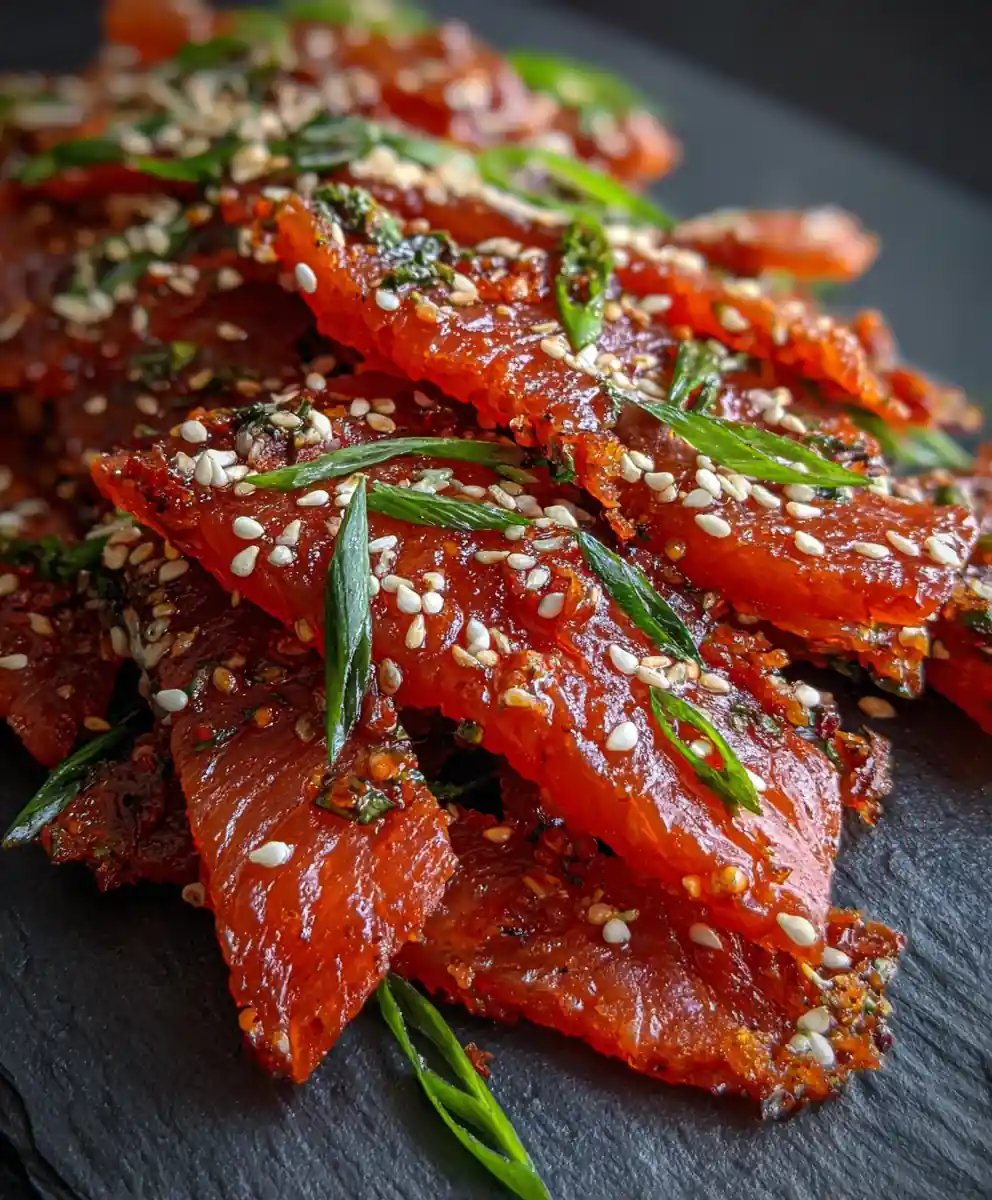
- Cool and Garnish: Once dried, remove the salmon jerky from the dehydrator or oven and let it cool completely on a wire rack at room temperature. It will feel firm to the touch once cooled. Cooling is crucial for achieving the desired texture and prevents condensation when stored. For plating, arrange the glossy, reddish-orange salmon jerky, sprinkle generously with 30 mL (2 tbsp) toasted white sesame seeds, and scatter 2 thinly sliced green onions for a vibrant, family-friendly finish.
Common Mistakes & How to Avoid Them
- Too Thick Slices: Leads to uneven drying. Always aim for consistent 5 mm strips to ensure every piece of your salmon jerky dries perfectly.
- Over-Marinating: While a longer marinade can deepen flavor, exceeding 4 hours might make the salmon too salty or alter its texture. Stick to the recommended times for the best salmon jerky recipe results.
- Too High Heat: Cooks the salmon instead of dehydrating it. Keep your dehydrator or oven temperature low and steady as specified to achieve true jerky texture, making a satisfying, healthy snack.
When and Where to Enjoy Your Delicious Salmon Jerky
This savory snack is incredibly versatile, fitting seamlessly into various moments of your day. Homemade salmon jerky offers a delicious protein boost for any occasion, from family meals to outdoor adventures.
- Family Dinners & Gatherings: Serve this flavorful treat as a unique appetizer or a healthy protein side.
- Weeknight Meals: Quickly add a protein punch to salads, wraps, or grain bowls.
- Kids’ Lunchboxes: It’s a fantastic, healthy alternative to sugary, processed snacks, and I often portion out this easy salmon jerky for my kids’ lunchboxes as a grab-and-go option.
- Festive Table: Elevate your charcuterie boards with a gourmet, protein-rich touch.
- Meal Prep: Portion into individual bags for simple, grab-and-go convenience.
Pairing Ideas: Enjoy your jerky with fresh fruit, a slice of cheese, or crunchy crackers, or even crumbled over a vibrant green salad for added texture and nutrition.
The Nutritional Goodness of a Healthy Salmon Jerky Snack
Choosing to make a healthy salmon jerky snack at home means fueling your body with quality ingredients. This high-protein snack offers a wealth of benefits for overall well-being and supports various dietary needs.
- Packed with Omega-3 Fatty Acids: Supports heart and brain health while reducing inflammation throughout the body.
- High-Quality Protein: Essential for muscle repair, growth, and providing sustained energy levels.
- Rich in Vitamins: A good source of Vitamin D and various B vitamins, crucial for energy metabolism.
- Keto-Friendly: Naturally low-carb and high in healthy fats, especially when using a sugar-free marinade.
- Paleo/Whole30 Compliant: Easily adapted by using approved ingredients like coconut aminos and avoiding refined sugars.
- Gluten-Free: Simple to make gluten-free by opting for tamari or coconut aminos in your salmon jerky recipe.
- Healthy Family Meals: Provides essential nutrients in a convenient, appealing form for everyone.
- Meal Prep Recipes for Weight Loss: Aids satiety and helps control portions, supporting your wellness goals.
- Protein-Packed Snacks: Ideal for post-workout recovery or a much-needed energy boost during a busy day.
- Low-Calorie Options: A satisfying snack that helps curb cravings without excess calories, contributing to healthy eating.
Everyday Perks: Why Homemade Salmon Jerky is a Game-Changer
Making your own homemade salmon jerky is more than just a culinary project; it’s a smart lifestyle choice that offers practical advantages for busy households. This convenient snack simplifies healthy eating.
- Time Savings: Mostly hands-off cooking, perfect for batch preparing on a weekend afternoon to stock up.
- Affordability: Significantly cheaper than store-bought jerky, especially when you find salmon on sale.
- Convenience: A ready-to-eat, shelf-stable snack that’s always on hand for quick fuel.
- Fits Modern Lifestyles: Provides quick cooking potential with minimal active prep time.
- Storage: Lasts weeks at room temperature in an airtight container; even longer refrigerated or frozen.
- Portability: Ideal for lunchboxes, hikes, travel, or gym bags, making it a perfect on-the-go snack.
- Make-Ahead: Excellent for stocking up your pantry or freezer with healthy options.
Pro Tips and Exciting Flavor Upgrades for Your Salmon Jerky
Elevate your homemade salmon jerky with these expert tips and creative flavor combinations. A few simple adjustments can transform your basic salmon jerky recipe into something truly special.
- Techniques for Success: Always ensure uniform slicing for even drying; pat salmon strips extensively dry before dehydrating. Using parchment paper on oven racks can prevent sticking.
- Seasoning and Spice Profiles:
- Teriyaki: Add a dash of sesame oil and grated fresh ginger to your base marinade.
- Spicy Sriracha-Lime: Include sriracha hot sauce and fresh lime juice for a vibrant kick.
- Herby Lemon-Dill: Mix in dried dill and lemon zest for a bright, fresh flavor.
- Dietary or Allergy Adjustments: Offer sugar-free marinade options using erythritol or stevia for those avoiding sugar. Always check labels for soy-free alternatives like coconut aminos if needed.
Your Top Questions About Salmon Jerky Answered
Is salmon jerky suitable for a low-carb diet?
Yes, absolutely! With a sugar-free marinade (using ingredients like coconut aminos and erythritol instead of brown sugar), it’s a fantastic high-protein, low-carb snack that perfectly supports your dietary goals and helps maintain ketosis.
What’s the best way to store homemade salmon jerky for meal prep?
Store your cooled salmon jerky in an airtight container or a sealed bag at room temperature for up to 2 weeks. For extended freshness, refrigerate it for up to a month. For long-term meal prep, you can even freeze it for several months.
Can I make salmon jerky in an oven if I don’t have a dehydrator?
Definitely! You can use your oven at its lowest possible setting, typically around 150-175°F (65-80°C). Prop the oven door slightly ajar with a wooden spoon to allow moisture to escape. It works great for this salmon jerky recipe, just ensure good airflow.
How do I know when my salmon jerky is done?
Your salmon jerky is ready when it’s firm, pliable, and slightly chewy, but not brittle. It shouldn’t be sticky to the touch or have any soft spots when you bend a piece. The color should also be uniformly deeper.
Can I use frozen salmon to make salmon jerky?
Yes, you can! Just make sure to fully thaw the salmon in the refrigerator before preparing it. Pat the thawed fillets very dry before slicing for the best texture and proper dehydration in your homemade salmon jerky.
What are some healthy seasoning ideas for salmon jerky?
For healthy salmon jerky, try a mix of garlic powder, onion powder, paprika, and a dash of cayenne pepper for a little heat. Fresh dill and lemon zest also offer a bright, flavorful option. Always aim to keep added sugar and sodium low.
Why is homemade salmon jerky better than store-bought?
Homemade salmon jerky lets you control every ingredient, avoiding the preservatives, excessive sodium, and artificial flavors often found in commercial brands. It’s fresher, more customizable, and usually more affordable, giving you a superior product.
Conclusion
This easy salmon jerky recipe isn’t just a snack; it’s a delicious, healthy win for any busy family looking for convenient, protein-packed fuel for a healthy lifestyle. I love having a batch ready for grab-and-go energy! Bookmark this recipe, share the goodness with a friend, and save it to your Pinterest boards for future healthy eating inspiration.
Print
salmon jerky recipe
- Total Time: 560 minutes
- Yield: about 16 servings 1x
- Diet: General (High-Protein with Gluten-Free and Paleo options)
Description
This homemade salmon jerky recipe transforms skinless salmon fillets into a high-protein, chewy, savory snack with a hint of sweet heat from gochujang and maple syrup. It’s an ideal meal prep item for busy families and active individuals, providing sustained energy.
Ingredients
- 1.5 lb skinless salmon fillets, about 1 inch thick, wild-caught
- 0.25 cup Gochujang (Korean chili paste), ensure no alcohol content
- 0.25 cup pure maple syrup (you can swap for honey)
- 3 tbsp low-sodium soy sauce (use tamari for gluten-free, or coconut aminos for paleo)
- 1 tbsp fresh ginger, grated
- 1 tbsp garlic, minced
- 1 tbsp apple cider vinegar
- 1 tsp toasted sesame oil
- 0.5 tsp freshly ground black pepper
- 2 tbsp toasted white sesame seeds, for garnish
- 2 green onions, thinly sliced on the bias, for garnish
Instructions
- Prep Salmon Fillets: Trim 1.5 lb skinless salmon fillets, removing any pin bones or dark fatty portions. Using a sharp knife, slice the salmon uniformly along the grain into strips approximately 0.2 inches (5 mm) thick and 1 inch (2.5 cm) wide, ensuring consistent size for even drying.
- Mix Marinade Ingredients: In a medium bowl, whisk together the 0.25 cup gochujang, 0.25 cup pure maple syrup, 3 tbsp low-sodium soy sauce, 1 tbsp grated fresh ginger, 1 tbsp minced garlic, 1 tbsp apple cider vinegar, 1 tsp toasted sesame oil, and 0.5 tsp black pepper until well combined.
- Marinate Salmon Strips: Add the sliced salmon strips to the marinade, ensuring each piece is thoroughly coated. Cover the bowl and refrigerate for a minimum of 2 hours, or up to 4 hours, to allow the rich flavors to deeply penetrate the fish.
- Prepare for Drying: Preheat your dehydrator to 140 degrees F (60 degrees C) or your oven to its lowest setting (typically 140-160 degrees F or 60-70 degrees C). If using an oven, line baking sheets with parchment paper and place wire racks on top for air circulation.
- Arrange Jerky Strips: Arrange the marinated salmon strips in a single layer on dehydrator trays or the prepared wire racks, ensuring no pieces overlap and there is space for air to circulate freely for even air flow and thorough drying.
- Dehydrate or Bake Jerky: Dehydrate for 4 to 8 hours, or bake in the oven with the door slightly ajar (to vent moisture) for 5 to 9 hours, flipping the strips every 2-3 hours. The jerky is done when it is firm, chewy, and pliable but no longer moist or sticky; start checking after 4 hours in a dehydrator and continue for another hour or two if needed.
- Cool and Garnish: Once dried, remove the salmon jerky from the dehydrator or oven and let it cool completely on a wire rack at room temperature. It will feel firm to the touch once cooled. For plating, arrange the glossy, reddish-orange salmon jerky, sprinkle generously with 2 tbsp toasted white sesame seeds, and scatter 2 thinly sliced green onions for a vibrant finish.
Notes
Ensure salmon strips are consistently 0.2 inches thick for even drying. Avoid over-marinating past 4 hours to prevent overly salty jerky. Keep drying temperature low (140-160F) to dehydrate, not cook, the salmon.
- Prep Time: 20 minutes
- Cook Time: 360 minutes
- Category: Snack
- Method: Dehydrating
- Cuisine: Korean-inspired
Nutrition
- Serving Size: 1-2 strips (about 17 g)
- Calories: 90 calories
- Sugar: 5 g
- Sodium: 220 mg
- Fat: 5 g
- Saturated Fat: 1.5 g
- Unsaturated Fat: 3.5 g
- Trans Fat: 0 g
- Carbohydrates: 6 g
- Fiber: 1 g
- Protein: 8 g
- Cholesterol: 25 mg
FREE PRINTABLE RECIPE
Get the Printable Recipe PDF (Free)
Enter your email and we’ll send you the ingredients + step-by-step instructions as a clean PDF you can save to your phone.
- ✅ Printable PDF (ingredients + steps)
- ✅ Save it to your phone (no long scrolling)
- ✅ Includes cook time + servings
- ✅ Easy to follow
FAQ
Where’s the full recipe?
It’s delivered as a printable PDF so you can save it and cook without scrolling.
I didn’t get the email.
Check Spam/Promotions and search your inbox for your site name. Then click Confirm to receive the PDF.