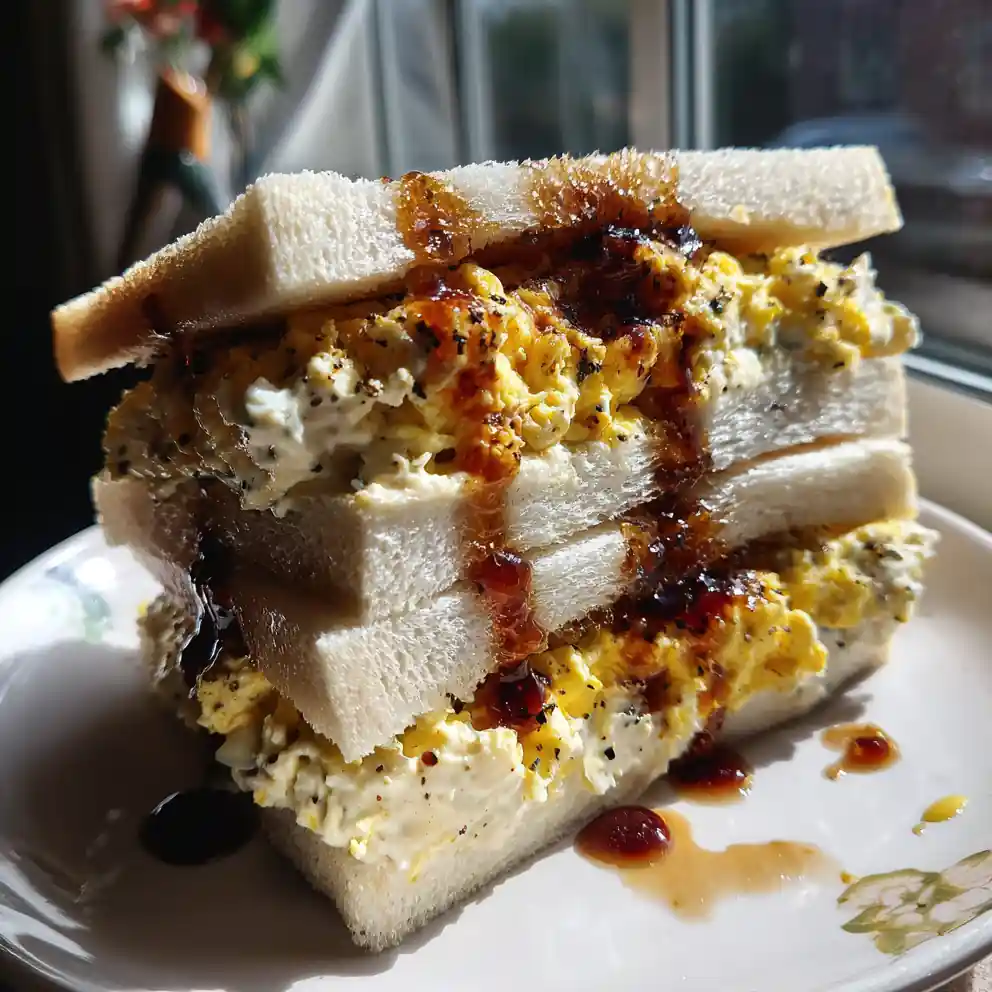
I really believe a great sandwich should feel like a small luxury, not just a quick meal. This elevated japanese egg sandwich recipe delivers exactly that, transforming the traditional tamago sando into a high-end experience with its creamy texture and rich, savory-sweet flavor. It’s the perfect high-protein snack for busy days or a new family-friendly lunch option that gets everyone excited. The key to this recipe’s success is using specific ingredients and techniques, and I’ll walk you through exactly how to achieve that perfect soft, pillowy texture and rich flavor in this japanese egg sandwich recipe.
Ingredients
To make the best possible version of this specific japanese egg sandwich recipe, you’ll want to choose ingredients that prioritize both texture and flavor. The combination of creamy egg salad and savory glaze requires a few key items:
- 6 large eggs
For the perfect creamy texture, boil for 9-10 minutes for firm but slightly soft yolks. Use cold water to start, and ensure a rapid ice bath afterward. - 4 slices shokupan (Japanese milk bread) or very soft white sandwich bread
The soft texture of shokupan is crucial for authenticity, as it compresses well without tearing. If shokupan isn’t available, use the softest, thick-cut white bread you can find, such as a brioche loaf. - 80 g (1/3 cup) Japanese mayonnaise (e.g., Kewpie-style)
Japanese mayonnaise is vital for flavor, as it uses only egg yolks, resulting in a richer, umami taste. Use a trusted brand to ensure non-halal ingredients are avoided if necessary. - 15 g (1 tablespoon) furikake (seaweed and sesame rice seasoning)
Adds texture, saltiness, and a nutty, ocean-fresh umami to the egg salad. Ensure the specific furikake blend does not contain non-halal ingredients; classic nori and sesame blends are ideal. - 2.5 ml (1/2 teaspoon) fine sea salt
Use to season the egg salad mixture. Adjust according to the salt content of your specific mayonnaise brand. - 1 g (1/4 teaspoon) freshly ground black pepper
Provides a subtle counterpoint to the rich, creamy egg salad base. - For the Sticky Soy-Mirin Glaze:
30 ml (2 tablespoons) light soy sauce: Light soy sauce provides color and salinity; use low-sodium if preferred.
30 ml (2 tablespoons) alcohol-free mirin: Adds sweetness and gloss without the alcohol content.
5 g (1 teaspoon) granulated sugar: Enhances the sweetness and helps thicken the glaze to a sticky consistency.
Instructions
Following these steps carefully ensures the perfect texture for this family-friendly japanese egg sandwich recipe.
- Hard-Boil and Peel the Eggs
Place the eggs in a saucepan and cover completely with cold water; bring to a full rolling boil over medium-high heat. Immediately reduce heat to low, cover, and cook for exactly 9-10 minutes for firm but still slightly creamy yolks. Transfer the hot eggs immediately to an ice bath for 5 minutes; this stops cooking and makes peeling easier. Peel the eggs and set aside. - Prepare the Sticky Soy-Mirin Glaze
In a small saucepan, combine the light soy sauce, alcohol-free mirin, and granulated sugar. Bring to a gentle simmer over medium-low heat, stirring until the sugar dissolves completely. Continue to simmer for 3-5 minutes, or until the glaze thickens to a glossy, ribbon-like consistency that coats the back of a spoon; let cool to room temperature to thicken further. - Create the Furikake-Infused Egg Salad
Coarsely chop the peeled, cooled eggs using a knife or large fork; do not mash them into a paste. In a medium bowl, combine the chopped eggs with Japanese mayonnaise, salt, black pepper, and 15g (1 tablespoon) furikake. Mix gently until just combined; ensure the mixture remains chunky and textured for the best mouthfeel. I’ve found that if I overmix it, the texture gets too smooth; a light touch keeps it chunky and satisfying. - Assemble and Glaze the Sandwiches
Lay out the four slices of shokupan on a clean work surface; on two slices, spread a generous layer of the furikake egg salad, leaving a small border. Spoon or drizzle about half of the prepared Sticky Soy-Mirin Glaze directly over the egg salad on these two slices, creating a visible dark ribbon or swirl in the center. Evenly distribute the remaining egg salad over the glaze, mounding it slightly in the middle, then top with the remaining two slices of bread. This layering technique enhances the flavor of this specific japanese egg sandwich recipe. - Trim and Slice for Presentation
Using a sharp, serrated knife, carefully trim all four crusts from each sandwich; work slowly to keep the filling intact. Gently press down on the sandwiches to ensure the filling is compact before slicing diagonally to create two triangular halves. The presentation cut showcases the creamy filling and the contrasting, dark ribbon of glaze for this beautiful japanese egg sandwich recipe. - Garnish and Serve Immediately
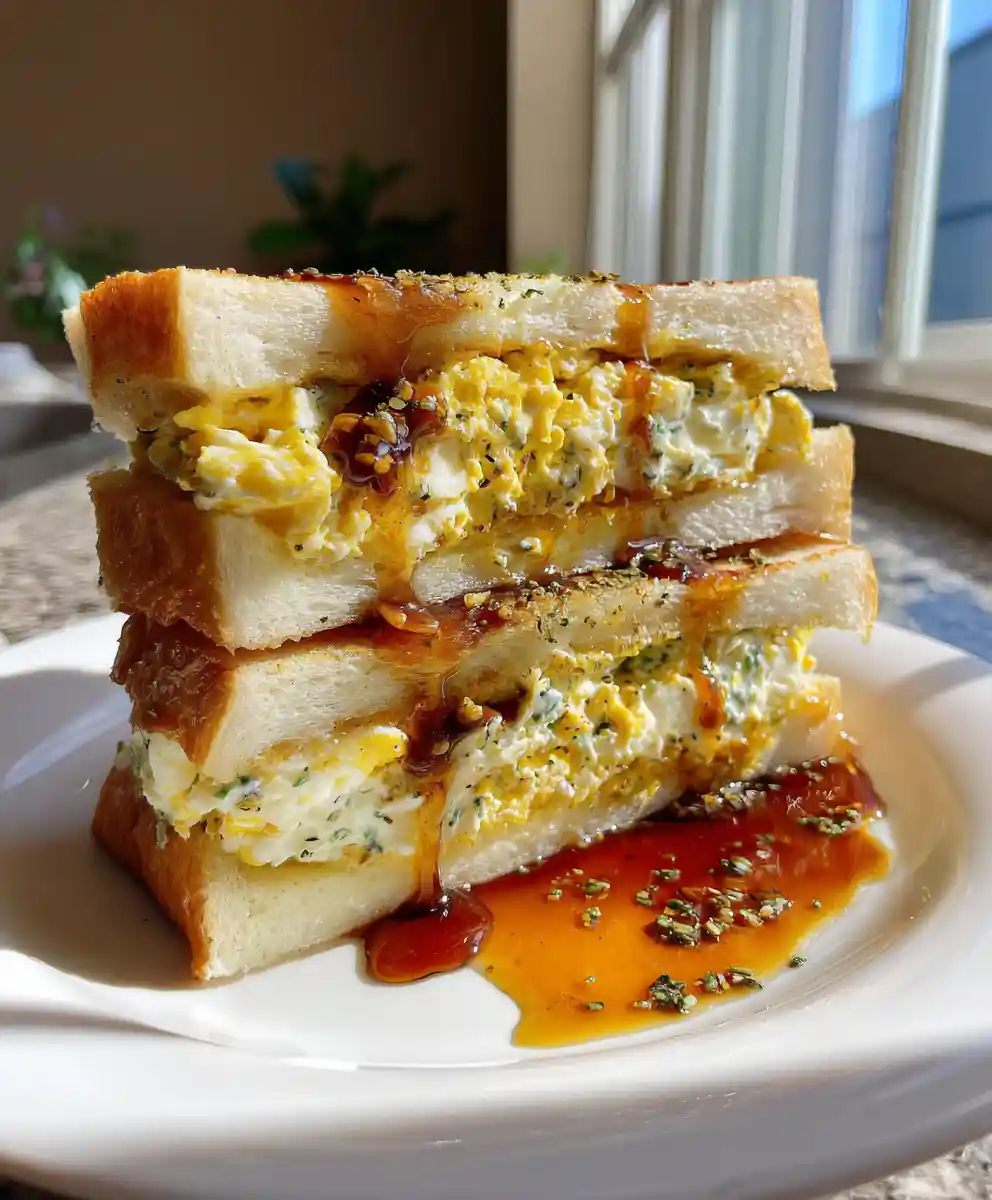
For plating, arrange two sandwich halves on a minimalist plate, showcasing the cut cross-section. Lightly dust the exposed egg salad and plate with a pinch of extra furikake. Drizzle a thin line of the remaining Sticky Soy-Mirin Glaze across one corner of the plate or directly onto the cut edge of the sandwich for an added touch of shine and flavor. The finishing touch elevates this healthy, high-protein snack.
The Secret to Shokupan (Japanese Milk Bread)
The soft texture of shokupan is essential for a truly authentic japanese egg sandwich recipe experience. This unique Japanese milk bread is known for its high moisture content and springy texture, which allows it to compress perfectly around a generous filling without tearing. If you cannot find shokupan, look for a very soft, thick-cut white bread or a brioche loaf that lacks a tough crust. The key is finding bread that will yield to the creamy egg salad filling rather than resisting it.
Mastering the Glaze for Umami Depth
The sticky soy-mirin glaze in this recipe adds a crucial layer of sweetness and umami, differentiating it from a standard egg salad sandwich. This element elevates a simple high-protein snack into something special. The key to thickening the glaze is careful reduction; monitor it closely during simmering to avoid scorching and ensure a glossy, sticky consistency that coats the back of a spoon. This glaze can also be used as a quick flavor booster on rice bowls or with other proteins for easy dinner ideas.
FAQs
Can I make the egg salad ahead of time?
Yes, the egg salad for this japanese egg sandwich recipe can be prepared up to 24 hours in advance and stored covered in the refrigerator. Assemble the sandwiches right before serving to prevent the bread from getting soggy. It keeps well for quick meals during the week.
What makes Japanese mayonnaise different from regular mayonnaise?
Japanese mayonnaise (like Kewpie) is richer and creamier because it uses only egg yolks instead of whole eggs, giving it a deeper umami flavor and a smoother texture. This richness is essential for creating the perfect mouthfeel in a tamago sando.
Is it okay to use regular white bread instead of shokupan?
You can use regular bread, but choose the softest bread possible. The unique springiness of shokupan is part of the experience, allowing the bread to hug the filling without tearing. For the best result, avoid breads with thick, firm crusts.
How do I get a clean cut without squeezing out the filling?
Use a very sharp, serrated knife and trim the crust first. A gentle, sawing motion works best; avoid pressing down too hard on the sandwich during the cut. For clean-edged sandwiches, I chill the assembled sandwiches for 10 minutes before cutting, which helps set the filling.
Can I substitute the furikake?
If you don’t have furikake for this japanese egg sandwich recipe, you can substitute it with toasted sesame seeds and a small amount of roasted seaweed flakes, though the flavor profile will be slightly different. For a lower-carb option, skip the furikake and add extra spices like garlic powder instead.
How long does the sandwich last after assembly?
These sandwiches are best enjoyed within an hour of assembly; after too long, the moisture from the egg salad will cause the bread to become soggy. They are not ideal for long-term meal prep after assembly.
Conclusion
This recipe transforms the classic japanese egg sandwich recipe into a memorable meal by layering savory, sweet, and umami flavors. The combination of creamy egg salad, furikake seasoning, and sticky glaze makes for a satisfying and easy lunch. If you try this recipe, save it to Pinterest for quick reference next time you need family-friendly lunch ideas.
Print
japanese egg sandwich recipe
- Total Time: 30 minutes
- Yield: 2 sandwiches 1x
- Diet: General
Description
This recipe elevates the traditional Japanese tamago sando (egg sandwich) with a creamy furikake-infused egg salad and a sticky soy-mirin glaze. It delivers a rich, savory-sweet flavor profile, perfect for a high-protein snack or lunch.
Ingredients
- 6 large eggs
- 4 slices Japanese milk bread (shokupan) or soft white bread
- 1/3 cup Japanese mayonnaise (Kewpie style)
- 1 tablespoon furikake (seaweed and sesame seasoning)
- 1/2 teaspoon fine sea salt
- 1/4 teaspoon ground black pepper
- 2 tablespoons light soy sauce
- 2 tablespoons alcohol-free mirin
- 1 teaspoon granulated sugar
Instructions
- Hard-Boil Eggs: Boil eggs in cold water for 9-10 minutes; transfer immediately to an ice bath for 5 minutes to cool and stop cooking. Peel eggs when fully cooled.
- Prepare Glaze: Combine soy sauce, mirin, and sugar in a small saucepan. Simmer for 3-5 minutes until thickened and glossy; cool completely to room temperature.
- Make Egg Salad: Coarsely chop the hard-boiled eggs. Gently mix with Japanese mayonnaise, salt, black pepper, and furikake; keep the mixture chunky, avoiding over-mashing.
- Assemble Sandwich: Spread a layer of egg salad on two bread slices. Drizzle half of the cooled glaze over the filling, then add the remaining egg salad on top before placing the other slices of bread on top.
- Slice and Serve: Trim all crusts with a sharp serrated knife, then slice each sandwich diagonally into two triangles. Serve immediately, garnished with extra furikake and glaze.
Notes
Use shokupan or soft brioche bread to achieve the right texture. Avoid overmixing the egg salad to keep it chunky. For cleaner cuts, chill the assembled sandwich for 10 minutes before trimming the crusts with a serrated knife.
- Prep Time: 15 minutes
- Cook Time: 15 minutes
- Category: Lunch, Snack
- Method: No-Cook
- Cuisine: Japanese
Nutrition
- Serving Size: 1 sandwich
- Calories: 850 kcal
- Sugar: 8g
- Sodium: 900mg
- Fat: 55g
- Saturated Fat: 10g
- Unsaturated Fat: 45g
- Trans Fat: 0g
- Carbohydrates: 55g
- Fiber: 3g
- Protein: 35g
- Cholesterol: 500mg
FREE PRINTABLE RECIPE
Get the Printable Recipe PDF (Free)
Enter your email and we’ll send you the ingredients + step-by-step instructions as a clean PDF you can save to your phone.
- ✅ Printable PDF (ingredients + steps)
- ✅ Save it to your phone (no long scrolling)
- ✅ Includes cook time + servings
- ✅ Easy to follow
FAQ
Where’s the full recipe?
It’s delivered as a printable PDF so you can save it and cook without scrolling.
I didn’t get the email.
Check Spam/Promotions and search your inbox for your site name. Then click Confirm to receive the PDF.