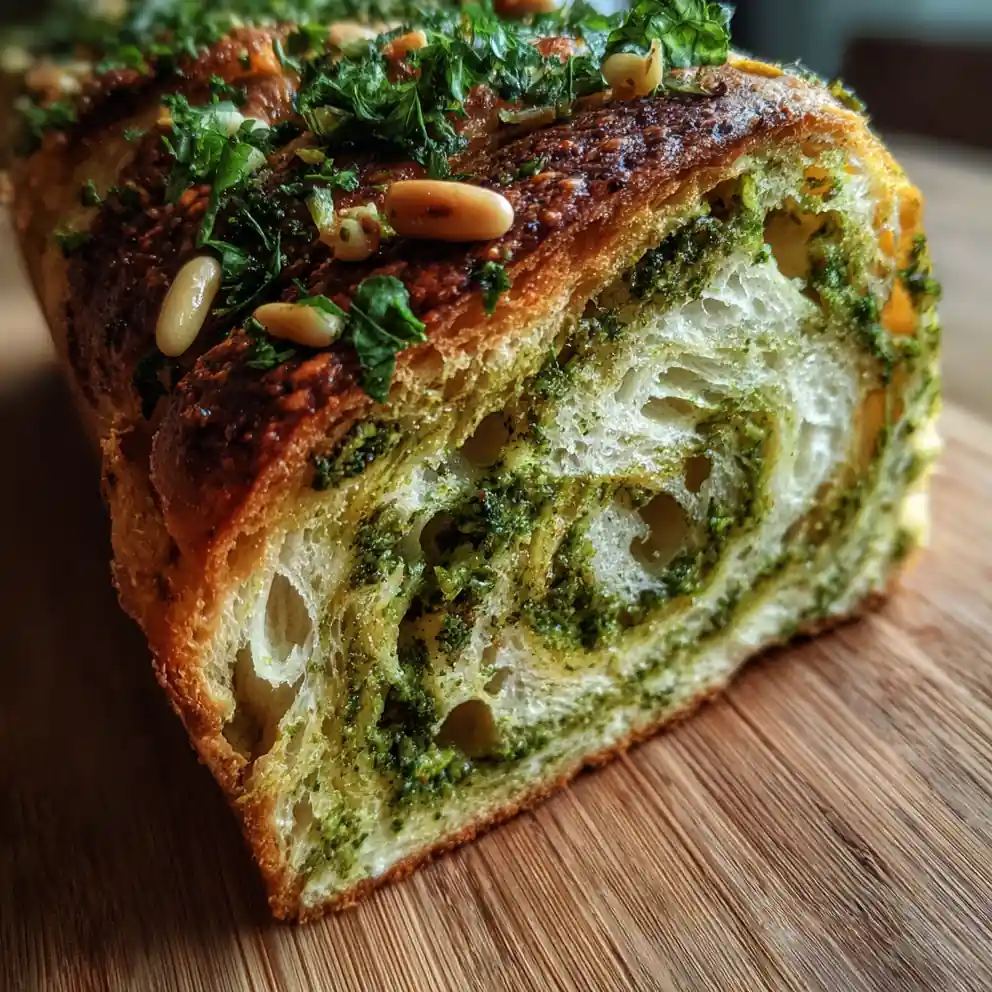
I always feel a huge sense of accomplishment when I pull a beautiful loaf of homemade bread from the oven. This **best bread recipe with yeast** takes that feeling to another level, transforming a simple dough into a vibrant, pesto-swirled masterpiece. The aroma of warm basil and toasted pine nuts fills the kitchen as it bakes, making it perfect for a cozy Sunday dinner or impressing guests. It’s a surprisingly easy, family-friendly recipe that looks complicated but relies on simple techniques. This hearty loaf freezes beautifully for quick meals later in the week.
Ingredients
Basic Yeast Dough Ingredients
- 350 ml (1 ½ cups) warm water (40-45°C / 105-115°F): The temperature must be precise to activate the yeast without killing it. Use a thermometer for accuracy, as water too hot will kill the yeast, and water too cold won’t activate it. Lukewarm water should feel just barely warm to the touch.
- 7 g (2 ¼ teaspoons) active dry yeast: This is the main leavening agent for your bread. Ensure your yeast is fresh and active by checking the expiration date on the package. Store extra yeast in an airtight container in the freezer for longer freshness.
- 15 g (1 tablespoon) granulated sugar: The sugar serves as food for the yeast, helping it activate and rise effectively. Do not omit the sugar; it is essential for the structure and flavor development of the bread. You can substitute honey if preferred, but use the same quantity (1 tablespoon).
- 500 g (4 cups) bread flour, plus more for dusting: Bread flour has higher protein content, which creates a stronger gluten structure and a chewier texture. For best results, measure flour by weight (grams) rather than volume (cups) as cup measurements can vary significantly. If you only have all-purpose flour, you can use it, but the final texture may be less airy and chewy.
- 10 g (1 ½ teaspoons) fine sea salt: Salt regulates the yeast activity and strengthens the gluten network, preventing the bread from rising too quickly. Do not add salt directly to the yeast mixture during activation, as it can hinder the process. Ensure you are using fine-grained salt; coarse salt may not dissolve properly.
- 30 ml (2 tablespoons) olive oil, plus more for greasing: The olive oil adds richness and moisture to the dough, contributing to a softer crumb. Use a standard olive oil rather than extra virgin, as the flavor will be more subtle during baking. Use a separate small amount of oil to lightly grease the bowl for the first rise, preventing sticking.
Fresh Basil Pesto Ingredients
- 60 g (2 cups packed) fresh basil leaves: Use fresh basil for the best flavor; dried basil will not work in this recipe. Ensure the leaves are thoroughly washed and dried before use to avoid watering down the pesto. This quantity of basil makes for a very vibrant green and flavorful pesto filling.
- 30 g (¼ cup) pine nuts, lightly toasted: Toasting the pine nuts enhances their flavor significantly; lightly toast them in a dry pan over medium heat for 3-5 minutes until golden brown. You can substitute walnuts or almonds if you have a pine nut allergy, but adjust for flavor preference. Ensure the nuts are cooled before adding them to the food processor to prevent the basil from turning brown.
- 2 cloves garlic, peeled: Use fresh garlic for the best, most pungent flavor. Adjust the quantity according to your preference; 2 cloves provide a balanced flavor without being overpowering. For a milder taste, you can roast the garlic slightly before adding it to the pesto.
- 50 g (½ cup) hard cheese (e.g., Parmesan-style), finely grated: Use a high-quality Parmesan or similar hard cheese for a savory, salty flavor. If making this vegetarian-friendly, ensure the cheese is made with microbial rennet, not animal rennet. Do not use pre-grated cheese in a can; freshly grated cheese melts and mixes better.
- 80 ml (⅓ cup) extra virgin olive oil: The oil creates the smooth, luxurious consistency of the pesto and carries the flavors. Use high-quality extra virgin olive oil for the best taste, as its flavor will be prominent in the final bread. Adjust the amount slightly to achieve the desired consistency; a thicker pesto is better for swirling.
- 2 g (½ teaspoon) fine sea salt and 1 g (¼ teaspoon) freshly ground black pepper: Use a fine salt to ensure it dissolves evenly into the pesto. The pepper adds a subtle kick to balance the rich basil and cheese flavors. Taste the pesto after blending and adjust salt and pepper if necessary.
Instructions
Here is how to make the **best bread recipe with yeast** for a flavorful pesto swirl loaf.
- Step 1: Activate the Yeast. In a large mixing bowl, combine the warm water, yeast, and sugar. Stir gently to dissolve the sugar. Allow the mixture to rest for 5-10 minutes. The mixture should become visibly foamy and bubbly, confirming the yeast is active and ready. If your mixture does not foam, your yeast may be old or the water temperature was incorrect; discard and try again with fresh ingredients.
- Step 2: Form the Dough. Add the bread flour and salt to the yeast mixture. Using a wooden spoon or dough whisk, stir thoroughly until a shaggy, cohesive dough forms. Ensure all the flour is incorporated, scraping down the sides of the bowl.
- Step 3: Knead. Turn the dough out onto a lightly floured work surface. Knead the dough vigorously for 8-10 minutes by hand. The dough should transform from sticky and rough to smooth, elastic, and springy. The key to a successful **best bread recipe with yeast** is proper kneading. Alternatively, use a stand mixer with a dough hook attachment for 6-8 minutes on medium-low speed.
- Step 4: First Rise. Lightly oil a clean, large bowl with olive oil. Place the dough in the bowl, turning once to coat all sides, then cover the bowl with plastic wrap or a clean kitchen towel. Allow the dough to rise in a warm spot for 1 to 1.5 hours, or until it has doubled in size; a good spot is on top of a warm oven or near a sunny window.
- Step 5: Prepare the Pesto. While the dough rises, prepare the basil pesto. In a food processor, combine the fresh basil leaves, toasted pine nuts, garlic cloves, grated hard cheese, salt, and pepper. Pulse a few times until the ingredients are roughly chopped, creating a coarse texture. Keep a close eye on the consistency; avoid over-processing, which can make the pesto bitter.
- Step 6: Finish the Pesto. With the food processor running on low speed, slowly drizzle in the extra virgin olive oil. Continue processing until a thick, vibrant green paste forms, scraping down the sides as needed. If necessary, add a tiny splash more oil to reach a smooth, spreadable consistency. I always keep a small basil plant on my kitchen window sill; I love the fresh flavor it adds to this bread. Set aside.
- Step 7: Shape the Dough. Once the dough has doubled, gently punch it down to release the air and turn it out onto a lightly floured surface. Using a rolling pin, roll the dough into a large rectangle approximately 30×40 cm (12×16 inches). Try to keep the thickness even across the entire surface for consistent results. This step in our **best bread recipe with yeast** is crucial for a great visual outcome.
- Step 8: Spread the Pesto. Spread the prepared basil pesto evenly over the entire surface of the rolled dough rectangle. Leave a small border (about 1 cm or ½ inch) along one of the long edges. This border will be used to seal the seam when rolling and prevents the pesto from leaking out.
- Step 9: Roll and Seal. Starting from the long edge opposite the small border, carefully roll the dough tightly into a log. Tightly rolling ensures the swirl pattern is defined and compact when sliced. Pinch the seam gently to seal the edges together securely.
- Step 10: Slice and Braid. Using a sharp knife, slice the log lengthwise down the middle, creating two long halves with the pesto filling exposed. Do not cut all the way through at one end; leave about 2-3 cm (1 inch) connected at the top. This connected end acts as an anchor for the braiding process.
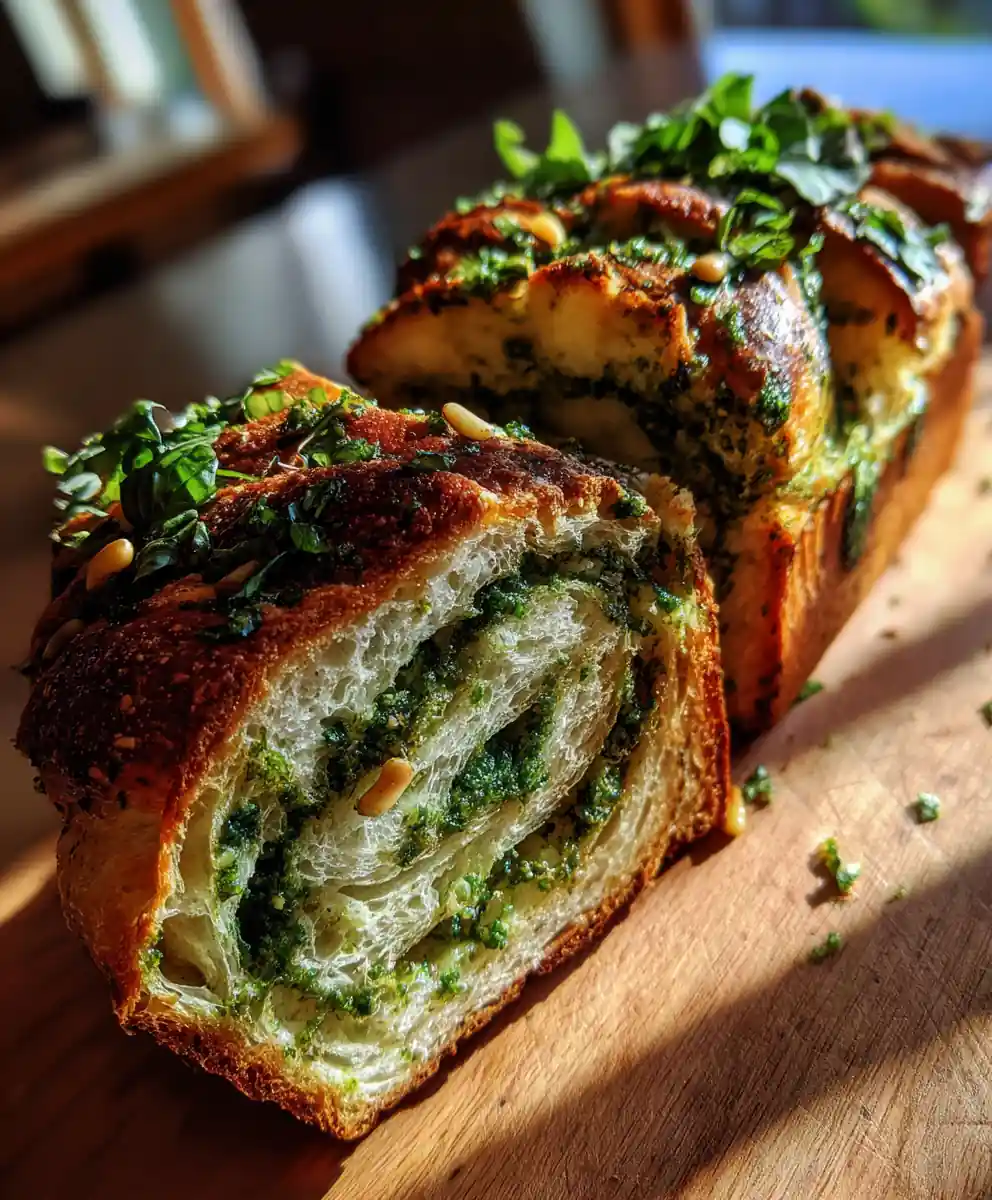
- Step 11: Create the Swirl. Gently twist the two halves around each other, creating a braided pattern. Try to keep the pesto-filled side facing upwards as much as possible for visual appeal. Carefully pinch the ends together at the bottom to seal the braid. If you find the twist is too loose or breaking, try chilling the rolled log for 15 minutes before slicing; this firms up the pesto and makes it easier to handle.
- Step 12: Second Rise. Lightly grease a 23×13 cm (9×5 inch) loaf pan. Carefully transfer the twisted dough into the prepared loaf pan. Cover loosely with plastic wrap or a kitchen towel and let it rise again for 30-45 minutes, or until visibly puffy.
- Step 13: Preheat Oven. Preheat your oven to 190°C (375°F). Place the oven rack in the center position for even heat distribution. Ensure the oven has reached full temperature before placing the bread inside. Preheating properly helps the bread rise rapidly in the oven (oven spring).
- Step 14: Bake. Bake the loaf for 30-35 minutes. Check for doneness when the crust is golden brown and the internal temperature reaches 90-93°C (195-200°F) using a food thermometer. If the top browns too quickly, tent it lightly with aluminum foil to prevent burning. Baking this **best bread recipe with yeast** requires attention to color.
- Step 15: Cool and Serve. Remove the bread from the oven and let it cool in the pan for 10 minutes. Transfer the bread to a wire rack to cool completely before slicing. For best slicing, allow it to cool for at least 30 minutes; slicing while hot can make the loaf dense and gummy. Enjoy this simple **best bread recipe with yeast** loaf for easy dinner ideas.
Troubleshooting Your Homemade Bread
Here are some common issues home bakers face when making this best bread recipe with yeast and simple solutions to get you back on track.
My dough didn’t rise.
Ensure your yeast is fresh and active by checking the expiration date on the package. The water temperature for activation must be precise (105-115°F); water that is too cold won’t activate it, and water that is too hot will kill it. Place the rising bowl in a warmer spot in your house or use the oven with the light on (oven light generates enough warmth to encourage rising).
The final bread texture is too dense.
A dense texture usually indicates a lack of proper kneading or not enough rising time. Ensure you knead for the full 8-10 minutes until the dough passes the windowpane test (stretches thin without tearing). For the first rise, make sure the dough truly doubles in size before punching down.
The pesto leaked out during baking.
This often happens if the seam isn’t pinched securely after rolling the log. Also, ensure you leave the small border when spreading the pesto, giving you a clean edge to seal. Make sure the log roll is tight and even to avoid gaps in the braid.
Making This Bread Ahead (Meal Prep Tips)
This best bread recipe with yeast is excellent for meal prep and freezing, ensuring you always have a hearty side dish ready to go.
Prepare the dough in advance.
You can prepare the dough through the first rise and then place it in the refrigerator. Cover the bowl tightly with plastic wrap and refrigerate for up to 24 hours. When ready to proceed, remove the dough from the fridge and let it sit at room temperature for 1 hour before rolling and shaping.
Freeze the loaf.
You can freeze the baked and cooled loaf for up to 3 months. Ensure the bread is completely cool, then wrap it tightly in plastic wrap, followed by aluminum foil. Thaw overnight at room temperature and refresh with a quick 10-minute bake at 350°F (180°C) before serving.
Freeze the shaped dough (unbaked).
After shaping the braid and placing it in the loaf pan for the second rise, wrap it tightly in plastic wrap. Place the entire loaf pan in the freezer for up to 3 weeks. When ready to bake, transfer the frozen loaf to the refrigerator overnight to thaw, then proceed with the second rise and baking steps as directed.
Simple Swaps for the Best Bread Recipe with Yeast
This best bread recipe with yeast is incredibly versatile; you can easily modify the filling and ingredients to fit dietary needs or preferences.
Nut-Free Pesto
If you have nut allergies, swap the pine nuts for sunflower seeds or pumpkin seeds (pepitas). Toast the seeds first to bring out their nutty flavor before processing. These provide a similar texture and richness to the pesto without the allergen concern.
Dairy-Free Option
To make this recipe completely plant-based, omit the hard cheese entirely or replace it with nutritional yeast. Nutritional yeast adds a cheesy, umami flavor without dairy. You may need to add a pinch more salt to compensate for the saltiness lost from the cheese.
Different Fillings
Once you master the technique for this best bread recipe with yeast, you can substitute the pesto for other flavor combinations. Try garlic butter with fresh herbs (parsley, rosemary) for a simple savory twist. For a sweet version, spread cinnamon sugar and softened butter on the dough before rolling.
FAQs
Can I use store-bought pesto for this best bread recipe with yeast?
Yes, you can use store-bought pesto if you are short on time. However, homemade pesto will always yield a fresher, more vibrant flavor. Choose a high-quality jarred pesto for the best results; I usually use store-bought pesto on busy weeknights when I want an easy, family-friendly meal.
What should I serve with this bread?
This bread makes an excellent accompaniment to soups and stews. It is also delicious served alongside roasted chicken or beef. It’s hearty enough to be the star of a light meal itself with a simple side salad.
What is the best way to store the leftovers?
Store leftovers at room temperature in an airtight container for up to 2 days. For longer storage, freeze slices or the entire loaf as directed above. Avoid refrigerating bread, as it tends to dry out quickly and become stale.
Can I use a different kind of flour in this best bread recipe with yeast?
Bread flour provides the best texture for this recipe because of its higher protein content. However, all-purpose flour can be used in a pinch; the texture may be slightly less chewy. Do not substitute with whole wheat flour in this specific recipe; it requires significant adjustments to liquid content and rise times.
My swirl isn’t defined after baking.
Did you roll the dough tightly enough, and did you ensure the pesto-coated sides were facing up during the braid? If the pesto layer is too thin or too watery, the swirl may not be as vibrant. A loose braid will also cause the swirl to lose shape during the second rise and baking.
Why do I need to let it cool completely before slicing?
Slicing hot bread crushes the crumb and can result in a gummy texture. Allowing the internal structure to cool and set ensures clean slices and a light, airy texture. Patience is key for the best results; wait at least 30 minutes, or even longer for a large loaf.
Conclusion
This best bread recipe with yeast transforms a simple dough into an impressive and delicious family favorite. The vibrant pesto swirl never fails to impress whether for a healthy Sunday dinner or special occasions, and it’s a great choice for easy dinner ideas. Don’t forget to tag us in your pictures when you create this delicious pesto swirl masterpiece!
Print
best bread recipe with yeast
- Total Time: 170 minutes
- Yield: 1 loaf (10 servings) 1x
- Diet: Vegetarian-Friendly
Description
A surprisingly easy, family-friendly recipe for a vibrant, pesto-swirled loaf of homemade bread, perfect for a cozy Sunday dinner or impressing guests.
Ingredients
- 350 ml warm water (40-45°C / 105-115°F)
- 7 g active dry yeast
- 15 g granulated sugar
- 500 g bread flour, plus more for dusting
- 10 g fine sea salt
- 30 ml olive oil, plus more for greasing
- 60 g fresh basil leaves, packed
- 30 g pine nuts, lightly toasted
- 2 cloves garlic, peeled
- 50 g hard cheese (e.g., Parmesan-style), finely grated
- 80 ml extra virgin olive oil
- 2 g fine sea salt
- 1 g freshly ground black pepper
Instructions
- Activate Yeast: In a large mixing bowl, combine the warm water, yeast, and sugar. Stir gently to dissolve the sugar. Allow the mixture to rest for 5-10 minutes until visibly foamy and bubbly, confirming the yeast is active.
- Form the Dough: Add the bread flour and salt to the yeast mixture. Using a wooden spoon or dough whisk, stir thoroughly until a shaggy, cohesive dough forms. Ensure all the flour is incorporated.
- Knead the Dough: Turn the dough out onto a lightly floured work surface. Knead vigorously for 8-10 minutes by hand until the dough becomes smooth, elastic, and springy. Alternatively, use a stand mixer with a dough hook for 6-8 minutes on medium-low speed.
- First Rise: Lightly oil a clean, large bowl. Place the dough in the bowl, turning once to coat all sides, then cover with plastic wrap or a clean kitchen towel. Allow the dough to rise in a warm spot for 1 to 1.5 hours, or until doubled in size.
- Prepare the Pesto: While the dough rises, prepare the basil pesto. In a food processor, combine the fresh basil leaves, toasted pine nuts, garlic cloves, grated hard cheese, salt, and pepper. Pulse until the ingredients are roughly chopped.
- Finish the Pesto: With the food processor running on low speed, slowly drizzle in the extra virgin olive oil. Continue processing until a thick, vibrant green paste forms. Scrape down the sides as needed.
- Shape the Dough: Once the dough has doubled, gently punch it down to release the air and turn it out onto a lightly floured surface. Roll the dough into a large rectangle approximately 30×40 cm (12×16 inches). Keep the thickness even across the surface.
- Spread the Pesto: Spread the prepared basil pesto evenly over the entire surface of the rolled dough rectangle, leaving a small border (about 1 cm or ½ inch) along one of the long edges.
- Roll and Seal: Starting from the long edge opposite the small border, carefully roll the dough tightly into a log. Pinch the seam gently to seal the edges together securely.
- Slice and Braid: Using a sharp knife, slice the log lengthwise down the middle, leaving about 2-3 cm (1 inch) connected at one end. Gently twist the two halves around each other, creating a braided pattern. Pinch the ends together at the bottom to seal the braid.
- Second Rise: Lightly grease a 23×13 cm (9×5 inch) loaf pan. Carefully transfer the twisted dough into the prepared loaf pan. Cover loosely and let it rise again for 30-45 minutes, or until visibly puffy.
- Preheat Oven: Preheat your oven to 190°C (375°F). Place the oven rack in the center position for even heat distribution.
- Bake Loaf: Bake the loaf for 30-35 minutes. Check for doneness when the crust is golden brown and the internal temperature reaches 90-93°C (195-200°F) using a food thermometer. If the top browns too quickly, tent it lightly with aluminum foil.
- Cool and Serve: Remove the bread from the oven and let it cool in the pan for 10 minutes. Transfer the bread to a wire rack to cool completely before slicing. Allow at least 30 minutes for cooling before slicing to avoid a dense, gummy texture.
Notes
To achieve a tight swirl and prevent pesto leakage, try chilling the rolled dough log for 15 minutes before slicing it lengthwise for braiding. If the top browns too quickly during baking, loosely tent the loaf with aluminum foil. Store extra yeast in the freezer for longer freshness.
- Prep Time: 35 minutes
- Cook Time: 35 minutes
- Category: Bread
- Method: Baking
- Cuisine: European
Nutrition
- Serving Size: 1 slice (80 g)
- Calories: 320 calories
- Sugar: 1.5 g
- Sodium: 450 mg
- Fat: 14 g
- Saturated Fat: 3 g
- Unsaturated Fat: 8 g
- Trans Fat: 0 g
- Carbohydrates: 40 g
- Fiber: 2 g
- Protein: 7 g
- Cholesterol: 5 mg
FREE PRINTABLE RECIPE
Get the Printable Recipe PDF (Free)
Enter your email and we’ll send you the ingredients + step-by-step instructions as a clean PDF you can save to your phone.
- ✅ Printable PDF (ingredients + steps)
- ✅ Save it to your phone (no long scrolling)
- ✅ Includes cook time + servings
- ✅ Easy to follow
FAQ
Where’s the full recipe?
It’s delivered as a printable PDF so you can save it and cook without scrolling.
I didn’t get the email.
Check Spam/Promotions and search your inbox for your site name. Then click Confirm to receive the PDF.