This quick pasta dish combines tender sautéed zucchini with a creamy cheese sauce for a satisfying meal. It is an efficient way to use seasonal produce and can be prepared in just 15 minutes.
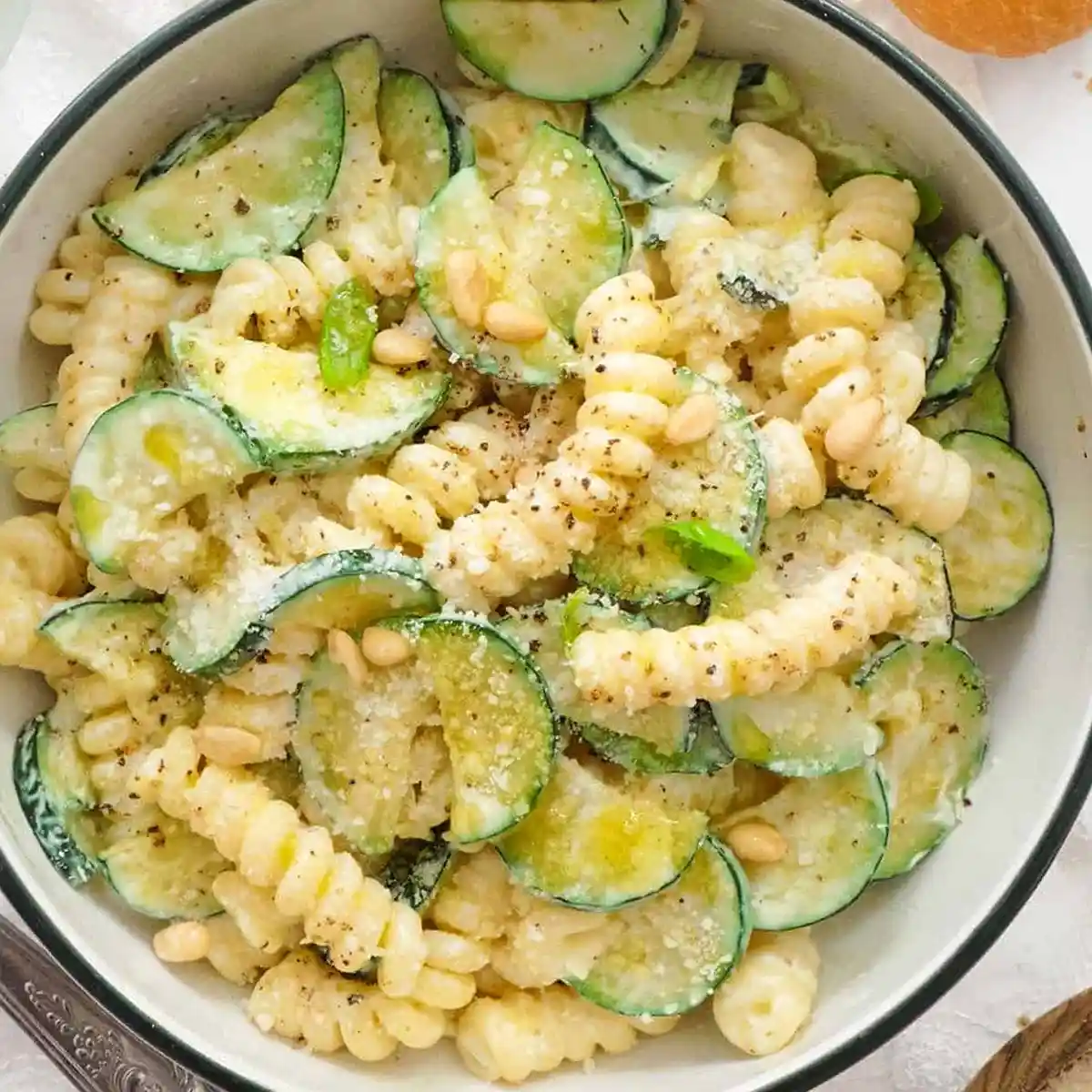
List of ingredients
- 8 oz (220 grams) Pasta – prefer fusilli, penne, or rigatoni for best sauce adherence.
- 1 tablespoon extra virgin olive oil – used for sautéing the vegetables.
- 1 lb (450 grams) zucchini – sliced or chopped, approximately 3 medium-sized zucchinis.
- Salt and pepper – added to taste for seasoning.
- 2 garlic cloves – grated or minced finely.
- ½ cup (40 grams) freshly grated parmesan – provides a salty, nutty flavor.
- ½ cup (80-90 grams) full-fat cream cheese or ricotta – adds richness and creaminess to the sauce.
step-by-step instructions
- Cook the pasta: Boil a large pot of salted water and cook the pasta according to package directions until it is al dente. Before draining, reserve approximately ½ cup of the starchy pasta water.
- Sauté the zucchini: While the pasta boils, heat olive oil in a large skillet over medium heat. Add the zucchini, season with salt and pepper, and cook until the pieces are tender and slightly golden. If the pan is too small, cook the zucchini in two separate batches to avoid steaming.
- Add the garlic: Stir in the minced garlic during the last 1-2 minutes of sautéing. Cook only until fragrant to ensure the garlic does not burn or become bitter.
- Combine ingredients: Drain the pasta and add it directly into the skillet with the zucchini. Stir in the grated parmesan and the cream cheese or ricotta.
- Finish the sauce: Pour in 2-3 tablespoons of the reserved pasta water. Toss all ingredients together over low heat until the cheese is melted and the sauce is evenly distributed. Taste and adjust seasonings before serving.
Optimal Zucchini Preparation
Choosing the Right Zucchini Size
Select medium-sized zucchinis that are firm to the touch. Large zucchinis often have larger, tougher seeds and a more watery texture that can make the pasta soggy. Medium ones provide the best balance of sweetness and structural integrity during sautéing.
Uniform Cutting Techniques
Cut the zucchini into consistent sizes, such as half-moons or uniform cubes. This ensures that every piece cooks at the same rate, preventing some pieces from becoming mushy while others remain raw. Aim for pieces that are roughly the same size as your chosen pasta shape.
Managing Vegetable Moisture
Zucchini has a high water content that can dilute the sauce. To prevent this, avoid overcrowding the pan, which traps steam and boils the vegetable instead of searing it. Sautéing in batches allows the moisture to evaporate quickly, resulting in a better golden-brown color.
Pasta Selection and Cooking Science
Best Pasta Shapes for Zucchini
Short, textured pastas like fusilli, penne, or rigatoni are ideal for this recipe. The ridges and hollow centers trap the cream cheese and parmesan sauce, ensuring every bite is flavorful. Long pastas like spaghetti can work but are less efficient at holding the zucchini pieces.
Achieving Perfect Al Dente Texture
Cook the pasta for one minute less than the package instructions suggest. Since the pasta is tossed in a warm pan with cheese and pasta water at the end, it continues to cook slightly. This prevents the pasta from becoming overcooked and mushy in the final dish.
The Importance of Starchy Pasta Water
The reserved pasta water contains released starches that act as an emulsifier. When added to the melted cheese and olive oil, it helps bind the ingredients into a smooth, cohesive sauce. This prevents the cream cheese from separating and creates a professional, glossy finish.
Ingredient Substitutions
Replacing Parmesan Cheese
If parmesan is unavailable, Pecorino Romano is a suitable alternative, though it has a saltier and sharper profile. For a milder taste, a hard aged provolone can be used. Adjust the additional salt in the recipe based on the saltiness of the substitute cheese.
Alternatives to Cream Cheese
Mascarpone provides a similar creamy texture but with a slightly sweeter, milkier taste. Whole-milk Greek yogurt can be used for a tangier version, although it should be stirred in at the very end over low heat to prevent curdling. Ricotta offers a grainier, more traditional Italian texture.
Dairy-Free Modifications
To make this dish vegan, omit the parmesan and cream cheese. Instead, use nutritional yeast for a cheesy flavor and a tablespoon of cashew cream or vegan cream cheese for thickness. Ensure the olive oil is high quality to maintain the richness of the dish.
Flavor Enhancements and Variations
Adding Fresh Summer Herbs
Stir in freshly chopped basil or parsley during the final tossing step. Basil adds a peppery sweetness that complements the zucchini, while parsley provides a clean, fresh finish. For a more unique profile, a small amount of minced mint can brighten the dish.
Integrating Additional Vegetables
Blanched peas or sautéed asparagus tips pair well with the zucchini and cream sauce. Add these vegetables during the last few minutes of the zucchini sauté process. This increases the nutritional value and adds varied colors to the plate.
Adding Protein Sources
Grilled chicken breast, sautéed shrimp, or pan-seared salmon chunks can be added to make the meal more filling. Cook the protein separately and stir it in at the end with the pasta. For a plant-based protein, chickpeas or cannellini beans work effectively.
Introducing Spicy Elements
Add a pinch of crushed red pepper flakes to the olive oil just before adding the zucchini. This infuses the oil with a subtle heat that cuts through the richness of the cream cheese. For a stronger kick, add a dash of cayenne pepper during seasoning.
Expert Cooking Tips
Preventing Garlic from Burning
Garlic burns quickly at high temperatures, which creates a bitter taste. Always add the garlic during the final two minutes of sautéing the zucchini. If the pan is too hot, remove it from the heat briefly before stirring in the garlic.
Maximizing Caramelization
Do not stir the zucchini constantly during the sautéing process. Let the vegetables sit undisturbed for 2-3 minutes to allow the natural sugars to caramelize against the hot pan. This creates the golden-brown edges that provide depth of flavor.
Balancing Richness with Acidity
The cream cheese and parmesan create a heavy flavor profile. To balance this, squeeze a fresh lemon wedge over the finished pasta just before serving. The acidity brightens the zucchini and cuts through the fat of the cheeses.
Storage and Reheating Guide
Proper Refrigeration Methods
Store leftover pasta in an airtight container in the refrigerator for up to three days. Keep the pasta slightly undercooked if you plan to store it, as it will soften further during reheating. Ensure the container is completely sealed to prevent the pasta from drying out.
Stovetop Reheating Process
Reheating on the stove is the best method for maintaining texture. Place the pasta in a skillet over medium-low heat and add a tablespoon of water or olive oil. Stir gently until the cheese melts again and the pasta is heated through.
Microwave Reheating Tips
If using a microwave, place the pasta in a microwave-safe bowl and add a splash of water or milk. Cover the bowl with a damp paper towel to trap steam, which prevents the pasta from becoming rubbery. Heat in 30-second intervals, stirring in between.
Troubleshooting Common Issues
Fixing a Watery Sauce
If the sauce appears too thin or watery, continue simmering the mixture over low heat for another minute. Alternatively, stir in an extra tablespoon of grated parmesan cheese. The cheese acts as a thickener and will absorb the excess liquid.
Correcting Overcooked Pasta
If the pasta has become too soft, avoid over-stirring it in the pan, as this can break the noodles. Serve it immediately rather than letting it sit, as the residual heat will continue to break down the starch. Use a wider pan to spread the pasta out and reduce cooking time.
Adjusting Bland Flavor
If the dish tastes bland, increase the amount of black pepper or add a small amount of lemon zest. Ensure you have used enough salt in the pasta boiling water, as this is the primary way to season the noodles themselves. A final drizzle of high-quality olive oil can also enhance the flavors.
Frequently Asked Questions
Can I use frozen zucchini for this recipe?
It is not recommended to use frozen zucchini. Frozen zucchini releases a significant amount of water when thawed and cooked, which prevents it from browning and can make the pasta sauce watery and thin.
Which cream cheese is best for the sauce?
Full-fat cream cheese is the best choice because it provides the most stable emulsion and a richer flavor. Low-fat versions may separate or become grainy when heated in the pan with the pasta water.
Can I make this recipe gluten-free?
Yes, you can substitute the traditional pasta with your favorite gluten-free pasta alternative. Be mindful that gluten-free pastas often have different cooking times and may release less starch into the water, so you may need to add a pinch of cornstarch to the reserved water.
Is this dish suitable for meal prep?
Yes, this dish is suitable for meal prep for up to three days. To keep the quality high, undercook the pasta slightly so it doesn’t become mushy when reheated in the microwave or on the stove.
Print
Creamy Garlic and Zucchini Pasta
- Total Time: 15 minutes
- Yield: 4 servings 1x
- Diet: vegetarian
Description
This pasta with zucchini is your go-to recipe for a delicious, satisfying pasta dish loaded with vegetables. It’s ready in about 15 minutes, requires only 5 ingredients, and turns plenty of zucchini into a perfect summer meal.
Ingredients
- 8 oz (220 grams) Pasta (fusilli, penne, or rigatoni)
- 1 tablespoon extra virgin olive oil
- 1 lb (450 grams) zucchini, sliced or chopped
- salt & pepper, to taste
- 2 garlic cloves, grated or minced
- ½ cup (40 grams) freshly grated parmesan
- ⅓ cup (80–90 grams) full-fat cream cheese or ricotta
Instructions
- Pasta: Cook your pasta in a large pot of salted boiling water according to the packet instructions, but drain when it’s still al dente, reserving about ½ cup of the cooking water.
- Zucchini: Heat the olive oil in a large pan or skillet; when the oil starts shimmering, stir in the sliced or chopped zucchini, season with salt and pepper to taste, and cook over medium heat, stirring occasionally. When the zucchini are nearly tender and slightly brown, stir in the garlic and cook for 1-2 minutes until the flavors bloom.
- Assemble and serve: Drain the pasta and add it to the pan with parmesan and cream cheese (or ricotta), adding a tad of the reserved pasta water and tossing until well combined and the cheese is evenly distributed.
Notes
Cut zucchini vertically into halves or quarters and then into thick slices to keep them the same size. If the pan is too overcrowded, cook the zucchini in batches to let them brown nicely rather than steaming.
- Prep Time: 5 minutes
- Cook Time: 10 minutes
- Category: pasta
- Method: stovetop
- Cuisine: Mediterranean
Nutrition
- Serving Size: 1 serving
- Calories: 482 kcal
- Sugar: 6 g
- Sodium: 183 mg
- Fat: 20 g
- Saturated Fat: 7 g
- Unsaturated Fat: 13 g
- Trans Fat: 0 g
- Carbohydrates: 62 g
- Fiber: 4 g
- Protein: 15 g
- Cholesterol: 28 mg